



N.Y. MTA budget reflects cuts due to $900M shortfall
Plan relies on expanded cost-cutting initiatives, controlling labor costs and increasing fares and toll revenue.

On Wednesday, the Metropolitan Transportation Authority (MTA) released its 2011 Preliminary Budget and proposed Four-Year Financial Plan for 2011-2014. The proposed plan reflects unprecedented internal cost cutting initiatives undertaken in response to a $900 million shortfall for 2010 resulting from cuts to State assistance and downturns in tax revenue. These shortfalls amount to more than $2.5 billion over the plan period.
As a result of its cost-cutting actions, the MTA was able to limit the fare revenue increase to 7.5 percent in 2011, as agreed to with the Governor and Legislature in May 2009 as part of the MTA rescue package. The Plan faces many risks, however, including the need for labor participation to control wage and benefit costs, according to the MTA. The July Plan is preliminary; the MTA Board will consider a final Plan in December.
The Plan relies on three key components. The first is the continuation and expansion of the MTA's cost-cutting initiatives, which have saved more than $380 million in 2010, translating into more than $500 million in annual recurring savings and growing to more than $700 million by 2014.
The second key to the Plan is controlling labor costs, which make up two-thirds of the MTA's operating expenses. The Plan acknowledges that in the current economic situation wage increases must be tied to productivity gains or other cost savings. The Plan assumes that all employees — both represented and non-represented — would receive a "net-zero" wage increase for two years.
Finally, the Plan includes the 7.5 percent increases in fare and toll revenue in 2011 and 2013 agreed upon with the Governor and Legislature as part of the MTA rescue package approved last spring, which also included a series of new taxes to support the MTA and funding for the first two years of the MTA's 2010-2014 Capital Program.
"The foundation of this Plan is the most aggressive and comprehensive overhaul in the history of the MTA," said MTA's Chairman/CEO Jay H. Walder. "These actions have allowed us to hold true to our commitment regarding fare increases while maintaining the quantity and quality of service that New Yorkers rely on every day. The State's ongoing fiscal crisis is one of many risks to the Plan, but with continued hard work and the participation of our labor unions I believe that this Plan can be achieved."
The MTA proposed budget assumes that Nassau County will fully fund its obligation to support Long Island Bus. Under a 1973 lease agreement, the MTA operates the system as a contractor working on behalf of the County, which owns the bus system.
Through 1999, the County made up 100 percent of its funding obligation. Since 2000, however, when the County dramatically cut back its assistance for this service, the MTA has been forced to shoulder an increasing share of this cost, totaling $140 million. The MTA can no longer afford to subsidize this service, which would cost the MTA more than $25 million in 2011.
Full details of the Financial Plan and fare increase proposal are available, here.
More Bus

LA Metro, City of West Hollywood, and Partners Advance Smarter Bus Lane Enforcement
The award-winning partnership combines AI-powered detection with human oversight to improve bus reliability, accessibility, and enforcement efficiency.
Read More →
PSTA Modernizes Workforce Management with Digital Bidding System
The award-winning Workforce Transit Modernization project replaced paper bidding with a transparent digital platform, cutting administrative effort while improving access for operators.
Read More →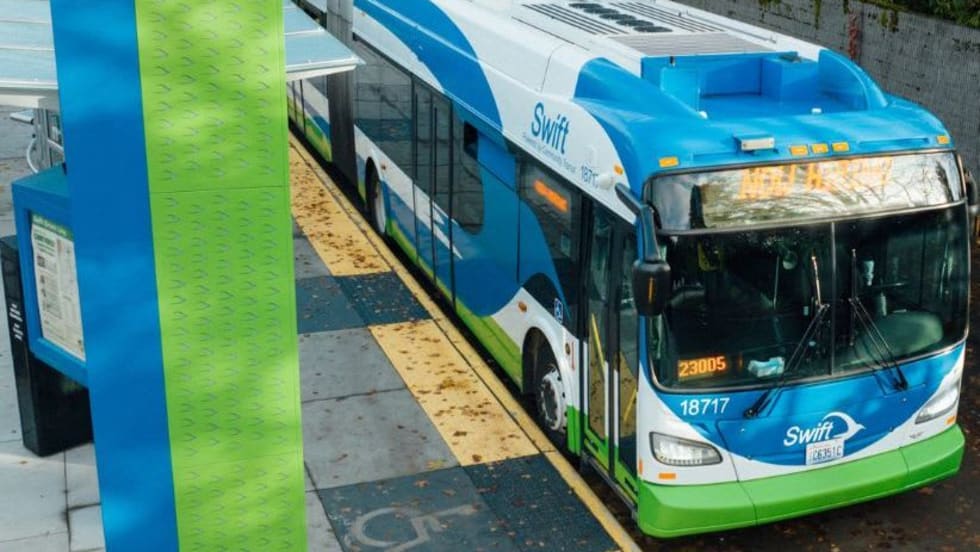
Washington's Community Transit Sets Six-Year Roadmap for Growth, Expansion
Approved TDP targets more bus service, new mobility options, Swift BRT expansion, and a potential Everett Transit annexation.
Read More →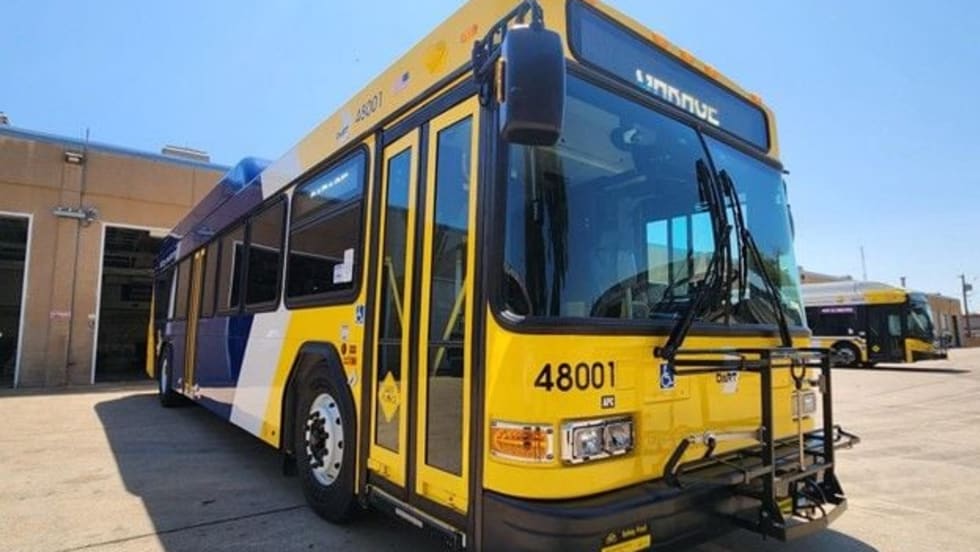
DART Customer Satisfaction Reaches Six-Year High
Overall satisfaction rose to 74.9%, while the agency’s Net Promoter Score reached a record 33.7.
Read More →
How DART's GoPass Is Redefining Regional Mobility
Serving 14 transit agencies, GoPass simplifies multimodal travel by allowing riders to plan, pay for, and manage an entire trip through one app.
Read More →
Biz Briefs: OCTA Taps Clean Energy for Hydrogen Station, Stadler to Supply Via Rail Vehicles, and More
From manufacturers and suppliers to transit agencies and motorcoach operators, these updates offer a snapshot of the projects, partnerships and business moves driving the industry forward.
Read More →
METRO Magazine Announces 2026 Innovative Solutions Awards Winners
Projects Recognized for Advancing Mobility Through Technology, Accessibility, Workforce Innovation, and Operational Excellence
Read More →
Biz Briefs: STV teams with Amtrak, Motorcoach Operators Boost Fleet and Land Contracts, and More
From manufacturers and suppliers to transit agencies and motorcoach operators, these updates offer a snapshot of the projects, partnerships and business moves driving the industry forward.
Read More →
LA Metro Marks Banner Year, Sets Ambitious Goals for New Fiscal Year
Incoming LA Metro Board Chair and Los Angeles Mayor Karen Bass joined outgoing Board Chair Fernando Dutra and LA Metro CEO Stephanie Wiggins to review accomplishments from fiscal year 2026, which included the opening of new rail extensions, advancement of major transit projects, expanded safety programs, and new rider amenities.
Read More →
DART Taps Nathaniel P. Ford Sr. as Next President/CEO
Since 2012, Ford has served as the CEO of the Jacksonville Transportation Authority
Read More →