



N.Y. MTA issuing Metrocards with Spanish-language ads
The MTA has used advertising on the rear face of MetroCards since 1995 and began selling space on the card’s front face in 2012. This is the first time, the agency has sold ads on Metrocards that are in Spanish.

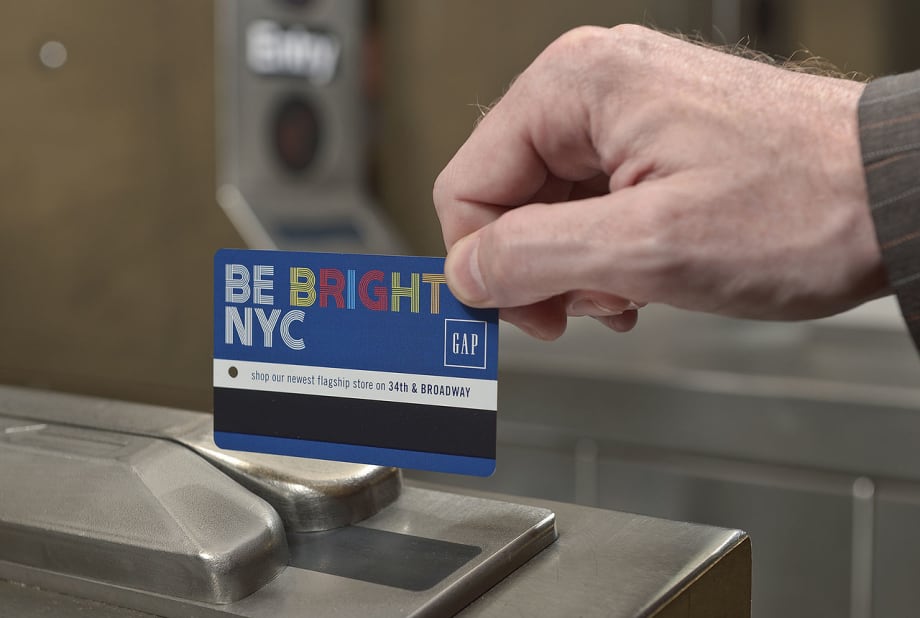
In 2012, the MTA also began selling space on MetroCards directly to advertisers rather than through an intermediary. Photo courtesy MTA

For the first time, the New York Metropolitan Transportation Authority (MTA) issued a Spanish-language advertising campaign on MetroCards.
A print run of 250,000 MetroCards in Spanish was purchased by the immigration law firm Youman, Madeo & Fasano LLP.
The print campaign uses two versions with a run of 125,000 cards for each. One version advertises the law firm and its locations, while the other promotes a television show on immigration issues that the law firm produces.
The MTA has used advertising on the rear face of MetroCards since 1995 and began selling space on the card’s front face in 2012. The change was part of an expanded initiative to raise revenue through MTA’s reach to eight million New York City residents and visitors who take subways and buses every day.
In 2012, the MTA also began selling space on MetroCards directly to advertisers rather than through an intermediary.
“We’re very pleased by the continuing high level of interest that advertisers are showing toward the MetroCard as a medium for promotions,” said Paul J. Fleuranges, MTA’s senior director, corporate and internal communications. “This confirms that our decision to relaunch the MetroCard advertising program was the right move. Advertisers can continue to leverage the MetroCard as a vehicle to communicate to our diverse customer base.”
The cards are scheduled for release beginning Saturday with distribution targeted on select stations.
More Management

VIA Metropolitan Transit Reports 2 Million More Passenger Trips as Better Bus Plan Gains Momentum
San Antonio's transit agency said accelerated service improvements are driving ridership growth, offering another example of how increased frequency and workforce investments can translate into stronger transit performance.
Read More →
ABAF Study Reveals Growing Insurance Crisis for Motorcoach Operators
Preliminary findings show 98% of operators faced premium increases over the past five years, while shrinking insurer participation is putting added pressure on businesses and customers.
Read More →
PSTA Modernizes Workforce Management with Digital Bidding System
The award-winning Workforce Transit Modernization project replaced paper bidding with a transparent digital platform, cutting administrative effort while improving access for operators.
Read More →
Chicago to Host Public Transportation's Biggest Gathering at APTA TRANSform & EXPO 2026
North America’s largest public transportation gathering returns to Chicago, connecting transit decision-makers with the technologies, ideas, and partnerships driving the industry forward.
Read More →
New Tricks for Old Bureaucracies: Joshua Schank on Making Transit Innovation Stick
Former LA Metro Chief Innovation Officer Joshua Schank discusses why good ideas aren't enough, how transit agencies can overcome resistance to change, and why today's challenges demand more innovation.
Read More →
Washington's Community Transit Sets Six-Year Roadmap for Growth, Expansion
Approved TDP targets more bus service, new mobility options, Swift BRT expansion, and a potential Everett Transit annexation.
Read More →
OKC Streetcar Makes Zero-Fare Service Permanent
Ridership increased an average of 71% compared with the same period a year earlier during the fare-free pilot.
Read More →
DART Customer Satisfaction Reaches Six-Year High
Overall satisfaction rose to 74.9%, while the agency’s Net Promoter Score reached a record 33.7.
Read More →
House Surface Transportation Bill Advances as Transit Funding Debate Intensifies
A bipartisan transportation package moving through Congress could redefine how the U.S. funds highways, transit, and motorcoach travel, while igniting new fights over electrification, regulation, and federal priorities.
Read More →
How Data, Strategy, and Community Engagement Are Reshaping Transit
In this edition of METROspectives, strada360 CEO Steve Lassey discusses how transit agencies can better align planning with operations, leverage data to improve decision-making, and build public trust as they prepare for the future of mobility.
Read More →