



New fare agreement to provide mobility for homeless in Arkansas
Through TAP, the Arkansas Homeless Coalition will pay a flat monthly fee to METRO for a program total of 1,000 eligible riders.


The Coalition is managing partner organization participation and project funding, and METRO is providing required transit training to all partner organizations.
Rock Region METRO
The Coalition is managing partner organization participation and project funding, and METRO is providing required transit training to all partner organizations.
Rock Region METRO
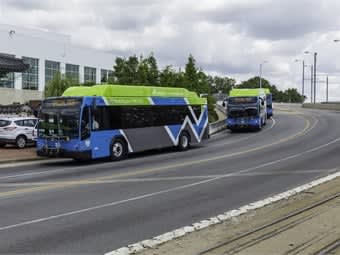
North Little Rock, Arkansas’ Rock Region METRO is launching a new fare agreement program with the Arkansas Homeless Coalition to provide transportation for individuals actively engaged in temporary and supported housing and vocational development programming.
The Transportation Alliance Project is a pilot fare agreement program that expands and diversifies the current fare agreement model METRO has with area academic institutions. Through TAP, the Arkansas Homeless Coalition will pay a flat monthly fee to METRO for a program total of 1,000 eligible riders on the METRO system. Riders will be vetted by the Coalition’s partner organizations participating in TAP and determined eligible for participation by the Coalition on a monthly basis, depending on individuals’ active participation in partner programs for temporary and supported housing and vocational development.
“There are several organizations in our community working to stabilize working and living conditions for people emerging from homelessness,” said METRO Executive Director Charles Frazier. “We’re happy to help them keep their clients actively engaged in temporary and supported housing programs and job training programs by organizing a way for partner organizations to fund transportation at a very affordable rate.”
Current TAP partner organizations include Arkansas Employment Career Center; Canvas Community Church; Central Arkansas ReEntry Coalition; Compassion Center; Family Promise of Pulaski County; Gain, Inc.; Immerse Arkansas; Jefferson Comprehensive Care System, Inc.; Jericho Way Resource Center; Little Rock Community Mental Health; Mercy Community Church; Our House Shelter; River City Ministry of Pulaski County; Romans 1:16 Ministries; the University of Arkansas for Medical Sciences and the UAMS Pulaski County Regional Crisis Stabilization Unit.
The Coalition is managing partner organization participation and project funding, and METRO is providing required transit training to all partner organizations. The Coalition is managing the administrative task of issuing Coalition photo ID cards to all program participants and partnering with ProTech Solutions for a system database to manage program participants and eligibility.
Beginning Friday, Feb. 1, individuals actively enrolled in TAP partner programs for temporary and supported housing and vocational training may apply with their respective organizations for a Coalition 31-Day METRO transit pass called the Transitions Pass. Partner organizations will update ProTech Solutions software called The Good Grid to track and monitor participant eligibility on a monthly basis. The Coalition will produce participants Coalition-branded photo IDs and distribute Transitions passes at key locations, using the Good Grid system to confirm participant eligibility. Once program participants have a Coalition-issued photo ID and a 31-Day Transitions funded pass, they may ride a METRO bus “free” by using the pass in the on-board METRO farebox and showing their Coalition-issued photo IDs to the bus operator.
More New Mobility

From Hardware to Digital Partner: Luminator Charts Its Next Chapter
CEO Magnus Friberg discusses Luminator’s shift toward becoming a digital partner, the growing importance of software and interoperability, and how AI can help agencies improve operations and passenger experience.
Read More →
Biz Briefs: Alstom Lands Canadian Contract, LYT to Supply California TSP, and More
In METRO's latest installment, we take a look at recent news from Complete Coach Works, Beep, FlixBus, and more partnerships making headlines across the transportation sector.
Read More →
CharterUP’s Armir Harris on Technology, AI, and the Future of Group Mobility
In a recent episode of METROspectives, CharterUP Founder/CEO Armir Harris discussed the company’s evolution from an online charter bus marketplace into a technology platform supporting public- and private-sector mobility and much more.
Read More →
Jacksonville’s NAVI Project Charts a New Course for Autonomous Public Transportation
Through its NAVI program, JTA is showing how autonomous vehicles, intelligent infrastructure, and coordinated operations can work together to deliver everyday public transportation.
Read More →
Biz Briefs: Luminator Marks Milestone and More
From manufacturers and suppliers to transit agencies and motorcoach operators, these updates offer a snapshot of the projects, partnerships and business moves driving the industry forward.
Read More →
New Tricks for Old Bureaucracies: Joshua Schank on Making Transit Innovation Stick
Former LA Metro Chief Innovation Officer Joshua Schank discusses why good ideas aren't enough, how transit agencies can overcome resistance to change, and why today's challenges demand more innovation.
Read More →
How DART's GoPass Is Redefining Regional Mobility
Serving 14 transit agencies, GoPass simplifies multimodal travel by allowing riders to plan, pay for, and manage an entire trip through one app.
Read More →
Biz Briefs: OCTA Taps Clean Energy for Hydrogen Station, Stadler to Supply Via Rail Vehicles, and More
From manufacturers and suppliers to transit agencies and motorcoach operators, these updates offer a snapshot of the projects, partnerships and business moves driving the industry forward.
Read More →CharterUP Expands Into New Mobility and Autonomous Transportation
Vice President of New Mobility Stephen Joos discusses how CharterUP is leveraging its nationwide transportation network, technology platform, and autonomous vehicle partnerships to expand into workforce mobility, campus shuttles, and transit solutions.
Read More →
METRO Magazine Announces 2026 Innovative Solutions Awards Winners
Projects Recognized for Advancing Mobility Through Technology, Accessibility, Workforce Innovation, and Operational Excellence
Read More →