



New Orleans RTA Marks 5 Years Under Public Management
In 2019, following an independent management study, the RTA Board decided to return the agency to public management, restoring local governance, transparency, and accountability.

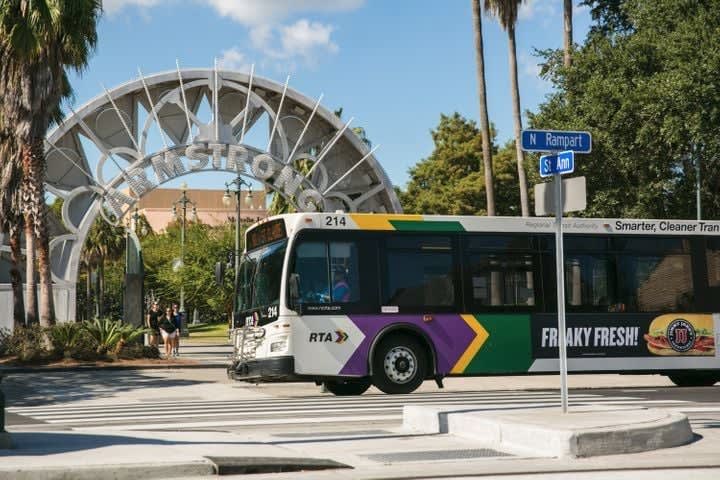
Public management has enabled the RTA to launch and execute a comprehensive capital program focused on reliability, accessibility, and the rider experience, agency officials said.
Credit: New Orleans RTA
The New Orleans Regional Transit Authority (RTA) marked its five-year anniversary under full public management, highlighting strong financial stewardship, safer operations, and meaningful improvements for riders, workers, and visitors since transitioning from private management.
The RTA’s Road to Public Management
Founded in 1979, the RTA has long played a vital role in keeping New Orleans moving. Following Hurricane Katrina, the agency operated under private management for more than a decade as the city worked to stabilize essential services.
In 2019, following an independent management study, the RTA Board decided to return the agency to public management, restoring local governance, transparency, and accountability.
Over the past five years, the RTA has delivered measurable results that reflect the benefits of public management, including:
Investing in the local workforce by hiring more than 800 employees, 27 of whom were newly created positions, thus strengthening the city’s economy through competitive wages and tax contributions.
Five consecutive years of clean audit opinions and strong bond ratings, reinforcing confidence in the RTA’s financial stewardship.
More than $170 million secured in competitive federal grants to modernize fleets, facilities, and rider amenities.
“Five years of public management have shown what is possible when local leadership, transparent decision-making, and community voice guide our transit system,” said RTA CEO Lona Edwards Hankins. “We’re not just moving people, we’re building connections, opportunities, and a stronger New Orleans.”
Five Years and Moving Forward
Public management has enabled the RTA to launch and execute a comprehensive capital program focused on reliability, accessibility, and the rider experience, agency officials said.
Investments to date include new buses and paratransit vehicles, hybrid fleet expansion, two new ferries, the Canal Street Ferry Terminal, and ADA accessibility improvements along the historic St. Charles Streetcar Line.
Looking ahead, the agency is advancing transformational projects that support the city’s long-term growth and equity goals, including bus rapid transit connections linking New Orleans East, Algiers, and downtown; a 30-year Streetcar Modernization roadmap; expanded passenger transfer hubs; fare technology upgrades; and the development of the Downtown Transit Center.
“Five years of public management has strengthened transparency, accountability, and performance across the organization,” said Fred Neal Jr., chairman of the RTA Board of Commissioners. “The decision to return the RTA to public control was about building a system that serves riders first, safeguards public dollars, and positions transit as a cornerstone of New Orleans’ economic future.”
As New Orleans prepares for a new chapter of civic leadership, the RTA’s five-year record under public management underscores the value of transparency, accountability, and community-centered decision-making in delivering essential public services, RTA officials said.
More Management

METRO Opens Submissions for 2026 Motorcoach Awards
Nominations are now being accepted for METRO Magazine’s Operator of the Year and Innovative Operator of the Year awards.
Read More →
New York MTA Advances Final Contract for Second Avenue Subway Expansion
Contract Four is the largest in the Second Avenue Subway Phase 2 project and includes construction of station infrastructure, tracks, and signals for the subway expansion, MTA officials said. Work on Contract Four will begin in 2027.
Read More →
Transit Agencies Highlight Safety Gains at National Summit
Leaders from 15 major transit systems shared crime-reduction results and safety initiatives while discussing the role of continued federal support.
Read More →

NITA Names New Leadership, Expands Reduced-Fare Program at First Board Meeting
The new regional transit authority appointed its first board chair and interim executive director while extending reduced fares across CTA, Metra, and Pace for eligible riders.
Read More →
Beyond the Checklist: A Structured Approach to Transit Maintenance
Reliability-Centered Maintenance helps transit agencies move beyond routine checklists to focus limited resources on the assets and failures that have the greatest impact on safety, reliability, and service.
Read More →
APTA 2026 Nominating Committee Selects Leadership Slate, Names Chair and Vice Chair Nominees
Leadership changes will help shape the association’s priorities and its representation of the transportation industry during the 2026–2027 term.
Read More →
DART Launches Major Security, Fare Enforcement Initiative
The 90-day demonstration will deploy coordinated security teams at five light rail stations while testing controlled access and gathering data to guide future investments.
Read More →
Advancing Fare Collection Through Technology and Innovation
Learn about delivering 1300 gates at 91 stations while managing fare evasion. Explore the large scale deployment, solution customization and real-world results that affect the region. Prepare for deployment in your region now.
Read More →
Game Day in Motion: Moving Millions During the 2026 World Cup
Between packed transit stations and team motorcoaches, see how agencies and operators across North America tackled the transportation demands of the 2026 FIFA World Cup.
Read More →
Surface Transportation Extension Averts Shutdown, Leaves Transit Funding Gap
The stopgap keeps federal transportation programs moving, but missing advance funding could complicate the transit and rail projects agencies are planning next.
Read More →