



New study looks at what transit agencies can learn from TNCs’ late-night popularity
The study synthesized origin-destination data for TNC trips for five U.S. metro areas; a 10,000-person survey of transit and shared-mobility users conducted by SUMC; and rider surveys supplied by four large public transit agencies.

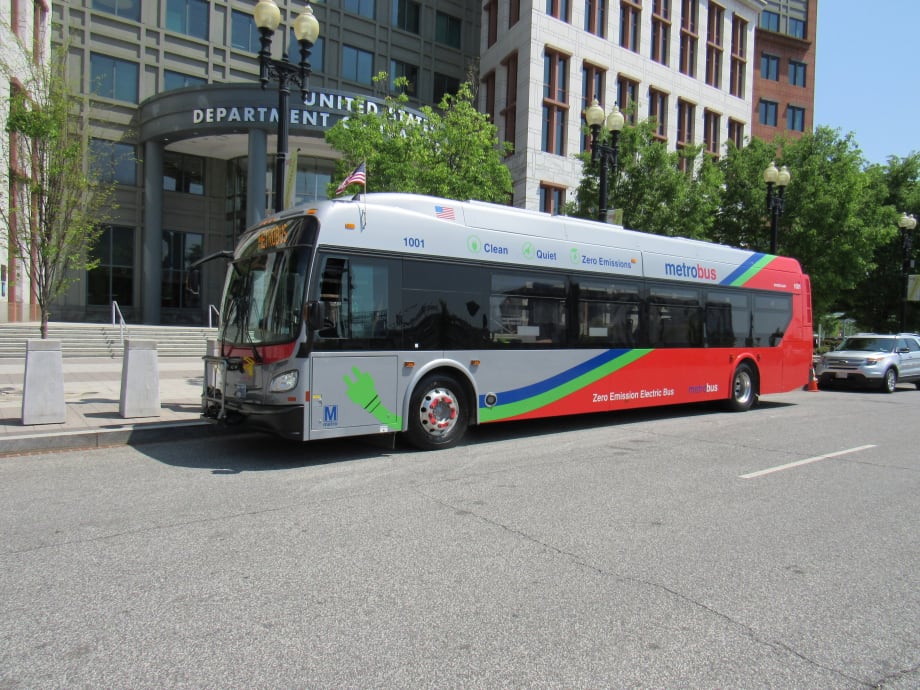
The study comes as researchers and policy analysts continue to assess the impacts of TNCs, which have reinvented transportation culture and prompted some conjecture that they could bode poorly for the fate of urban public transit systems.
New Flyer
The study comes as researchers and policy analysts continue to assess the impacts of TNCs, which have reinvented transportation culture and prompted some conjecture that they could bode poorly for the fate of urban public transit systems.
New Flyer
A new study by the Shared-Use Mobility Center (SUMC) for the Transit Cooperative Research Program (TCRP) finds that peak use of transportation network companies (TNCs) like Uber and Lyft comes on weekends and evenings, not during rush hours when public transit use is highest. SUMC’s findings were based on one of the first uses of origin-destination trip data provided by a major TNC. This finding was presented in TCRP Report 195, “Broadening Understanding of the Interplay between Public Transit, Shared Mobility, and Personal Automobiles.”
“Public transit is the backbone of any urban transportation system,” said Sharon Feigon, SUMC’s executive director. “Having this data and doing this study gave us a lot of new insights. In a congested environment, generally nothing is more efficient at moving lots of people than public transit. But we can see where TNCs fit into the gaps where the transit systems don’t work as well. People want flexibility and frequency and services like Uber and Lyft are filling in the gaps. We want to create an ecosystem of choices to create a multimodal system that can work for all.”
SUMC conducted the study for the TCRP, a division of the Transportation Research Board (TRB) of the National Academies of Sciences, Engineering, and Medicine. The study synthesized origin-destination data for TNC trips for five U.S. metro areas; a 10,000-person survey of transit and shared-mobility users conducted by SUMC; and rider surveys supplied by four large public transit agencies.
Other key findings included:
There is no clear relationship between the level of rush-hour TNC use and longer-term changes in public transit usage. The study looked at TNC trip data from Seattle, Nashville, Los Angeles, Chicago, and Washington, D.C., as well as similar modeled data from San Francisco. From 2010 to 2016 transit ridership declined during rush hour in some of the study areas and increased in others. The data showed that in some of these regions TNC use was high during rush hours and in others it was low. But there was no relationship between the changes in transit ridership and the levels of TNC usage during rush hour.
TNC usage takes place in communities of all income levels. The TNC trip data shows that individual TNC trips were widespread across each of the study regions, suggesting that TNCs are used to some degree by people in communities across the socioeconomic spectrum. While urban core areas had the highest volume, TNC trips started and ended in nearly every zip code in the central counties of the study regions.
Most TNC trips in the study regions are short and concentrated in downtown core neighborhoods or to and from airports. Peak-hour TNC usage was concentrated primarily in urban cores, along relatively short, contiguous corridors between dense neighborhoods — often taking place within a single zip code. The only notable exceptions were airports, which were the highest non-core areas of TNC activity in most of the study regions.
SUMC’s researchers also found a correlation between frequent TNC usage and lower rates of car ownership among many of those surveyed. A small net attrition in vehicle ownership was found that outstripped any car purchases spurred by people aspiring to become drivers for ride-hailing services.
“While we’re still in the infancy of the changes that TNCs have unleashed, the data we analyzed suggest that transit remains resilient during times of day when it provides core services and moves the greatest number of people most efficiently,” said Colin Murphy, director of research and consulting at SUMC. “Although we’re seeing some reductions in total transit usage that is probably attributable to a shift to ride-hailing, use of TNCs still mostly takes place during off-peak hours. Rail and bus service remain central to the commutes of most urban dwellers who aren’t driving alone, and TNCs don’t appear to be changing that big picture in the cities we looked at.”
The study comes as researchers and policy analysts continue to assess the impacts of TNCs, which have reinvented transportation culture and prompted some conjecture that they could bode poorly for the fate of urban public transit systems. It also expands upon research SUMC conducted and TRB published in 2016 that found that TNC’s have a complementary relationship to transit, attracting their highest volume of users during hours when urban bus and light rail service is most infrequent. (TCRP Report 188, Shared Mobility and the Transformation of Public Transit.)
As cities and public transit administrators acclimate to the changing travel habits spurred by TNCs, the report’s authors offered the following guidance, tailored to cities of different sizes:
Transit agencies in large urban areas should continue to prioritize rail, bus rapid transit, bus-only lanes, and other transit-centered approaches that move large numbers of people efficiently and effectively. Recommendations for transit agencies seeking to coordinate with TNCs include designating curb space or other specific locations for TNC pick up/drop offs to minimize conflict near transit stops or stations, and pursuing cost savings through public-private partnerships on late night, call-and-ride, and paratransit services.
Transit agencies in midsized urban areas may want to explore first/last mile partnership opportunities with TNCs to help attract new riders and increase the accessibility of public transit in lower-density areas. They may also be able to find ways to work with both TNCs and large employers on behavior change efforts to encourage residents to their leave cars at home and make alternative transportation choices. Components of such efforts can include carpooling/guaranteed ride home programs, parking policy changes and other transportation demand management strategies.
Transit agencies in smaller urban areas often have challenges beyond the fare box when it comes to providing frequent and full coverage of their service areas, and thus may be interested in partnering with TNCs to provide alternatives to unproductive routes or provide service across greater time spans or geographic areas. These efforts should focus on allowing transit agencies to concentrate their resources on key routes while also bringing new riders to transit through explicit linkages to service gaps in time or geography, such as late nights, weekends, and unserved areas.
“While the evidence in this study suggests that the demand for peak-time transit capacity is stable, this is not cause for complacency,” Feigon said. “Transit systems will need to adapt and evolve along with TNCs, and look at what TNCs are doing right that makes them so attractive to customers.”
To view the full report, click here.
More New Mobility

From Hardware to Digital Partner: Luminator Charts Its Next Chapter
CEO Magnus Friberg discusses Luminator’s shift toward becoming a digital partner, the growing importance of software and interoperability, and how AI can help agencies improve operations and passenger experience.
Read More →
Biz Briefs: Alstom Lands Canadian Contract, LYT to Supply California TSP, and More
In METRO's latest installment, we take a look at recent news from Complete Coach Works, Beep, FlixBus, and more partnerships making headlines across the transportation sector.
Read More →
CharterUP’s Armir Harris on Technology, AI, and the Future of Group Mobility
In a recent episode of METROspectives, CharterUP Founder/CEO Armir Harris discussed the company’s evolution from an online charter bus marketplace into a technology platform supporting public- and private-sector mobility and much more.
Read More →
Jacksonville’s NAVI Project Charts a New Course for Autonomous Public Transportation
Through its NAVI program, JTA is showing how autonomous vehicles, intelligent infrastructure, and coordinated operations can work together to deliver everyday public transportation.
Read More →
Biz Briefs: Luminator Marks Milestone and More
From manufacturers and suppliers to transit agencies and motorcoach operators, these updates offer a snapshot of the projects, partnerships and business moves driving the industry forward.
Read More →
New Tricks for Old Bureaucracies: Joshua Schank on Making Transit Innovation Stick
Former LA Metro Chief Innovation Officer Joshua Schank discusses why good ideas aren't enough, how transit agencies can overcome resistance to change, and why today's challenges demand more innovation.
Read More →
How DART's GoPass Is Redefining Regional Mobility
Serving 14 transit agencies, GoPass simplifies multimodal travel by allowing riders to plan, pay for, and manage an entire trip through one app.
Read More →
Biz Briefs: OCTA Taps Clean Energy for Hydrogen Station, Stadler to Supply Via Rail Vehicles, and More
From manufacturers and suppliers to transit agencies and motorcoach operators, these updates offer a snapshot of the projects, partnerships and business moves driving the industry forward.
Read More →CharterUP Expands Into New Mobility and Autonomous Transportation
Vice President of New Mobility Stephen Joos discusses how CharterUP is leveraging its nationwide transportation network, technology platform, and autonomous vehicle partnerships to expand into workforce mobility, campus shuttles, and transit solutions.
Read More →
METRO Magazine Announces 2026 Innovative Solutions Awards Winners
Projects Recognized for Advancing Mobility Through Technology, Accessibility, Workforce Innovation, and Operational Excellence
Read More →