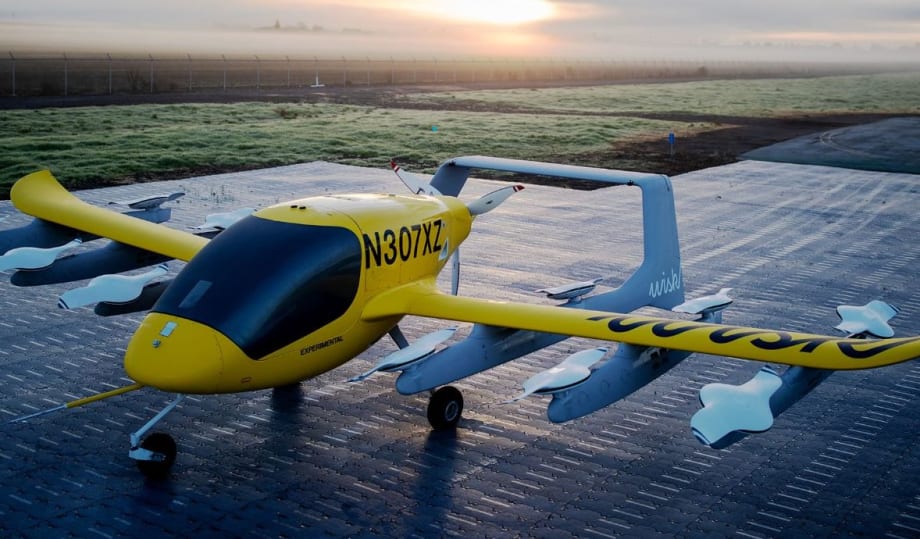
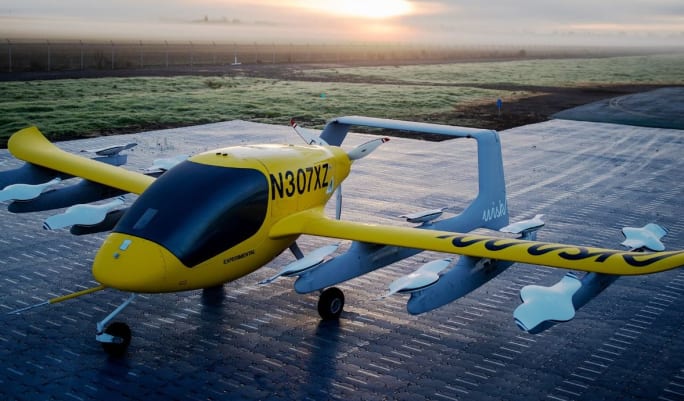
Wisk's self-flying, all-electric air taxi flies 100 mph. Wisk
The New Zealand Government and Wisk, an Urban Air Mobility (UAM) company, have announced a Memorandum of Understanding (MOU) to establish a passenger transport trial in Canterbury, New Zealand. Wisk's self-flying, all-electric air taxi, called Cora, is the aircraft selected for the trials.
Ad Loading...
Cora, its self-flying, eVTOL (electric vertical takeoff and landing) air taxi, will make it possible for passengers to skip traffic gridlock and get to their destination faster.
In October 2019, the New Zealand Government announced that it was establishing an industry-wide airspace integration program to work with leading, innovative domestic and international industry partners to safely test and demonstrate unmanned aircraft. Wisk, based in the U.S. and New Zealand, was announced as the first industry partner to join this program.
Product Name: Cora (prototype)
Type of Machine: Air taxi
Power: All-electric
Capacity: Designed for two passengers
Altitude: Cora flies approximately 1500 feet above ground
Dimensions: 21 feet long with a 36 foot wingspan
Vertical take-off and landing: Cora is powered by 12 independent lift fans, which enable her to take off and land vertically like a helicopter. Therefore, Cora has no need for a runway.
Fixed-wing flight: On a single propeller
Range: Initially about 25 miles plus reserves / about 40 kilometres plus reserves
Speed: About 100 miles per hour / about 160 kilometres per hour
Regulation: Cora has an experimental airworthiness certificate from both the New Zealand Civil Aviation Authority (CAA) and the United States Federal Aviation Administration (FAA).
Around the globe, Urban Air Mobility is an emerging, high-value industry and New Zealand is an attractive location because of its thriving innovation ecosystem with unique expertise, people and technology.
With the agreement now in place, the planning for a passenger transport trial in Canterbury is now underway. The passenger route is a world's first and will commence after Cora's certification by the New Zealand Civil Aviation Authority.
Wisk, an urban air-mobility company based in the San Francisco Bay Area and New Zealand, is an independent company backed by The Boeing Co. and Kitty Hawk Corp.
Ad Loading...
Wisk's Cora has been testing in the Canterbury region since 2017.
CEO Magnus Friberg discusses Luminator’s shift toward becoming a digital partner, the growing importance of software and interoperability, and how AI can help agencies improve operations and passenger experience.
In METRO's latest installment, we take a look at recent news from Complete Coach Works, Beep, FlixBus, and more partnerships making headlines across the transportation sector.
In a recent episode of METROspectives, CharterUP Founder/CEO Armir Harris discussed the company’s evolution from an online charter bus marketplace into a technology platform supporting public- and private-sector mobility and much more.
Through its NAVI program, JTA is showing how autonomous vehicles, intelligent infrastructure, and coordinated operations can work together to deliver everyday public transportation.
From manufacturers and suppliers to transit agencies and motorcoach operators, these updates offer a snapshot of the projects, partnerships and business moves driving the industry forward.
Former LA Metro Chief Innovation Officer Joshua Schank discusses why good ideas aren't enough, how transit agencies can overcome resistance to change, and why today's challenges demand more innovation.
From manufacturers and suppliers to transit agencies and motorcoach operators, these updates offer a snapshot of the projects, partnerships and business moves driving the industry forward.
Vice President of New Mobility Stephen Joos discusses how CharterUP is leveraging its nationwide transportation network, technology platform, and autonomous vehicle partnerships to expand into workforce mobility, campus shuttles, and transit solutions.