



NJ TRANSIT Locomotive Engineers on Strike
In a public statement, Gov. Phil Murphy expressed frustration over the breakdown in negotiations, emphasizing the strike’s potential to impact hundreds of thousands of New Jersey commuters.

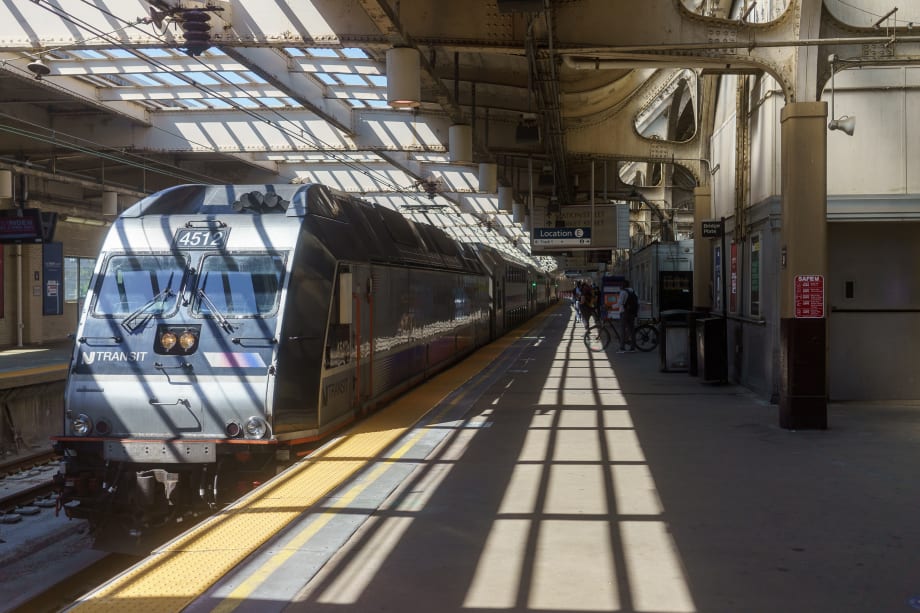
The announcement follows unsuccessful negotiations between NJ TRANSIT and the Brotherhood of Locomotive Engineers and Trainmen.
Photo: NJTRANSIT
The State of New Jersey and NJ TRANSIT are preparing for a significant disruption to rail service following confirmation that locomotive engineers are officially on strike as of May 16 at 12:01 a.m.
While trains already in service before midnight were able to complete their trips, the agency said no new rail service will begin after the strike commences.
How We Got Here
The announcement follows unsuccessful negotiations between NJ TRANSIT (NJT) and the Brotherhood of Locomotive Engineers and Trainmen (BLET). The BLET is the only of the agency’s 15 rail unions that has not signed onto a pattern bargaining agreement previously described by BLET leadership as “fair and responsible.”
NJ TRANSIT said in a press release that a tentative agreement was reached on March 10, but ratification has since stalled.
Leadership Response and Call for Continued Negotiations
In a public statement, Gov. Phil Murphy expressed frustration over the breakdown in negotiations, emphasizing the strike’s potential to impact hundreds of thousands of New Jersey commuters.
“Our single-highest priority has always been to provide the best possible service to our state’s commuters and taxpayers,” said Murphy. “This strike will upend the lives of New Jerseyans. I urge our locomotive engineers to stay at the negotiating table so we can reach a fair and affordable deal and resume full service as soon as possible.”
Kris Kolluri, president and CEO of NJ TRANSIT, echoed the Governor’s sentiment, emphasizing the agency’s commitment to fiscal responsibility and continued dialogue.
“Any deal must be fair to our engineers and fiscally sustainable for our riders and taxpayers,” said Kolluri. “We remain committed to bargaining in good faith and working around the clock to restore full rail service.”
In a statement from the BLET, officials said that NJ TRANSIT “refuses to offer a contract that pays BLET members the industry standard. NJT locomotive engineers have gone without a raise since their contract became amendable in 2019.”
“This strike could be over in an instant if NJT offers a fair contract,” added Mark Wallace, president of the BLET and the Teamsters Rail Conference. “Our members at NJT only want to be paid the same as engineers who work for other commuter railroads that share the same train platforms.”
Contingency Plan in Place for Affected Riders
NJ TRANSIT had previously announced a contingency plan to mitigate disruption for rail customers, particularly those who commute to New York City.
The agency estimates the contingency plan can support approximately 20% of the current weekday rail ridership, given the bus network's limited capacity to absorb rail demand.
Key elements of the plan include:
Expanded service on select New York commuter bus routes located near rail stations.
Contracted private carrier bus service from four regional Park & Ride lots across New Jersey.
Focus on the more than 70,000 daily New York-bound commuters, including passengers transferring to PATH at Hoboken Terminal and Newark Penn Station.
Despite these measures, officials acknowledge that the contingency options are not a complete substitute for regular rail operations.
As a result, officials continue to encourage passengers to plan alternative routes and consult NJ TRANSIT’s published contingency resources for the latest updates.
More Management

METRO Opens Submissions for 2026 Motorcoach Awards
Nominations are now being accepted for METRO Magazine’s Operator of the Year and Innovative Operator of the Year awards.
Read More →
New York MTA Advances Final Contract for Second Avenue Subway Expansion
Contract Four is the largest in the Second Avenue Subway Phase 2 project and includes construction of station infrastructure, tracks, and signals for the subway expansion, MTA officials said. Work on Contract Four will begin in 2027.
Read More →
Transit Agencies Highlight Safety Gains at National Summit
Leaders from 15 major transit systems shared crime-reduction results and safety initiatives while discussing the role of continued federal support.
Read More →

NITA Names New Leadership, Expands Reduced-Fare Program at First Board Meeting
The new regional transit authority appointed its first board chair and interim executive director while extending reduced fares across CTA, Metra, and Pace for eligible riders.
Read More →
Beyond the Checklist: A Structured Approach to Transit Maintenance
Reliability-Centered Maintenance helps transit agencies move beyond routine checklists to focus limited resources on the assets and failures that have the greatest impact on safety, reliability, and service.
Read More →
APTA 2026 Nominating Committee Selects Leadership Slate, Names Chair and Vice Chair Nominees
Leadership changes will help shape the association’s priorities and its representation of the transportation industry during the 2026–2027 term.
Read More →
DART Launches Major Security, Fare Enforcement Initiative
The 90-day demonstration will deploy coordinated security teams at five light rail stations while testing controlled access and gathering data to guide future investments.
Read More →
Advancing Fare Collection Through Technology and Innovation
Learn about delivering 1300 gates at 91 stations while managing fare evasion. Explore the large scale deployment, solution customization and real-world results that affect the region. Prepare for deployment in your region now.
Read More →
Game Day in Motion: Moving Millions During the 2026 World Cup
Between packed transit stations and team motorcoaches, see how agencies and operators across North America tackled the transportation demands of the 2026 FIFA World Cup.
Read More →
Surface Transportation Extension Averts Shutdown, Leaves Transit Funding Gap
The stopgap keeps federal transportation programs moving, but missing advance funding could complicate the transit and rail projects agencies are planning next.
Read More →