




Read More: Northern California Transit Agencies Join Equity in Infrastructure Coalition
NVTC Adopts Principles For Funding Public Transit
NVTC provided guidance as the region works toward long-term, sustainable funding solutions for transit.
January 17, 2025
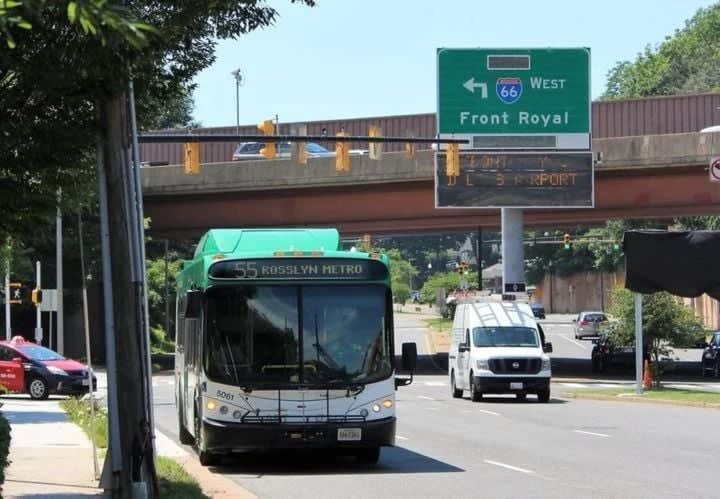
The NVTC is looking for a long-term revenue solution that provides adequate growth to meet current and future operating and capital needs.
Photo: NVTC
2 min to read
The Northern Virginia Transportation Commission (NVTC) approved “Guiding Principles for Future Transit Funding” at their last meeting. The principles set forth NVTC’s policy priorities as two major efforts focused on establishing long-term sustainable funding for public transit move forward this year.
NVTC has a seat at the table for both DMVMoves, a task force created by D.C. Metro and the Metropolitan Washington Council of Governments, as well as the Virginia General Assembly’s SJ28 Northern Virginia Growing Needs of Public Transit Joint Subcommittee.
"The Metro system, and all of the region's public transit agencies, are vital to the economic development and environmental sustainability of Northern Virginia and the Greater Washington region," said NVTC Chair David F. Snyder. "It's also an important transportation link that enables members of the public to conveniently and affordably go about their daily lives and supports our democracy by enabling citizens to easily reach and engage with their national government. That's why we need to ensure that Metro, VRE, and our local bus systems receive the ongoing funding that they will need to remain viable far into the future."
NVTC represents the cities of Alexandria, Falls Church, and Fairfax, and the Counties of Arlington, Fairfax, and Loudoun, These principles provide a consensus position on priorities related to addressing future regional transit funding needs.
Goals for Funding
For all public transit agencies in Northern Virginia, NVTC seeks a long-term, sustainable, dedicated funding solution that:
Provides adequate growth in revenues to meet current and future operating and capital needs for Metro, Virginia Railway Express (VRE) and local transit operators in Northern Virginia.
Preserves existing local, regional and statewide revenue sources that support public transit operating and capital expenses.
Aims to reduce pressure on property taxes as a funding source for transit.
Continues to reflect a diverse range of revenue sources to reduce the economic risk associated with overreliance on a single revenue source.
Directly distributes revenues to NVTC for allocation to local bus systems, VRE, and to those jurisdictions funding Metro, matching or similar to NVTC’s financial management model.
The “Guiding Principles for Future Transit Funding” also include specific priorities for funding Metro, recognizing that each of NVTC’s member jurisdictions and the Commonwealth of Virginia pay to operate and maintain the Metro system.
More Management

METRO Opens Submissions for 2026 Motorcoach Awards
Nominations are now being accepted for METRO Magazine’s Operator of the Year and Innovative Operator of the Year awards.
Read More →
New York MTA Advances Final Contract for Second Avenue Subway Expansion
Contract Four is the largest in the Second Avenue Subway Phase 2 project and includes construction of station infrastructure, tracks, and signals for the subway expansion, MTA officials said. Work on Contract Four will begin in 2027.
Read More →
Transit Agencies Highlight Safety Gains at National Summit
Leaders from 15 major transit systems shared crime-reduction results and safety initiatives while discussing the role of continued federal support.
Read More →

NITA Names New Leadership, Expands Reduced-Fare Program at First Board Meeting
The new regional transit authority appointed its first board chair and interim executive director while extending reduced fares across CTA, Metra, and Pace for eligible riders.
Read More →
Beyond the Checklist: A Structured Approach to Transit Maintenance
Reliability-Centered Maintenance helps transit agencies move beyond routine checklists to focus limited resources on the assets and failures that have the greatest impact on safety, reliability, and service.
Read More →
APTA 2026 Nominating Committee Selects Leadership Slate, Names Chair and Vice Chair Nominees
Leadership changes will help shape the association’s priorities and its representation of the transportation industry during the 2026–2027 term.
Read More →
DART Launches Major Security, Fare Enforcement Initiative
The 90-day demonstration will deploy coordinated security teams at five light rail stations while testing controlled access and gathering data to guide future investments.
Read More →
Sponsored•September 9, 2026
Advancing Fare Collection Through Technology and Innovation
Learn about delivering 1300 gates at 91 stations while managing fare evasion. Explore the large scale deployment, solution customization and real-world results that affect the region. Prepare for deployment in your region now.
Read More →
Game Day in Motion: Moving Millions During the 2026 World Cup
Between packed transit stations and team motorcoaches, see how agencies and operators across North America tackled the transportation demands of the 2026 FIFA World Cup.
Read More →
Surface Transportation Extension Averts Shutdown, Leaves Transit Funding Gap
The stopgap keeps federal transportation programs moving, but missing advance funding could complicate the transit and rail projects agencies are planning next.
Read More →