



NTSB calls on Amtrak to record and review crewmember actions
Also reiterates recommendations on audio/image recorders, as well as asked Amtrak to report twice a year on its progress in the installation of the recorders.

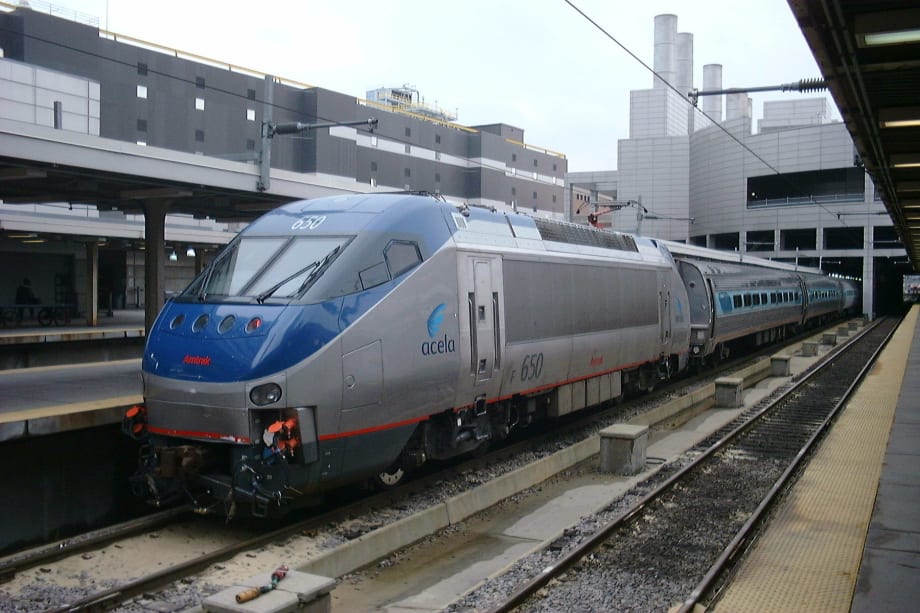
In a letter to Amtrak, the National Transportation Safety Board (NTSB) said that it should install crash- and fire-protected inward- and outward-facing audio and image recorders in the operating cabs of all of its trains and review the recordings to ensure that crew actions are in accordance with procedures.
Additionally, the NTSB asked Amtrak to report twice a year on its progress in the installation of the recorders.
“The information that recorders can provide to ensure that crews are consistently operating trains safely is just too valuable to ignore,” said NTSB Chairman Christopher A. Hart. “And, recordings can provide critical information in understanding crew actions prior to accidents, which can help prevent tragedies like the recent derailment in Philadelphia.”
The NTSB first made recommendations on audio recorders in operating cabs to the Federal Railroad Administration (FRA) following a 1996 train collision in Silver Spring, Maryland. The NTSB then called for image recorders after a 2005 accident in Mississippi.
Then, after a commuter train collided with a freight train in Chatsworth, Calif., in 2008, killing 25 people, the NTSB enhanced the recommendations to include “crash- and fire-protected inward- and outward- facing audio and image recorders capable of providing recordings (for at least 12 hours) to verify that crewmembers actions are in accordance with rules and procedures that are essential to safety as well as train operating conditions.”
Also, in a letter to the FRA, the NTSB reiterated those recommendations. In that letter, the NTSB cited 12 rail accidents in which it had recommended the use of audio and/or image recorders in operating cabs after finding that, in almost all cases, such information could have significantly aided the investigations of those events.
The FRA letter also referenced two recent train accident investigations that were aided by inward-facing audio and image recorders. In a 2013 accident in Walnut Creek, Calif., involving a Bay Area Rapid Transit train that struck roadway workers, the video/audio recorder helped verify the accident sequence. And in an ongoing investigation of a commuter train that struck a truck earlier this year in Oxnard, Calif., the information from the recorder has been critical in corroborating the engineer’s description of events.
Following the May 12 derailment of train 188 in Philadelphia, Amtrak announced that it would install inward-facing video recorders in the operating cabs in some of its trains. The NTSB has asked Amtrak to install recorders in all of its trains, ensure that they capture audio, are crash- and fire-protected, and are reviewed on a regular basis to ensure crewmembers are operating trains safely.
More Rail

ENC Lands MATA Contract and More in Biz Briefs
In this edition of Biz Briefs, we spotlight the latest developments shaping the future of mobility.
Read More →
Strada360’s Steve Lassey on Turning Transit Data Into Better Decisions
From breaking down data silos to preparing for AI, Strada360 CEO Steve Lassey discusses how transit agencies can use technology to improve operations, customer information, and long-term decision-making.
Read More →
SEPTA Details Accelerate Vision for Transit System
The plan outlines investments in trolley modernization, new Metro and Regional Rail vehicles, accessible stations, and more frequent bus and rail service.
Read More →
FTA Ends Direct Oversight of MBTA Safety Actions
The federal agency closed its remaining special directive to the Massachusetts Department of Public Utilities following a safety review that began in 2022.
Read More →
Amtrak, CN Reach Agreements to Strengthen Passenger Rail Service, Safety
The agreement resolves a more than decade-long proceeding before the Surface Transportation Board concerning the terms and conditions for Amtrak services, such as the City of New Orleans, Illini/Saluki, and Wolverine.
Read More →
New York MTA Advances Final Contract for Second Avenue Subway Expansion
Contract Four is the largest in the Second Avenue Subway Phase 2 project and includes construction of station infrastructure, tracks, and signals for the subway expansion, MTA officials said. Work on Contract Four will begin in 2027.
Read More →
San Diego MTS Breaks Monthly Trolley Ridership Record
Agency officials said July’s ridership indicates MTS’s continued recovery from the pandemic.
Read More →
Report Examines NJ TRANSIT Reliability, Funding Challenges
The Garden State Initiative analysis examines the roles of Amtrak infrastructure, fleet management, and agency operations while recommending a more performance-based approach to improving reliability.
Read More →
Stadler, CapMetro Sign Long-Term Rail Fleet Support Agreement
Beginning in 2027, Stadler will provide on-site technical expertise, spare parts support, training, and obsolescence management to help extend the reliability and longevity of CapMetro’s GTW fleet.
Read More →
Biz Briefs: Alstom Lands Canadian Contract, LYT to Supply California TSP, and More
In METRO's latest installment, we take a look at recent news from Complete Coach Works, Beep, FlixBus, and more partnerships making headlines across the transportation sector.
Read More →