



Ohio's SARTA Approves Revised Budget to Tackle Shortfall
The first resolution revises the 2024 revenue and capital budget from $33 million to $29.9 million and reflects a $994,511 shortfall in sales tax revenue, $76,000 reduction in proceeds from fares, a $2.2 million decrease in anticipated federal funding, and an $800,000 increase in SARTA’s local share of capital budget projects.

SARTA approved a $5.2 million operating and capital budget for January and February 2025. A budget for the remainder of the year is being formulated and will be based on a projected $1 million reduction in sales tax revenue and a $3.7 million decrease in anticipated federal operating assistance in 2025.
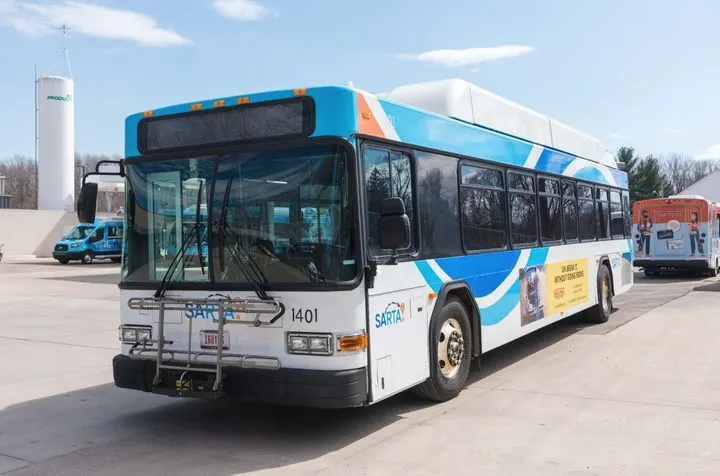
Photo: SARTA
During its regularly scheduled meeting, the members of Canton, Ohio’s Stark Area Regional Transit Authority (SARTA) board approved a number of resolutions that will enable the agency to effectively deal with fiscal challenges caused by significant reductions in projected tax revenue, fares, and federal funding that, left unaddressed, would have resulted in a $4.1 million budget deficit for the year 2024.
The first resolution revises the 2024 revenue and capital budget from $33 million to $29.9 million and reflects a $994,511 shortfall in sales tax revenue, $76,000 reduction in proceeds from fares, a $2.2 million decrease in anticipated federal funding, and an $800,000 increase in SARTA’s local share of capital budget projects.
Additional Board Actions
The SARTA board also:
Approved a $5.2 million operating and capital budget for January and February 2025. A budget for the remainder of the year is being formulated and will be based on a projected $1 million reduction in sales tax revenue and a $3.7 million decrease in anticipated federal operating assistance in 2025.
Signed off on the previously announced suspension of five fixed routes.
Authorized the restructuring of Proline — SARTA’s Americans with Disabilities Act (ADA) compliant service to serve only origins and destinations within .75 miles of a fixed route.
“The steps we took today will enable us to effectively and responsibly address the fiscal challenges we now face and carefully plan for the future,” said SARTA CEO Kirt Conrad.
He also said SARTA will do everything possible in the days, weeks, and months ahead to:
Enhance the quality of life in the community by providing efficient, affordable, and sustainable mobility options for Stark County.
Ensure that residents have access to education, employment, medical care, shopping, libraries, recreational venues, and thousands of destinations across Stark County and beyond.
Operate within the budget and in a fiscally responsible manner.
Offer mobility options that meet the diverse needs of the public.
Maintain the agency's commitment to sustainability and zero-emission technology.
Restructuring of ADA Program
Conrad acknowledged that riders, family members, and agencies SARTA works with and partners with are extremely concerned about the impending restructuring of Proline.
“We understand those concerns and we will work with all interested parties and stakeholders to develop and implement a new service model, but we’ve known for more than four years that continuing to operate Proline as a countywide, on demand, point-to-point, unlimited service is simply not sustainable from a fiscal, logistical, or managerial standpoint,” he said.
“The existing model, which has not been changed significantly in 25 years, gives us no control over the number of trips a rider may take a day or the destination(s), length or purpose of those trips,” Conrad continued. “As a result, we must have vehicles and operators on standby ready to answer calls and provide rides as they are requested. That alone generates 100 hours of overtime per day which places an incredible strain on our budget. SARTA is the only transit system in Ohio that operates countywide complementary ADA paratransit service.”
Conrad added that despite that strain, the agency had planned to continue operating Proline as-is until it was prepared to fully implement new proven ADA and on demand services that would be accepted and embraced by SARTA stakeholders.
“The fiscal challenges we now face disrupted that plan and require us to begin making incremental changes that will substantially reduce Proline’s negative fiscal impact when they take effect in February,” Conrad said.
New Countywide Paratransit Service
The board was provided an outline of the first iteration of the restructured service during the board meeting.
Under this proposal SARTA will provide ADA and Non-ADA trips. Customer Service Representatives will use scheduling software to determine if a trip is ADA or Non-ADA.
“While this situation may be disconcerting to some, we are confident that we are on the road to developing a new innovative service that will enable us to achieve the twin goals of delivering the greatest value for the taxpayer dollars we receive, as well as the outstanding public transit service the residents of Stark County want, need, and deserve,” said Conrad.
The board will be asked to approve the new non-ADA service in early January, with the revised services set to go into effect February 10.
More Management

Castro to Lead RTC of Southern Nevada and More in People Movement
In this edition, we also cover recent appointments and announcements at the STV, MCI, and more, showcasing the individuals helping to shape the future of transportation.
Read More →
STraffic Expands North American Presence with Fare Collection Technology
John Moon, Associate Director, Product Strategy at STraffic, discusses the company's growth in North America, its efforts to reduce fare evasion, and more.
Read More →
Study: Denver RTD Generates $2.1 Billion in Annual Economic Activity
An economic impact study finds the agency supports approximately 17,500 jobs, delivers $1.6 billion in annual community and mobility benefits, and generates $2.42 in economic value for every dollar invested.
Read More →
Mark Aesch Nominated to Lead Federal Transit Administration
The former Rochester transit chief and TransPro founder, who has also contributed to METRO Magazine, brings decades of industry experience and a focus on performance, accountability, and financial sustainability to the nomination.
Read More →
Best and Worst U.S. Cities for Public Transportation in 2026
A new analysis of 50 major U.S. urban areas ranks public transit systems based on accessibility, affordability, usefulness, and safety, highlighting where transit performs best and where challenges remain.
Read More →
Laketran Cuts Fuel Costs, Boosts Efficiency with Propane-Powered Fleet
The Ohio transit agency is using propane-powered vehicles and on-site fueling infrastructure to cut fuel and maintenance costs while meeting growing demand for paratransit services.
Read More →
Canada’s Public Transit Supports $65.6 Billion in Annual GDP
New research from the Canadian Chamber of Commerce examines transit's economic contributions, including job creation and the financial implications of transportation investment.
Read More →
Pierce Transit Moves to Expand Fleet Following Proposition 1 Approval
The agency authorized the purchase or refurbishment of up to 60 buses to support a 47% service expansion, as voters nationwide approved billions in new transit funding.
Read More →
Right-Sizing Rural Transit: Lessons from North Grenville’s On-Demand Model
A small municipality shows how flexible service, rider needs, and public accountability can expand mobility with limited resources.
Read More →
Transit Ballot Victories Signal Strong Voter Support: What Comes Next?
Voters approved billions in public transportation investments in 2026, giving agencies opportunities to preserve service, expand operations, and strengthen regional connections amid a changing political landscape.
Read More →