



Ohio's TARTA, Union Reach Labor Agreement
The union’s membership includes TARTA fixed route, paratransit, and TARTA Flex on demand operators, in addition to mechanics and other personnel.

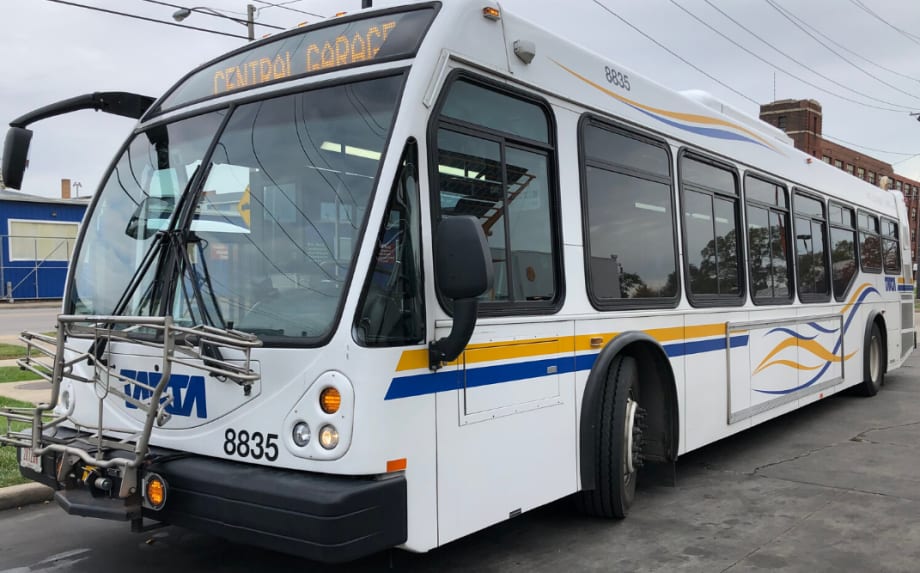
The contract enables TARTA to create an operator apprenticeship program in collaboration with the National and local ATU union.
Photo: TARTA
Amalgamated Transit Union Local 697 and Ohio’s Toledo Area Regional Transit Authority (TARTA) board came to an agreement on a new 2 1/2-year contract.
ATU — which represents more than 200 of TARTA’s employees — approved the contract at a meeting earlier this month, with the contract approved March 20. The union’s membership includes TARTA fixed route, paratransit, and TARTA Flex on demand operators, in addition to mechanics and other personnel.
“The first contact so many customers have with TARTA is with their operator, and we are thrilled to have reached an agreement that benefits TARTA, its employees and its customers,” said TARTA Board President Kendra Smith. “We continue to celebrate the skill, hard work and dedication displayed by these frontline workers as they carry out their essential role in the community.”
TARTA’s Agreement with Union
The agreement keeps pay and benefits for operators and maintenance employees in line with transit industry standards and locally competitive with area jobs of the same nature.
The agreement — which takes effect May 1, and runs through December 31, 2027 — allows a raise of 11.5% over three years. Four percent increases will be effective July 1 of 2025 and 2026, and a 3.5% increase will take effect in July 2027.
The contract enables TARTA to create an operator apprenticeship program in collaboration with the National and local ATU union.
The apprenticeship program utilizes an industry-proven curriculum to ensure operators have the skills needed for a successful career in public transit.
More Contract Details
The move is in addition to the already established M-PACT mentorship program for newer drivers and would be the next step in TARTA’s increased commitment to training and workforce development for its team members.
The agreement also invests in the future of electric vehicle fleet maintenance workforce by increasing wage differentials for obtaining additional professional certifications.
TARTA’s last contract with ATU — which was ratified in 2022 and raised wages 20% over three years — represented the first significant raise in years for many team members.
TARTA CEO Laura Koprowski knows it’s not an accident that employee retention has gone up as wages have.
“Fair wages and benefits support our efforts to attract and retain a talented workforce,” she said. “We have nearly a full complement of drivers for the first time in decades, which is not a coincidence. As more people consider a career in public transportation, I think the word is out that the new TARTA respects and values its people. That is certainly something we aspire to continue.”
More Management

METRO Opens Submissions for 2026 Motorcoach Awards
Nominations are now being accepted for METRO Magazine’s Operator of the Year and Innovative Operator of the Year awards.
Read More →
New York MTA Advances Final Contract for Second Avenue Subway Expansion
Contract Four is the largest in the Second Avenue Subway Phase 2 project and includes construction of station infrastructure, tracks, and signals for the subway expansion, MTA officials said. Work on Contract Four will begin in 2027.
Read More →
Transit Agencies Highlight Safety Gains at National Summit
Leaders from 15 major transit systems shared crime-reduction results and safety initiatives while discussing the role of continued federal support.
Read More →

NITA Names New Leadership, Expands Reduced-Fare Program at First Board Meeting
The new regional transit authority appointed its first board chair and interim executive director while extending reduced fares across CTA, Metra, and Pace for eligible riders.
Read More →
Beyond the Checklist: A Structured Approach to Transit Maintenance
Reliability-Centered Maintenance helps transit agencies move beyond routine checklists to focus limited resources on the assets and failures that have the greatest impact on safety, reliability, and service.
Read More →
APTA 2026 Nominating Committee Selects Leadership Slate, Names Chair and Vice Chair Nominees
Leadership changes will help shape the association’s priorities and its representation of the transportation industry during the 2026–2027 term.
Read More →
DART Launches Major Security, Fare Enforcement Initiative
The 90-day demonstration will deploy coordinated security teams at five light rail stations while testing controlled access and gathering data to guide future investments.
Read More →
Advancing Fare Collection Through Technology and Innovation
Learn about delivering 1300 gates at 91 stations while managing fare evasion. Explore the large scale deployment, solution customization and real-world results that affect the region. Prepare for deployment in your region now.
Read More →
Game Day in Motion: Moving Millions During the 2026 World Cup
Between packed transit stations and team motorcoaches, see how agencies and operators across North America tackled the transportation demands of the 2026 FIFA World Cup.
Read More →
Surface Transportation Extension Averts Shutdown, Leaves Transit Funding Gap
The stopgap keeps federal transportation programs moving, but missing advance funding could complicate the transit and rail projects agencies are planning next.
Read More →