




Keep Reading: SEPTA, PennDOT Adding New Red Bus Lanes
Pennsylvania Governor Directs Nearly $220M in Additional Capital Funding to SEPTA
See how the funding boost fast-tracks the agency’s safety upgrades, restores full Regional Rail, and builds on delivering reliable rides for almost 800,000 commuters.
November 25, 2025
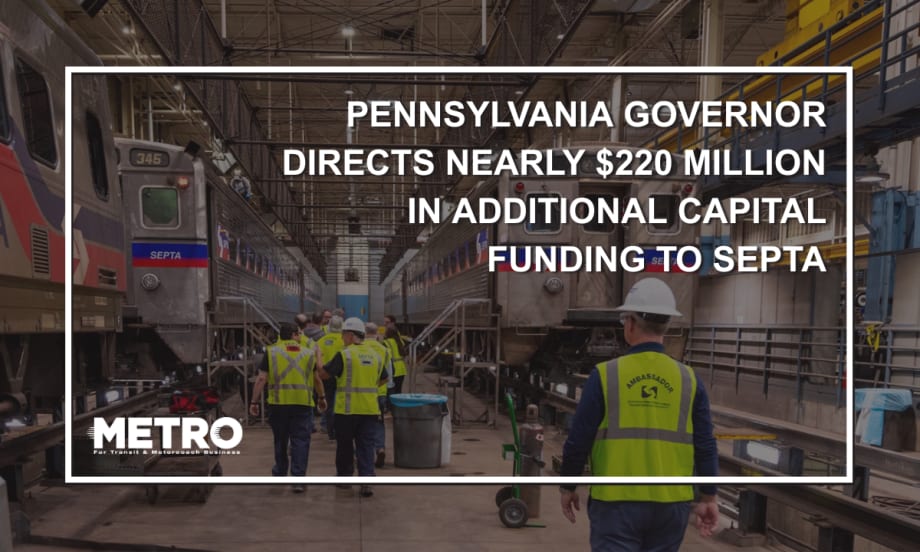
The $219.9 million in additional PennDOT capital funding includes key investments toward Regional Rail fleet upgrades, railcar leasing and procurement, metro fleet upgrades, and more.
Photo: SEPTA/METRO
3 min to read
This week, Pennsylvania Governor Josh Shapiro directed Mike Carroll, the state’s transportation secretary, to allocate $219.9 million in additional capital funding to the Southeastern Pennsylvania Transportation Authority (SEPTA) to support urgent safety upgrades and infrastructure improvements.
Following recent orders from the Federal Railroad Administration (FRA) and the Federal Transit Administration (FTA), this action will ensure SEPTA can comply with federal orders, accelerate needed repairs, and “maintain safe, reliable service for the nearly 800,000 Pennsylvanians.”
Shapiro made the announcement at SEPTA’s Frazer Shop & Yard in Chester County.
“Mass transit is absolutely critical to our Commonwealth’s economy, our communities, and the everyday lives of Pennsylvanians,” Shapiro said. “I will keep fighting for additional recurring funding for mass transit in Harrisburg so that we can invest in mass transit systems, including SEPTA, all across the Commonwealth.”
According to a release, the governor’s action comes after Senate Republicans refused to support long-term, recurring funding for mass transit in the 2025–26 budget, resulting in a lack of capital resources necessary for SEPTA to make urgent safety improvements in line with federal directives.
Federal Safety Oversight and PennDOT Response
This fall, SEPTA was subject to a series of emergency federal directives following safety incidents involving Silverliner IV Regional Rail trains and the trolley network’s overhead catenary system, including those from the FRA, which required inspections and upgrades to all 223 Silverliner IV railcars, and the FTA, which issued an emergency action letter directing inspections of SEPTA’s entire trolley catenary network.
SEPTA completed all required inspections ahead of federal deadlines, returning 98 railcars to service. At the current pace, approximately 180 railcars are expected to be operational by mid-to-late December — enough to restore full weekday Regional Rail service.
While the FRA oversees Regional Rail safety, PennDOT’s State Safety Oversight Agency (SSOA) enforces safety standards for SEPTA’s metro and trolley systems. Under Shapiro, SSOA now reports directly to PennDOT’s Deputy Secretary for Multimodal Transportation, and dedicated managers have been hired, including one focused on SEPTA, with three safety and inspection positions currently being hired.
“PennDOT is using every tool available to support transit systems across the Commonwealth,” said Secretary Carroll. “These resources will help SEPTA complete essential repairs, modernize aging infrastructure, and keep riders safe. But this is a temporary fix — we need sustained, predictable mass transit funding.”
Funding Targets Fleet, Power, and Rail Reliability
The $219.9 million in additional PennDOT capital funding includes key investments toward Regional Rail fleet upgrades, railcar leasing and procurement, metro fleet upgrades, utility fleet and power infrastructure upgrades, and critical infrastructure.
“These funds are going to make a significant difference in our efforts to overcome this current crisis — and to prevent problems moving forward,” said Scott Sauer, general manager, SEPTA. “These funds are going to make a significant difference in our efforts to overcome this current crisis — and to prevent problems moving forward. With these new capital dollars, we can advance initiatives that will improve service across the system. This money will be directed to projects that can begin quickly and will enhance safety and reliability for our riders.”
“[Governor Shapira has] been fighting for us since we first sounded the alarm about our funding crisis three years ago,” said Marian Moskowitz, Chester County commissioner and vice chair of SEPTA’s Board. “These new capital funds are a lifeline that will help us maintain our fleet and infrastructure and plan for our future.”
According to the release, Pennsylvania is preparing to host millions of visitors in 2026 for the America 250 celebrations, NCAA March Madness, FIFA World Cup, and MLB All-Star Game.
“This investment allows SEPTA to restore Regional Rail service by the end of the year,” Representative Ed Neilson said. “This is not about rural vs. urban areas because mass transit impacts all 67 counties in Pennsylvania.”
More Management

METRO Opens Submissions for 2026 Motorcoach Awards
Nominations are now being accepted for METRO Magazine’s Operator of the Year and Innovative Operator of the Year awards.
Read More →
New York MTA Advances Final Contract for Second Avenue Subway Expansion
Contract Four is the largest in the Second Avenue Subway Phase 2 project and includes construction of station infrastructure, tracks, and signals for the subway expansion, MTA officials said. Work on Contract Four will begin in 2027.
Read More →
Transit Agencies Highlight Safety Gains at National Summit
Leaders from 15 major transit systems shared crime-reduction results and safety initiatives while discussing the role of continued federal support.
Read More →

NITA Names New Leadership, Expands Reduced-Fare Program at First Board Meeting
The new regional transit authority appointed its first board chair and interim executive director while extending reduced fares across CTA, Metra, and Pace for eligible riders.
Read More →
Beyond the Checklist: A Structured Approach to Transit Maintenance
Reliability-Centered Maintenance helps transit agencies move beyond routine checklists to focus limited resources on the assets and failures that have the greatest impact on safety, reliability, and service.
Read More →
APTA 2026 Nominating Committee Selects Leadership Slate, Names Chair and Vice Chair Nominees
Leadership changes will help shape the association’s priorities and its representation of the transportation industry during the 2026–2027 term.
Read More →
DART Launches Major Security, Fare Enforcement Initiative
The 90-day demonstration will deploy coordinated security teams at five light rail stations while testing controlled access and gathering data to guide future investments.
Read More →
Sponsored•September 9, 2026
Advancing Fare Collection Through Technology and Innovation
Learn about delivering 1300 gates at 91 stations while managing fare evasion. Explore the large scale deployment, solution customization and real-world results that affect the region. Prepare for deployment in your region now.
Read More →
Game Day in Motion: Moving Millions During the 2026 World Cup
Between packed transit stations and team motorcoaches, see how agencies and operators across North America tackled the transportation demands of the 2026 FIFA World Cup.
Read More →
Surface Transportation Extension Averts Shutdown, Leaves Transit Funding Gap
The stopgap keeps federal transportation programs moving, but missing advance funding could complicate the transit and rail projects agencies are planning next.
Read More →