



SEPTA, PennDOT Adding New Red Bus Lanes
The bus priority lanes will be implemented in conjunction with scheduled PennDOT repaving through a partnership between the City, SEPTA, and PennDOT.

The initiative aims to improve safety and reduce congestion by using camera-mounted computer vision technology to enforce violations for blocking bus lanes, bus stops, and trolley zones.
Photo: PennDOT/SEPTA
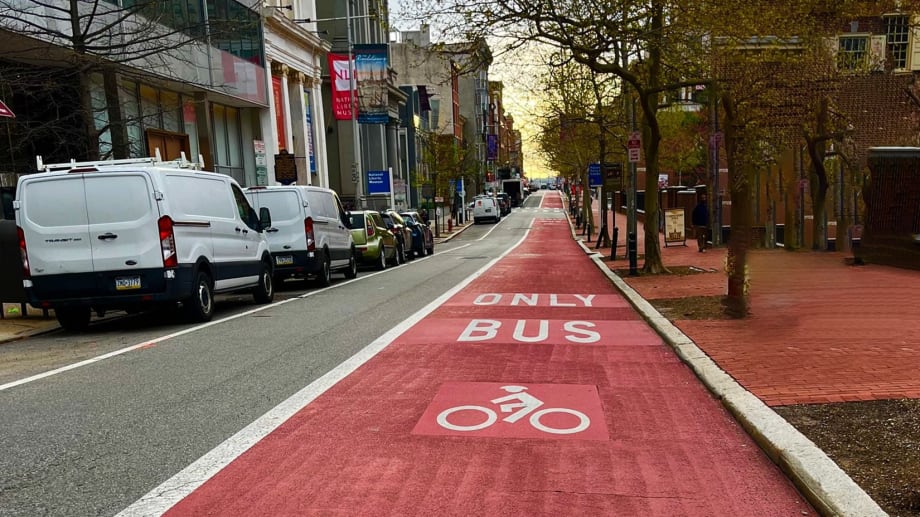
The City of Philadelphia, the Pennsylvania Department of Transportation (PennDOT), and SEPTA announced that red-painted bus-only lanes will be installed on three critical transit corridors in Center City and South Philadelphia.
Philadelphia’s New Red Lanes
The bus priority lanes will be implemented in conjunction with scheduled PennDOT repaving through a partnership between the City, SEPTA, and PennDOT.
All three corridors were identified in the 2021 Philadelphia Transit Plan as “Tier 1” priority corridors for improvements to bus service. Corridors were identified and prioritized based on ridership, bus speeds, service hours, geographic and economic equity, and connections, among other factors.
“SEPTA is proud to partner with the City of Philadelphia and PennDOT to expand our region’s bus lane network,” said SEPTA GM Scott A. Sauer. “These bus lanes immediately improve the customer experience by enhancing bus reliability and trip times while increasing traffic safety for SEPTA’s riders and operators.”
Red-painted bus-only lanes will be implemented on:
Chestnut Street between Broad Street and 21st Street.
Walnut Street between Broad Street and 19th Street.
Oregon Avenue between 5th Street and Front Street.
Philadelphia has seen success in implementing red-painted bus lanes on Chestnut Street, from Broad Street to 2nd Street, and more recently, on Market Street, from 20th Street to 15th Street, as well as on Erie Avenue, from Germantown Avenue to Old York Road.
“These red bus lanes will improve the daily commute for thousands of city residents while increasing the efficiency of SEPTA’s service,” said Chris Puchalsky, director, policy and strategic initiatives, at the City of Philadelphia’s Office of Transportation and Infrastructure Systems.
The Effectiveness of Red Lanes
A study of the red bus lane on the eastern portion of Chestnut Street revealed improvements to bus service, reductions in the improper use of the bus-only lane and illegal double parking, and no slowdowns for drivers.
Buses on this section of Chestnut Street experienced a 12% reduction in travel times, while buses elsewhere in Center City during the same time period saw a 4% increase in travel times.
In addition to these successes, the City and SEPTA anticipate further positive impacts on bus service and reductions in misuse of the bus-only lanes following the recent implementation of the Automated Bus Camera Enforcement Initiative, a partnership between the Philadelphia Parking Authority (PPA) and SEPTA.
The initiative aims to improve safety and reduce congestion by using camera-mounted computer vision technology to enforce violations for blocking bus lanes, bus stops, and trolley zones. It is currently in effect in Center City, as well as on Market, Chestnut, and Walnut streets between the Schuylkill River and 63rd Street.
The streets have been milled. Red paint for the bus lane will then be installed after resurfacing, according to officials.
More Security and Safety

Transit Agencies Highlight Safety Gains at National Summit
Leaders from 15 major transit systems shared crime-reduction results and safety initiatives while discussing the role of continued federal support.
Read More →
DART Launches Major Security, Fare Enforcement Initiative
The 90-day demonstration will deploy coordinated security teams at five light rail stations while testing controlled access and gathering data to guide future investments.
Read More →
RTD Launches NextRide App to Consolidate Trip Planning, Fares, Security Reporting
The app expands on RTD’s existing NextRide web application and allows customers to view real-time vehicle locations and service alerts, purchase and store digital fares, and access customer support.
Read More →

TAPTCO Updates OSHA Compliance Training for Transit Maintenance Operations
The revamped program addresses 26 OSHA standards for maintenance facilities, with TAPTCO pointing to training, documentation, and everyday shop hazards as continuing challenges for transit operations.
Read More →
How VaporVision Adds Value to Transit Door Systems
Wabtec engineers explain how the system improves doorway detection, strengthens diagnostics and gives transit agencies and OEMs greater operating flexibility.
Read More →
FRA Announces $5.3B in Rail Investments, Including $2B for Amtrak
Funding will support grade-crossing improvements, infrastructure upgrades, and new Amtrak equipment in 23 states.
Read More →
Chicago, Maryland Expand Non-Law-Enforcement Safety, Rider Support
The CTA and MTA are launching new programs aimed at de-escalation, crisis response, rider assistance, and greater transparency.
Read More →
LA Metro, City of West Hollywood, and Partners Advance Smarter Bus Lane Enforcement
The award-winning partnership combines AI-powered detection with human oversight to improve bus reliability, accessibility, and enforcement efficiency.
Read More →
LA Metro Reports 57% Decline in Homelessness on Transit System Since 2024
The agency's latest homelessness count offers new data on how care-based services and cross-sector partnerships can complement traditional transit security strategies.
Read More →
FTA Launches 'Transit Moves America' Dashboard to Highlight Agency Safety and Performance
The online dashboard transforms National Transit Database information into a public-facing resource that allows users to compare transit agencies on key operational and safety metrics.
Read More →