



Philadelphia's SEPTA Sets Deadline to Avert Cuts
The agency has also released schedules reflecting the service cuts and is urging customers to review all of their travel options.

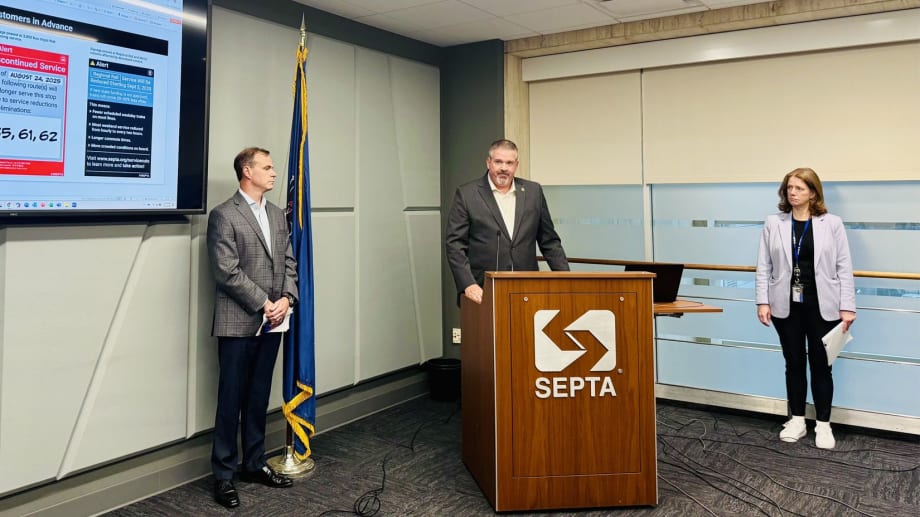
The August 24 service cuts would be the first of several steps SEPTA will take this year to fill a $213 million budget deficit, absent a legislative solution, said SEPTA GM Scott Sauer.
Photo: SEPTA

Overall, there would be a 20% cut to all SEPTA services, including the elimination of 32 bus routes and significant reductions in trips on rail modes, and an end to all exceptional service, including the Sports Express.
Photo: SEPTA
Philadelphia’s SEPTA must secure new state transit funding by August 14 to avoid a 20% service cut, officials warned. Without it, preparations for reduced schedules, including staffing and materials, will begin ahead of an August 24 rollout, agency officials said in a press release.
SEPTA has released schedules reflecting the service cuts and is urging customers to review all of their travel options. Overall, there would be a 20% cut to all services, including the elimination of 32 bus routes and significant reductions in trips on rail modes, and an end to all exceptional service, including the Sports Express.
Deadline Set and Necessary
The implementation deadline must be set for SEPTA to have time to complete a series of critical pre-schedule change tasks, the agency said. This includes finalizing work schedules for thousands of frontline workers and other staff, and ensuring equipment is in place and ready for service.
The agency said time is also needed to prepare data feeds for the SEPTA App, external feeds, digital signage, platform announcements, and bus and train marquees to ensure service information is accurate. These processes typically take a minimum of three weeks to complete for routine schedule changes. Still, they will be compressed to less than 10 days to ensure all facets of SEPTA’s operation are ready for new schedules on August 24.
“Our planning and operations staff have worked hard to compress the timeline for pre-schedule change work, but we cannot push it beyond Aug. 14,” said SEPTA GM Scott A. Sauer. “If funding is not secured by then, these painful service cuts will go into effect on Aug. 24.”
First of Projected Cuts
The August 24 service cuts would be the first of several steps SEPTA will take this year to fill a $213 million budget deficit, absent a legislative solution, said agency officials.
Additional measures will quickly follow, including a 21.5% fare increase on September 1 and a complete hiring freeze later in that month.
A second wave of service cuts on January 1 will include the elimination of five Regional Rail Lines, a 9 p.m. curfew on all rail services, and the elimination of 18 additional bus routes to achieve an overall 45% reduction in service. Those are the steps needed to balance this year’s budget without new funding. Further cuts would follow in subsequent years.
“At that point, we will be left with no other choice but to begin dismantling the SEPTA system,” Sauer said. “Tens of thousands of people or more will be left with no viable public transportation options.”
Preparing for Decreased Service
SEPTA has worked to create two sets of schedules for all service modes — one set of schedules based on current service levels and another set reflecting the 20% cuts.
The Authority has also put up signs at the 3,000 bus stops across the system that will be eliminated as of August 24, and has met with officials at the School District of Philadelphia, where tens of thousands of students need to find other ways to get to school, which begins the next day on August 25.
“We remain optimistic that a funding agreement can be reached by August 14,” Sauer said. “We will continue working with lawmakers in any way we can to help get this over the finish line.”
More Management

METRO Opens Submissions for 2026 Motorcoach Awards
Nominations are now being accepted for METRO Magazine’s Operator of the Year and Innovative Operator of the Year awards.
Read More →
New York MTA Advances Final Contract for Second Avenue Subway Expansion
Contract Four is the largest in the Second Avenue Subway Phase 2 project and includes construction of station infrastructure, tracks, and signals for the subway expansion, MTA officials said. Work on Contract Four will begin in 2027.
Read More →
Transit Agencies Highlight Safety Gains at National Summit
Leaders from 15 major transit systems shared crime-reduction results and safety initiatives while discussing the role of continued federal support.
Read More →

NITA Names New Leadership, Expands Reduced-Fare Program at First Board Meeting
The new regional transit authority appointed its first board chair and interim executive director while extending reduced fares across CTA, Metra, and Pace for eligible riders.
Read More →
Beyond the Checklist: A Structured Approach to Transit Maintenance
Reliability-Centered Maintenance helps transit agencies move beyond routine checklists to focus limited resources on the assets and failures that have the greatest impact on safety, reliability, and service.
Read More →
APTA 2026 Nominating Committee Selects Leadership Slate, Names Chair and Vice Chair Nominees
Leadership changes will help shape the association’s priorities and its representation of the transportation industry during the 2026–2027 term.
Read More →
DART Launches Major Security, Fare Enforcement Initiative
The 90-day demonstration will deploy coordinated security teams at five light rail stations while testing controlled access and gathering data to guide future investments.
Read More →
Advancing Fare Collection Through Technology and Innovation
Learn about delivering 1300 gates at 91 stations while managing fare evasion. Explore the large scale deployment, solution customization and real-world results that affect the region. Prepare for deployment in your region now.
Read More →
Game Day in Motion: Moving Millions During the 2026 World Cup
Between packed transit stations and team motorcoaches, see how agencies and operators across North America tackled the transportation demands of the 2026 FIFA World Cup.
Read More →
Surface Transportation Extension Averts Shutdown, Leaves Transit Funding Gap
The stopgap keeps federal transportation programs moving, but missing advance funding could complicate the transit and rail projects agencies are planning next.
Read More →