



Port Authority Breaks Ground on $2 Billion AirTrain Newark Project
The new $3.5 billion system will replace the existing AirTrain, which opened in 1996 and has become outdated, over capacity, and unable to accommodate Newark Liberty’s rapid growth.

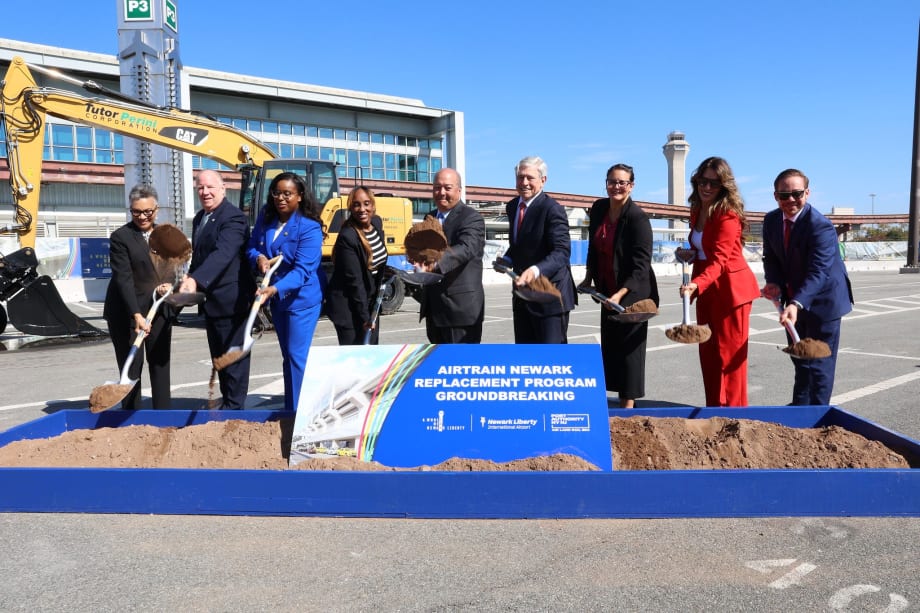
According to officials, the new AirTrain system will enable expanded passenger capacity, increased reliability, and flexible connectivity in conjunction with the airport’s redevelopment plan. It is expected to begin operation in 2030.
Photo: PANYNJ
The Port Authority of New York and New Jersey (PANYNJ) broke ground on a new AirTrain Newark system at Newark Liberty International Airport, marking the start of construction on a modern, reliable 2.5-mile automated people mover.
The new $3.5 billion system will replace the existing AirTrain, which opened in 1996 and has become outdated, over capacity, and unable to accommodate Newark Liberty’s rapid growth.
Newark’s Incoming AirTrain
The new AirTrain system is a significant piece of the ongoing redevelopment of Newark Liberty International Airport. The redevelopment plan outlines a comprehensive reimagining of the airport, featuring modern terminals and infrastructure, a more intuitive roadway network, and a redesigned taxiway system to accommodate aircraft more efficiently and reduce delays.
According to officials, the new AirTrain system will enable expanded passenger capacity, increased reliability, and flexible connectivity in conjunction with the airport’s redevelopment plan. It is expected to begin operation in 2030.
“The new AirTrain Newark is essential to Newark Liberty’s future,” said Port Authority Executive Director Rick Cotton. “It will improve access to the airport, support its continued growth, and knit together the airport’s terminals, rail links, and parking into a modern, unified system. Together with the new award-winning Terminal A and future redevelopment projects, the AirTrain will help deliver the 21st-century travel experience that our region deserves.”
Replacing the Outdated System
The existing AirTrain is reaching the end of its useful life, requires extensive maintenance and repair, and cannot adequately meet upcoming demand. AirTrain ridership is projected to increase by 50% by 2040, surpassing the capacity of the existing system.
The current system cannot be expanded or upgraded to newer technology, and its limitations will hinder future airport growth, whereas the new system is designed to be expandable. When the current system opened, the airport served approximately 30 million passengers each year. In 2024, Newark Liberty welcomed nearly 50 million passengers.
The new $3.5 billion AirTrain system will be better positioned to meet the needs of the redeveloped and modernized airport. The system will offer greater reliability and capacity, with the ability to handle 50,000 passengers per day, up from the current system’s 33,000-passenger capacity. Its route will allow for easier access to the new Terminal A, eliminating the current 15-minute walk between the AirTrain station and the terminal.
The route was designed with future airport growth in mind. Planning is underway for a new Terminal B to replace the current 52-year-old terminal. The current system will remain largely operational until the new system is introduced, with some intermittent outages expected over the next 28 months, excluding peak summer and holiday travel periods.
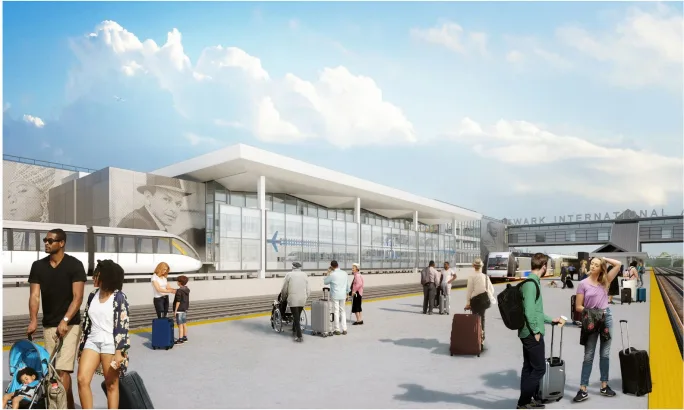
As the Port Authority continues to redevelop the entire airport, passengers will be able to connect to the current terminal using a variety of options, including pedestrian walkways and efficient bus services.
Photo: Rendering via Tutor Perini/O&G
The Future and the Present
The Port Authority will provide connections to the current Terminal B. As the Port Authority continues to redevelop the entire airport, passengers will be able to connect to the current terminal using a variety of options, including pedestrian walkways and efficient bus services.
The agency will also test the use of autonomous shuttles as a new and convenient form of transportation that leverages 21st-century technology to provide a comfortable experience.
The Port Authority plans to pilot the technology through three companies in 2026, building on several successful autonomous vehicle pilots conducted at Newark Liberty and John F. Kennedy International airports over the past three years. Conventional electric shuttle buses will also remain an option. The new world-class Terminal B will be directly adjacent to the AirTrain station.
The Port Authority is delivering the new AirTrain Newark system through a multi-phase procurement process:
In December 2023, the Port Authority selected Doppelmayr, a market leader in cable-propelled transport systems, for the design, construction, operation, and maintenance of the automated people mover system and its vehicles.
In summer 2024, engineering firm Stantec was selected to design the new 70,000-square-foot maintenance and control facility (MCF) and the pedestrian connectors, as well as to decommission the existing AirTrain.
In November 2024, the Port Authority selected the joint-venture firm of Tutor Perini/O&G to design and build a new 2.5-mile elevated rail structure, known as the guideway, and three new stations.
Reimagined Airport Accessibility
The new AirTrain is a key component of the agency’s EWR Vision Plan. This comprehensive blueprint sets the course for Newark Liberty International Airport’s continued development over the coming decades. Much of its current infrastructure dates back to the 1970s, when terminals B and C, as well as the original Terminal A, were built.
Today, the airport’s legacy infrastructure struggles to meet the needs of modern air travel. The EWR Vision Plan envisions a new Terminal B, along with streamlining the airport’s outdated roadway network and redesigning the airport’s delay-prone taxiway system to maximize efficiency.
Construction is also underway on a new entry point to the airport’s rail station, served by NJ TRANSIT, Amtrak, and both the current and future AirTrain system, which will dramatically expand transit and airport access for historically underserved areas of Newark and Elizabeth.
More Rail
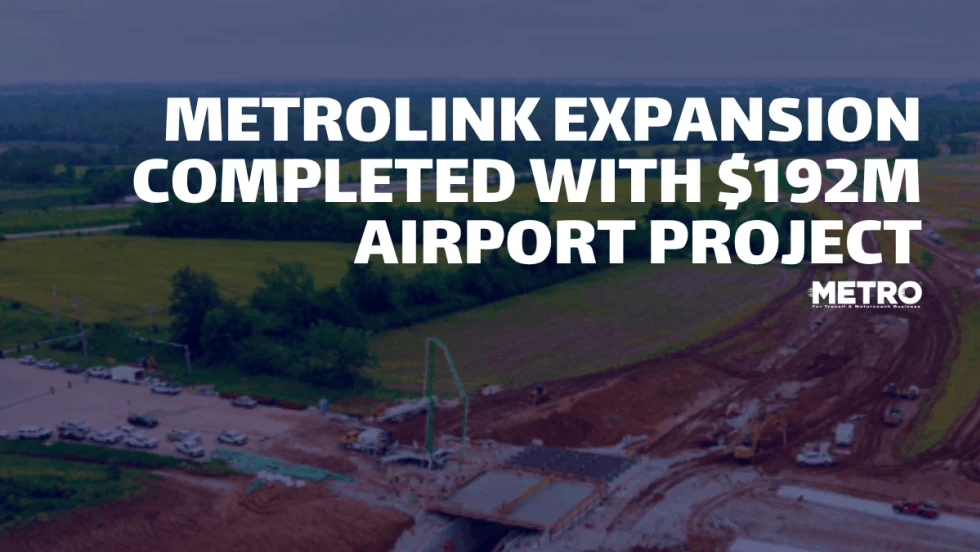
First Full MetroLink Rail Expansion Completed in 20 Years with $192M Airport Project
The project links two St. Louis-area airports by light rail while adding roadway and bike trail connections to improve regional access and mobility.
Read More →
Utilimarc Launches SmartReplace to Optimize Fleet Replacement Decisions
AI-powered SmartReplace helps fleets prioritize vehicle replacements, model budget scenarios, and build more defensible long-term strategies.
Read More →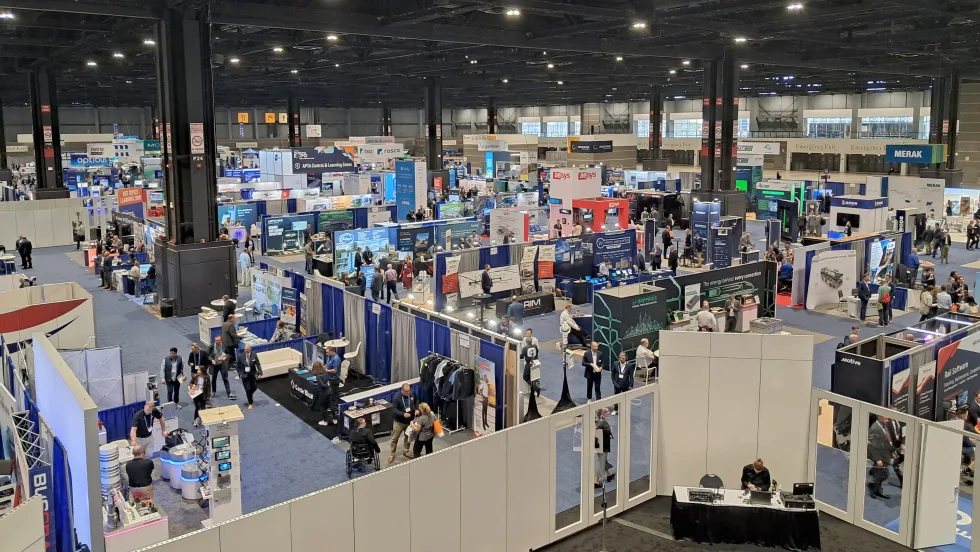
Scenes from APTA TRANSform & EXPO 2026
Transit leaders, manufacturers, and industry professionals gathered in Chicago to explore new technologies, share ideas, and discuss the future of public transportation.
Read More →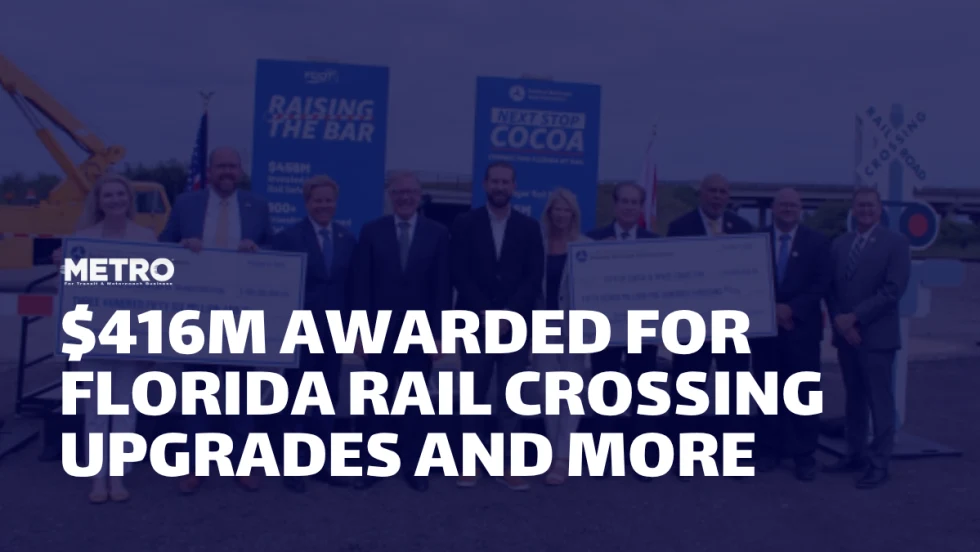
USDOT Awards $416 Million for Florida Rail Crossing Safety Upgrades, New Brightline Station
The projects aim to reduce risks for motorists and pedestrians at rail crossings while expanding passenger rail access along Florida’s Space Coast.
Read More →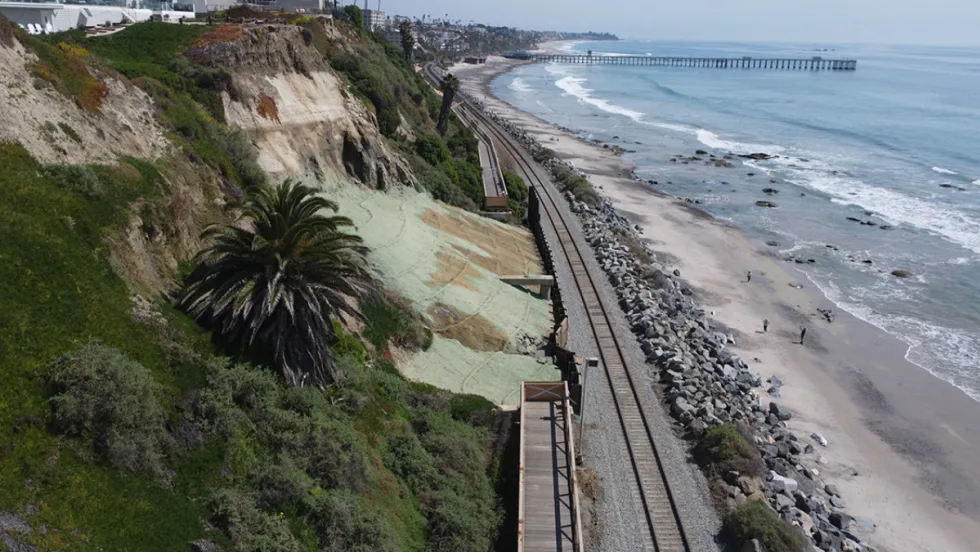
OCTA Declares Emergency to Protect Rail Corridor From Coastal Erosion
The California agency is accelerating shoreline protection and plans to place approximately 690,000 cubic yards of sand along the San Clemente coast to protect a key passenger and freight rail link.
Read More →
More Than a Summer Job: Building the Next Generation of Transit Talent
The Delaware River Port Authority and PATCO have transformed their internship program into a hands-on professional development experience that introduces students to the breadth of transportation careers — and creates a pipeline for future employees.
Read More →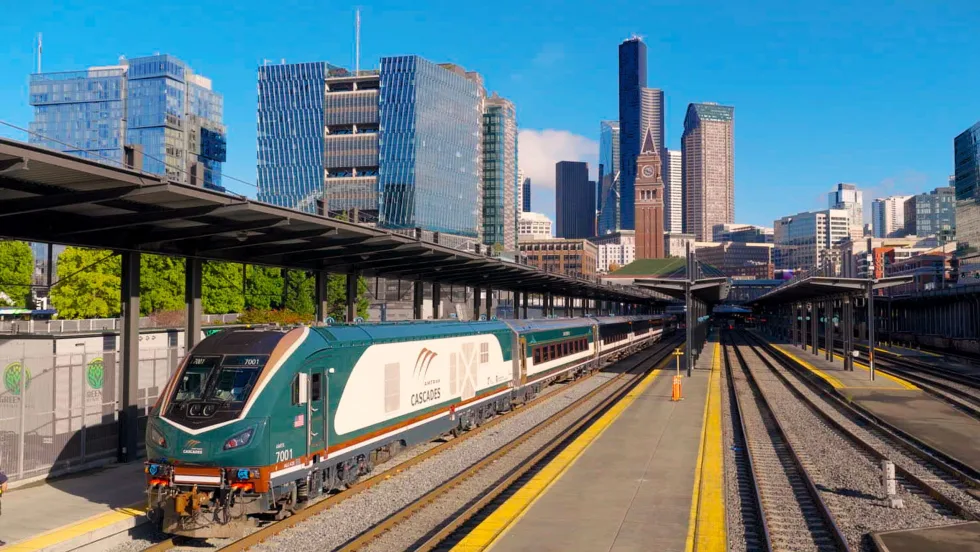
Airo Trains Make Their Amtrak Cascades Debut in the Pacific Northwest
Effective immediately, two cutting-edge Airo trainsets will join the Amtrak Cascades route, operating four daily trips between Vancouver, B.C., Seattle, Portland, and Eugene, Oregon, marking the first introduction of Airo trains into passenger service anywhere in the country.
Read More →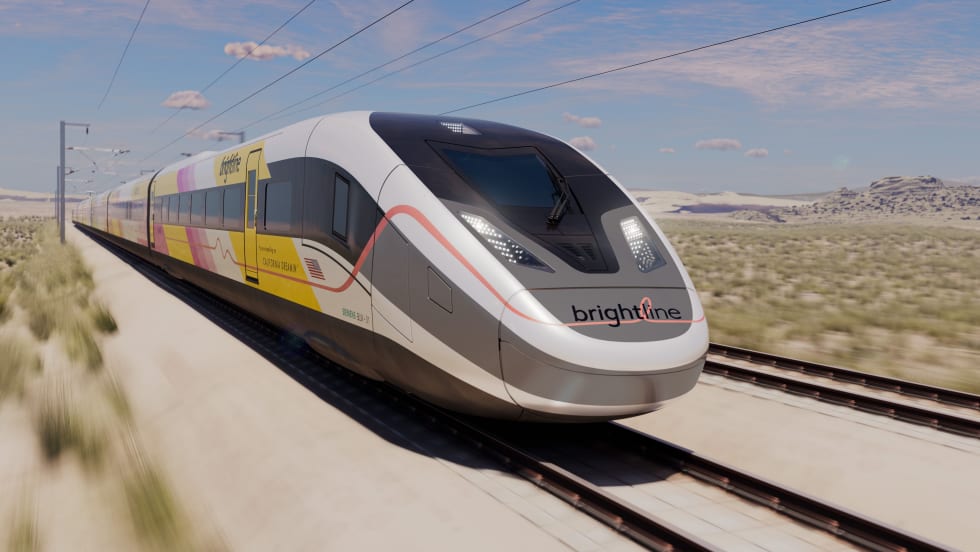
Florida's Brightline Announces Financial Restructuring
Brightline Florida says train operations will continue as normal as certain parent entities enter Chapter 11 and financial stakeholders provide $490 million in new long-term capital.
Read More →
ENC Lands MATA Contract and More in Biz Briefs
In this edition of Biz Briefs, we spotlight the latest developments shaping the future of mobility.
Read More →
Strada360’s Steve Lassey on Turning Transit Data Into Better Decisions
From breaking down data silos to preparing for AI, Strada360 CEO Steve Lassey discusses how transit agencies can use technology to improve operations, customer information, and long-term decision-making.
Read More →