




RELATED: Montreal real-time bus tracking enters final testing phase
Project team wins award for N.Y. bus time displays
The countdown clocks were developed in part to address concerns about the overall accessibility of MTA’s Bus Time system, which sends wait-time information to riders via text message, a QR code scan, or over a web site.
June 30, 2015
2 min to read
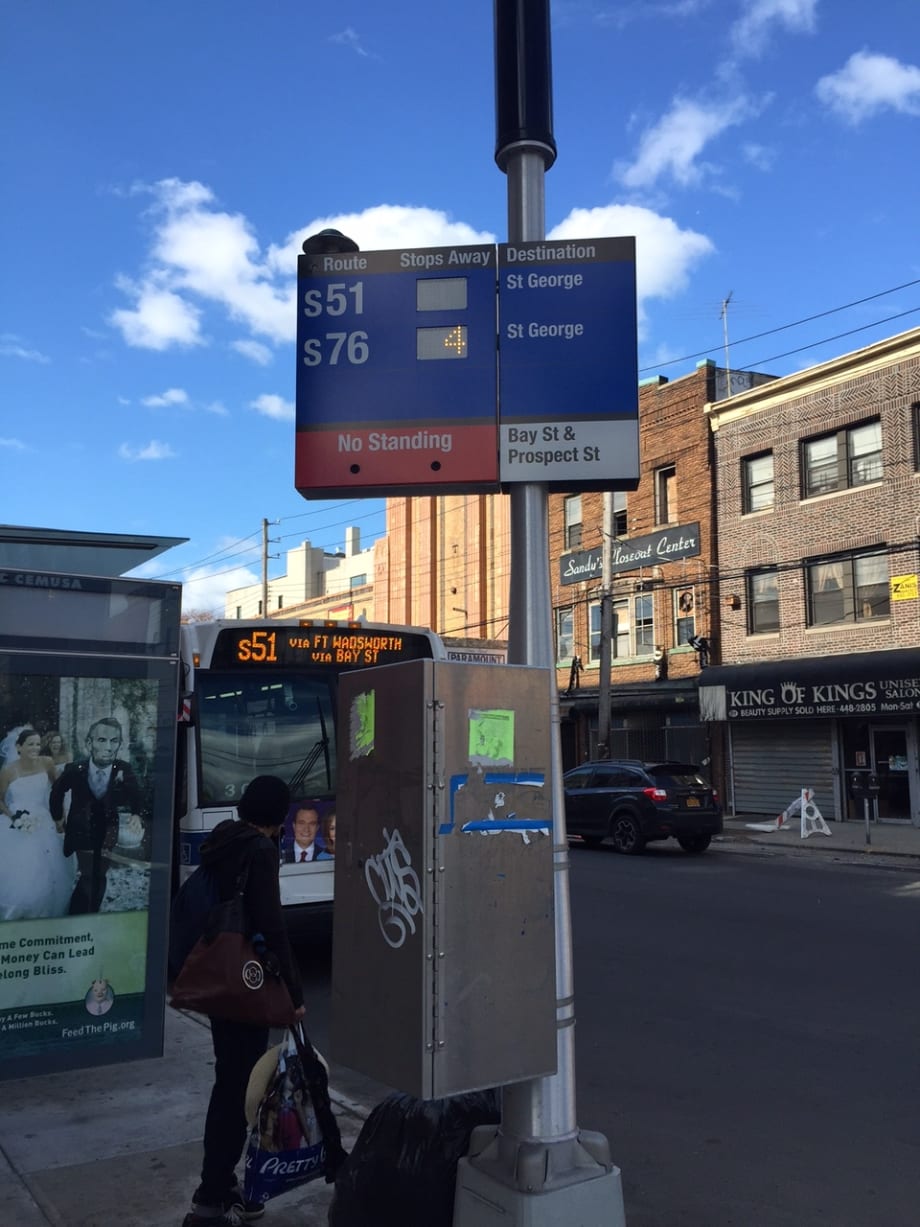
Innovative real-time passenger information signs that are currently being deployed throughout the Metropolitan Transportation Authority (MTA) New York City Transit bus system, recently received a 2015 Project of the Year Award from the Intelligent Transportation Society of New York (ITS-NY).
STV, a leading transportation firm, in association with its subconsultant, Traffic Systems Inc., and the client, New York City Department of Transportation, were the recipients of this prestigious award, which recognizes the best intelligent transportation systems throughout the New York region.
The Real Time Passenger Information (RTPI) signs utilize existing GPS tracking technology called MTA Bus Time, which provides riders with wait-time information for city buses and projects this data onto an easy-to-see LED display. The RTPI sign prototypes are both line-powered and solar-powered. The latter signs are capable of gathering enough energy to power the signs 24 hours a day, seven days a week.
“Rider intercept surveys conducted by the STV team have shown that customers love the clocks and want to see more of them at key locations,” said Charles Ardilio, manager of STV’s ITS group, which has led the field equipment product development for the RTPI signs from conceptual design through prototype evaluation. “The project team is truly honored that this unique project was recognized by ITS-NY.”
The countdown clocks were developed in part to address concerns about the overall accessibility of MTA’s Bus Time system, which sends wait-time information to riders via text message, a QR code scan, or over a web site. The RTPI countdown clocks were launched because not every New York City bus commuter owns a smart phone or has access to online technology to access MTA Bus Time. The RTPI pilot program consisted of two solar-powered signs that were installed on Staten Island and one line-powered RTPI sign located in Manhattan. Since deploying the pilot signs, elected officials in New York City have allocated funding for more than 100 additional RTPI display signs.
“STV has set a new New York City technology standard to fundamentally change the manner in which basic transit information can be accessed at the point of boarding,” said Steven Scalici, P.E., STV project manager.
One of the hallmarks of the project team’s design was a scalable management server that will assist in the large-scale deployment of these signs throughout the city. Operators can access the management server remotely to configure and manage the RTPI signs. The system can provide the operators with features in the future such as altering power consumption for the solar signs based on exposure and weather conditions.
More Bus

New York MTA Plans Largest Bus Fleet Upgrade in More Than a Decade
The agency is seeking manufacturers for 650 new CNG buses to replace aging vehicles, improve reliability, and advance its broader fleet modernization strategy.
Read More →
Building a Flexible Path to Transit Electrification
John Hroncich discusses BAE Systems’ modular and scalable approach, lessons learned from decades of real-world operations, and how agencies can identify electrification strategies that fit their fleets.
Read More →
Bus Tech Talk: Keeping Transit Technicians Ahead of the Technology Curve
LA Metro’s Obed Mejia discusses technician training, evolving maintenance technology, fleet replacement, and strategies for getting the most out of today’s transit fleets.
Read More →
Biz Briefs: RIPTA Unveils New Frontrunners, Clevland RTA Adds New Siemens, and More
In METRO's latest installment, we take a look at recent news from Siemens, Prevost, Dodge, and more partnerships making headlines across the transportation sector.
Read More →
People Movement: Holly Arnold Joins Transdev and More
In this edition, we also cover recent appointments and announcements at Pace, CamTran, MCI, and more, showcasing the individuals helping to shape the future of transportation.
Read More →
The High Cost of Transit Buses: Industry Leaders Look to Procurement Reform
Transit leaders and policymakers examine how standardized bus designs, streamlined procurement, and predictable funding could help agencies stretch budgets and deliver better service.
Read More →
The Business Voice Behind Public Transportation
As chair of APTA’s Business Members Board of Governors, Ray Melleady explains how more than 850 business members are partnering with transit agencies to advance funding, innovation, and industry-wide collaboration.
Read More →
From Surviving to Thriving: Building Stronger Transportation Organizations
Bus Business Consultants founder Brian Dickson shares lessons on leadership, organizational health, and creating options for long-term success in a changing transportation industry.
Read More →
Finding the ‘Happy Medium’: Optimizing Maintenance Without Sacrificing Reliability
The key to maintenance optimization isn’t doing less work—it’s doing the right work at the right time on the right assets.
Read More →
LA Metro, City of West Hollywood, and Partners Advance Smarter Bus Lane Enforcement
The award-winning partnership combines AI-powered detection with human oversight to improve bus reliability, accessibility, and enforcement efficiency.
Read More →