



Public-Private coalition to launch AV pilot in Grand Rapids
The pilot will bring four May Mobility six-seat, electric shuttles to the streets of downtown Grand Rapids from March 2019 to March 2020.

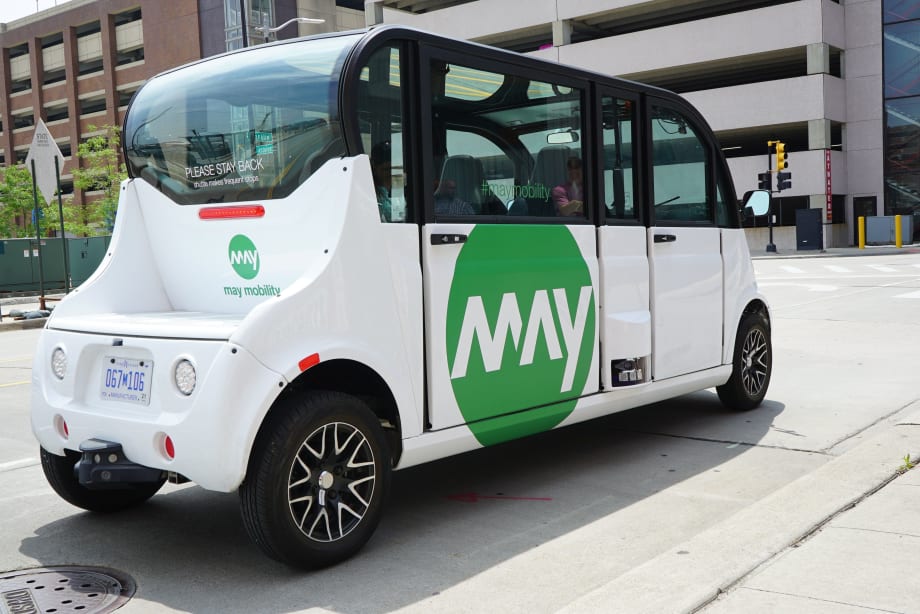
The Grand Rapids Autonomous Mobility Initiative will bring four May Mobility six-seat, electric shuttles to the streets of downtown Grand Rapids from March 2019 to March 2020.
Photos courtesy May Mobility
The Grand Rapids Autonomous Mobility Initiative will bring four May Mobility six-seat, electric shuttles to the streets of downtown Grand Rapids from March 2019 to March 2020.
Photos courtesy May Mobility
Nine Michigan companies and the City of Grand Rapids have come together to form a unique coalition that will place autonomous vehicles on city streets in March 2019. The Grand Rapids Autonomous Mobility Initiative is the next big step to prove that civic infrastructure can support the ever-evolving, ever-expanding operational capabilities of the rapidly approaching autonomous vehicle market.
The Grand Rapids Autonomous Mobility Initiative will bring four May Mobility six-seat, electric shuttles to the streets of downtown Grand Rapids from March 2019 to March 2020. This first-of-its kind coalition brings together enterprise and infrastructure to gather and analyze critical information to understand the usage of autonomous vehicles and their environments. The fleet will operate complementary to the city’s existing DASH transportation fleet. Shuttles will be free for riders.
Consisting of companies including May Mobility, Consumers Energy, Faurecia, Gentex, Rockford Construction, Seamless, and Steelcase, and public organizations including the City of Grand Rapids and Start Garden.
The Grand Rapids Autonomous Mobility Initiative will operate on a 3.2-mile section of the city’s existing DASH West bus route, which provides access to both downtown Grand Rapids and the city’s West Side and Heartside business districts. The route includes 22 stops, 30 traffic lights and 12 turns, including three left turns. As a commuter-driven service, the DASH West provides connectivity to more than 10 city-owned parking lots and points of interest that include David D. Hunting YMCA, Kendall College of Art & Design, Grand Rapids Children's Museum, Van Andel Arena, and Bridge Street Market.
“Across the U.S., cities are seeking cost-effective, safe, and reliable transportation services that will improve congestion and convert cities into more livable and green spaces. Self-driving shuttles are a great solution,” said Edwin Olson, founder and CEO of May Mobility. “As we strive to make transportation is more accessible and convenient, we’re thrilled to be working with the City of Grand Rapids and partners to accelerate a path toward a future where the people of Grand Rapids can drive less and live more.”
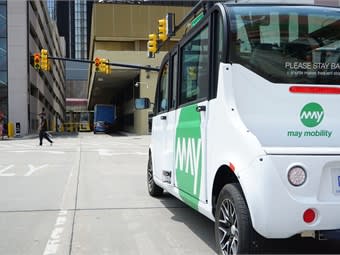
The Grand Rapids Autonomous Mobility Initiative will operate on a 3.2-mile section of the city’s existing DASH West bus route, which provides access to both downtown Grand Rapids and the city’s West Side and Heartside business districts.
The Grand Rapids Autonomous Mobility Initiative will focus on three areas during its operation:
Feasibility: Little research has been done on the impact of mobility on our cities, yet every change in transport technology has transformed them. The autonomous vehicle initiative is designed to gain insight and understand how it impacts existing urban structures.
Accessibility: Address how autonomous vehicles improve or impact mobility for the elderly and people with disabilities, and explore solutions around design of interiors and the urban environment to facilitate accessibility.
Community: Prepare the local community and neighborhoods for the effects of autonomous mobility. This is a priority for the initiative and will include open sessions for community stakeholders for community visioning, goal setting, plan making, and recommendations for public investments.
The coalition’s approach will include partnering with developers, urban planners, accessibility experts, and community stakeholders to understand their needs and design solutions that will build trust and capability with the autonomous technology created by May Mobility.
More New Mobility

From Hardware to Digital Partner: Luminator Charts Its Next Chapter
CEO Magnus Friberg discusses Luminator’s shift toward becoming a digital partner, the growing importance of software and interoperability, and how AI can help agencies improve operations and passenger experience.
Read More →
Biz Briefs: Alstom Lands Canadian Contract, LYT to Supply California TSP, and More
In METRO's latest installment, we take a look at recent news from Complete Coach Works, Beep, FlixBus, and more partnerships making headlines across the transportation sector.
Read More →
CharterUP’s Armir Harris on Technology, AI, and the Future of Group Mobility
In a recent episode of METROspectives, CharterUP Founder/CEO Armir Harris discussed the company’s evolution from an online charter bus marketplace into a technology platform supporting public- and private-sector mobility and much more.
Read More →
Jacksonville’s NAVI Project Charts a New Course for Autonomous Public Transportation
Through its NAVI program, JTA is showing how autonomous vehicles, intelligent infrastructure, and coordinated operations can work together to deliver everyday public transportation.
Read More →
Biz Briefs: Luminator Marks Milestone and More
From manufacturers and suppliers to transit agencies and motorcoach operators, these updates offer a snapshot of the projects, partnerships and business moves driving the industry forward.
Read More →
New Tricks for Old Bureaucracies: Joshua Schank on Making Transit Innovation Stick
Former LA Metro Chief Innovation Officer Joshua Schank discusses why good ideas aren't enough, how transit agencies can overcome resistance to change, and why today's challenges demand more innovation.
Read More →
How DART's GoPass Is Redefining Regional Mobility
Serving 14 transit agencies, GoPass simplifies multimodal travel by allowing riders to plan, pay for, and manage an entire trip through one app.
Read More →
Biz Briefs: OCTA Taps Clean Energy for Hydrogen Station, Stadler to Supply Via Rail Vehicles, and More
From manufacturers and suppliers to transit agencies and motorcoach operators, these updates offer a snapshot of the projects, partnerships and business moves driving the industry forward.
Read More →CharterUP Expands Into New Mobility and Autonomous Transportation
Vice President of New Mobility Stephen Joos discusses how CharterUP is leveraging its nationwide transportation network, technology platform, and autonomous vehicle partnerships to expand into workforce mobility, campus shuttles, and transit solutions.
Read More →
METRO Magazine Announces 2026 Innovative Solutions Awards Winners
Projects Recognized for Advancing Mobility Through Technology, Accessibility, Workforce Innovation, and Operational Excellence
Read More →