



Q&A with RATP Dev USA President Blaine Rigler
METRO’s Managing Editor Alex Roman recently spoke to Rigler about the evolution of tech in the transit industry, the growth of Mobility-as-a-Service, and more.


Rigler

Rigler
With over 25 years of experience in leadership and operations management roles, RATP Dev USA President Blaine Rigler’s expertise encompasses sales and marketing leadership, international business acumen, operations, and technology systems innovation.
METRO’s Managing Editor Alex Roman recently spoke to Rigler about the evolution of tech in the transit industry, the growth of Mobility-as-a-Service, and more.
Can you talk about your Orbyt connected transportation platform? Orbyt is RATP Dev USA’s technology and innovation framework, to advance our service alongside the industry demand, or even ahead of it. Some people confuse this framework thinking it’s technology, but it’s not — it is our proactive approach to innovative business development, ensuring we partner and invest in the right start ups, tools, and technology to advance operational excellence in the industry. When we created Orbyt, we leveraged our industry experience coupled with conversations with transit industry leaders who supported the concept of integrating the rider and operator experience as one, connected experience. Through our framework, we connect key focus areas to a methodical timeline: before, during, and after the journey. This journey, timeline, and evolution reminded us of the solar system, how it’s always evolving… which is where we came up with Orbyt. The four key focus areas to address the challenges our customers face include improving core services, taking advantage of new mobilities on the rise, anticipating industry disruptions, and ultimately increasing passenger satisfaction. We take a consultative approach with each agency, to help fulfill their vision.
Take safety, for example, which is sort of core to the industry and who we are. We have deployed a technology, drive2zero, that we can apply at each stage of the passenger journey: the before, like learning management and operator training; the during, such as cameras and telematics on the buses that track behavior; and the after, which is the analysis of all that and developing risk profiles — what are agencies doing well, where are their opportunities for improvement — and integrate that to their training and learning management.
Planning and scheduling software…those are applied in the same type of way. What do you do in advance to make sure that you’re planning and scheduling the perfect route? How do you monitor that — both during the journey and afterwards? Can passengers access this information, too? That evolves into the “big data stuff” and how you take the copious amounts of data collected throughout the journey and turn it into information that can be used to continuously improve your processes.
How do you feel contractors can help transit agencies when implementing technology? The advantage of being a global provider allows us to leverage the vast technologies implemented in our locations across the globe and share those best practices with all of our local agencies. Leveraging the learnings and best practices for a different technologies implementation, pilots, etc., provides feedback to the agency, giving them a view into what worked best for similar systems based on the size or type of operation they are running. A key to many of these technologies is that they are not hardwired. Today’s software is being developed so it can integrate with other technologies that agency’s may already have and has the flexibility to be tweaked or upgraded more immediately than it has in the past.
Why do you think public transit has embraced the move to a mobility model so quickly? If you think about it, Mobility-as-a-Service (MaaS) was not even a term a couple years ago and now it’s a buzzword. There are early adopters launching pilots utilizing a portion of the MaaS potential, and with their success, more agencies are getting on board, now. I think with the funding not exactly growing and ridership in decline in a lot of cities, the question has become how do you utilize your most expensive assets and keep them on main routes with greater frequencies, and then, funnel people to those services through other forms of transportation? So, it’s coming out of a need to provide more options. An important thing to keep in mind is that one size doesn’t fit all. Ideas like microtransit are interesting, because it can be used to funnel people to bus and rail services, as part of an agency’s normal package, or it can be a premium service that they provide as well.
How do you feel autonomous technology will evolve in the U.S.? I think it will evolve much differently now that the major auto manufacturers have invested so heavily in the technology. The 10-passenger shuttles you are seeing today will continue to evolve. We’re still in generation one of the shuttles and looking at coming out with generation two, and those will continue to be ideal for first mile/last mile challenges, downtown areas, school campuses, and parking lots, but the technology and size of the vehicles will change drastically in the years to come as self-driving vehicles, in general, become more prominent.
More New Mobility

From Hardware to Digital Partner: Luminator Charts Its Next Chapter
CEO Magnus Friberg discusses Luminator’s shift toward becoming a digital partner, the growing importance of software and interoperability, and how AI can help agencies improve operations and passenger experience.
Read More →
Biz Briefs: Alstom Lands Canadian Contract, LYT to Supply California TSP, and More
In METRO's latest installment, we take a look at recent news from Complete Coach Works, Beep, FlixBus, and more partnerships making headlines across the transportation sector.
Read More →
CharterUP’s Armir Harris on Technology, AI, and the Future of Group Mobility
In a recent episode of METROspectives, CharterUP Founder/CEO Armir Harris discussed the company’s evolution from an online charter bus marketplace into a technology platform supporting public- and private-sector mobility and much more.
Read More →
Jacksonville’s NAVI Project Charts a New Course for Autonomous Public Transportation
Through its NAVI program, JTA is showing how autonomous vehicles, intelligent infrastructure, and coordinated operations can work together to deliver everyday public transportation.
Read More →
Biz Briefs: Luminator Marks Milestone and More
From manufacturers and suppliers to transit agencies and motorcoach operators, these updates offer a snapshot of the projects, partnerships and business moves driving the industry forward.
Read More →
New Tricks for Old Bureaucracies: Joshua Schank on Making Transit Innovation Stick
Former LA Metro Chief Innovation Officer Joshua Schank discusses why good ideas aren't enough, how transit agencies can overcome resistance to change, and why today's challenges demand more innovation.
Read More →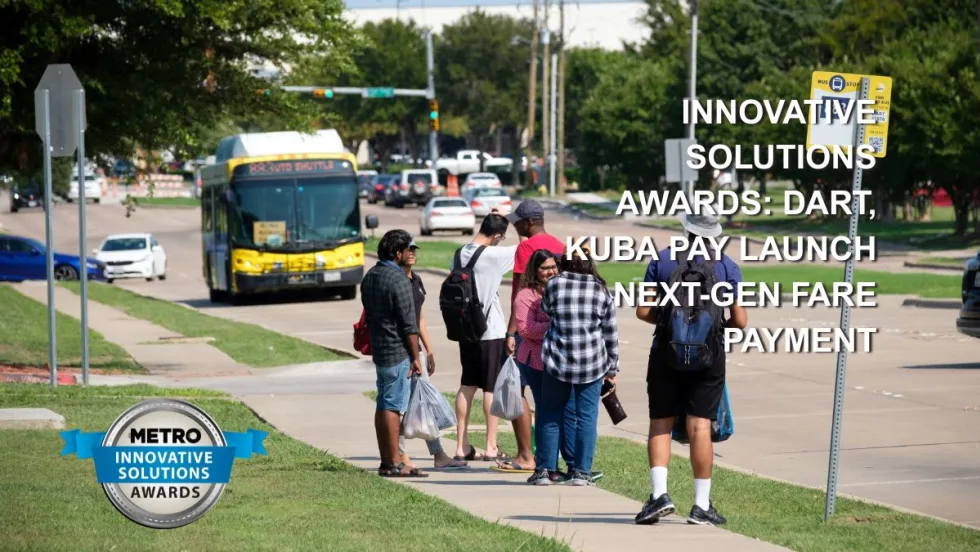
How DART's GoPass Is Redefining Regional Mobility
Serving 14 transit agencies, GoPass simplifies multimodal travel by allowing riders to plan, pay for, and manage an entire trip through one app.
Read More →
Biz Briefs: OCTA Taps Clean Energy for Hydrogen Station, Stadler to Supply Via Rail Vehicles, and More
From manufacturers and suppliers to transit agencies and motorcoach operators, these updates offer a snapshot of the projects, partnerships and business moves driving the industry forward.
Read More →CharterUP Expands Into New Mobility and Autonomous Transportation
Vice President of New Mobility Stephen Joos discusses how CharterUP is leveraging its nationwide transportation network, technology platform, and autonomous vehicle partnerships to expand into workforce mobility, campus shuttles, and transit solutions.
Read More →
METRO Magazine Announces 2026 Innovative Solutions Awards Winners
Projects Recognized for Advancing Mobility Through Technology, Accessibility, Workforce Innovation, and Operational Excellence
Read More →