




RELATED: LIRR launches service for people with mobility issues
Report proposes integrating Metro-North, LIRR fares to boost access
NYC Comptroller Stringer called on the MTA to improve job access, reduce commute times, extend the reach of the transit system, and relieve overcrowding.
October 16, 2018
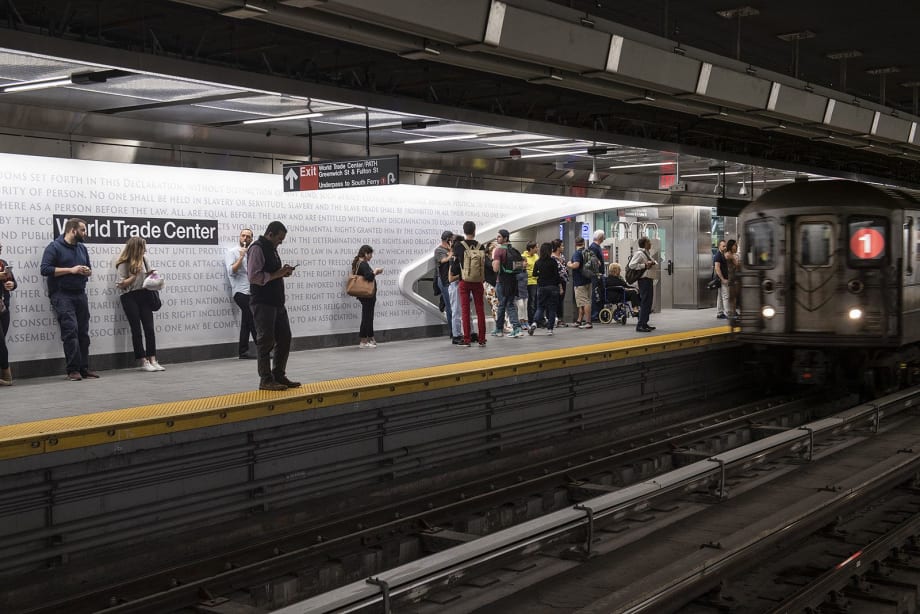
Exorbitant fares limit the use of commuter rail stations leaving peak-hour trains with significant spare capacity and off-peak commuter trains more than half empty, according to an NYC Comptroller report. Photo: NY MTA
4 min to read
Exorbitant fares limit the use of commuter rail stations leaving peak-hour trains with significant spare capacity and off-peak commuter trains more than half empty, according to an NYC Comptroller report. Photo: NY MTA
New York City Comptroller Scott M. Stringer called on the MTA to drop prohibitively expensive Metro-North and Long Island Rail Road (LIRR) fares to the price of a Metrocard swipe for all trips within the five boroughs. The proposal would dramatically expand transit access in 31 neighborhoods in the Bronx, Brooklyn, and Queens that have Metro-North or LIRR stations.
While commuter rail stations are often the only mass transit option for the 1.4 million residents of these neighborhoods, expensive ticket prices — nearly four times as costly as a Metrocard swipe — leave locals stranded and forced to take lengthy trips on overcrowded roads, subways, and buses. Simply lowering fares and allowing free transfers between commuter rail, subways, and buses for all trips in the city would have system-wide benefits and help alleviate the city’s transit crisis, according to the report.
The report, Expanding Access In One Swipe, details the potential impact of the proposal, including how integrating Metro-North and LIRR fares with the subway and bus would cut commute times in half, improve job access, extend the reach of the transit system, and relieve overcrowding on the subway.
Highlights of Stringer’s analysis include:
City Commuters Stranded by Steep Rail Costs
In total, 38 Metro-North and LIRR stations serve 31 neighborhoods in the Bronx, Brooklyn, and Queens, home to 1.4 million residents and 327,000 jobs;
18 of these stations are located in neighborhoods that sit beyond the reach of the subway system. In these under-served neighborhoods, 82% of residents are people of color and 41% are foreign-born – much higher than the city-wide averages of 68% and 37%, respectively;
One way, rush-hour tickets from all 13 Bronx stations and 14 Queens stations to central Manhattan cost $9.25 and $10.25, respectively. With the additional cost of bus and subway transfers, the financial burden of commuter rail is prohibitive for working New Yorkers;
Neglected Commuter Rail Lines Could Cut Commute Times in Half
Exorbitant fares limit the use of commuter rail stations leaving peak-hour trains with significant spare capacity and off-peak commuter trains more than half empty. The average rush-hour LIRR train, for instance, has 233 empty seats during the morning rush and 282 during the evening peak;
Yet these under-capacity trains skip over city stations nearly 80% of the time during the morning rush, only stopping to pick up city commuters a handful of times; and,
As a result, city commuters in these areas spend hours longer on buses and subways to get around:
While the LIRR to Penn Station takes 35 minutes from Queens Village and 25 minutes from Auburndale, the same trip on the subway and local bus takes over an hour at 80 minutes and 75 minutes, respectively.
The Metro-North to Grand Central, meanwhile, takes 30 minutes from Riverdale and 25 minutes from Belmont. Traveling by subway and local bus would take up to three times longer, at 90 minutes and 50 minutes, respectively.
As part of the report, Comptroller Stringer called on the MTA to improve job access, reduce commute times, extend the reach of the transit system, and relieve overcrowding by:
Reducing fares for all in-city commuter rail trips and making more local stops. The MTA should take full advantage of its rail assets. Whether traveling via bus, subway, or commuter trail, all in-city MTA trips should cost $2.75 and allow free transfers.
Connecting bus service with commuter rail stations. For many commuters, the gaps between bus and rail infrastructure makes transferring between the systems and using rail altogether too difficult. In northeast Queens, for instance, while dozens of bus lines converge at the terminus of the 7 Train, several LIRR stations are multiple blocks from a single bus stop, with similar patterns in northwest Bronx and southeast Queens. As a more equitable fare policy is introduced, NYCT Bus and MTA Bus should provide more frequent service to these commuter rail stations.
Making all commuter stations ADA accessible. Half of the Metro-North and LIRR stations in the Bronx, Brooklyn, and Queens are not currently ADA-accessible. This should be rectified as soon as possible, adding new elevators, ramps, and wayfinding upgrades for the sight- and hearing-impaired.
The proposal to open up commuter rail service at 38 Bronx, Brooklyn, and Queens stations for working New Yorkers would cost an estimated $50 million per year — a fraction of the $7 billion and 10 years it cost to open four new stations along Second Avenue and in Hudson Yards. Taking these steps will demand improved coordination between the MTA’s Metro-North, LIRR, and New York City Transit divisions, which for too long have operated in silos. It may also require more frequent commuter rail service to handle increased ridership – though the MTA should begin by focusing on filling the spare capacity that already exists.
More Rail
Amtrak, CN Reach Agreements to Strengthen Passenger Rail Service, Safety
The agreement resolves a more than decade-long proceeding before the Surface Transportation Board concerning the terms and conditions for Amtrak services, such as the City of New Orleans, Illini/Saluki, and Wolverine.
Read More →
New York MTA Advances Final Contract for Second Avenue Subway Expansion
Contract Four is the largest in the Second Avenue Subway Phase 2 project and includes construction of station infrastructure, tracks, and signals for the subway expansion, MTA officials said. Work on Contract Four will begin in 2027.
Read More →
San Diego MTS Breaks Monthly Trolley Ridership Record
Agency officials said July’s ridership indicates MTS’s continued recovery from the pandemic.
Read More →
Report Examines NJ TRANSIT Reliability, Funding Challenges
The Garden State Initiative analysis examines the roles of Amtrak infrastructure, fleet management, and agency operations while recommending a more performance-based approach to improving reliability.
Read More →
Stadler, CapMetro Sign Long-Term Rail Fleet Support Agreement
Beginning in 2027, Stadler will provide on-site technical expertise, spare parts support, training, and obsolescence management to help extend the reliability and longevity of CapMetro’s GTW fleet.
Read More →
Biz Briefs: Alstom Lands Canadian Contract, LYT to Supply California TSP, and More
In METRO's latest installment, we take a look at recent news from Complete Coach Works, Beep, FlixBus, and more partnerships making headlines across the transportation sector.
Read More →
CATS Gold Line Marks 5 Years of Service, 2.8M Passenger Trips
With a six-mile expansion planned, the Charlotte streetcar is positioned to connect more neighborhoods and major transit hubs across the region.
Read More →
Why Simulating Pedestrian Movement Has Become Essential for Modern Rail Stations
Pedestrian microsimulation is helping rail planners identify bottlenecks, test station designs, and prepare complex transit hubs for growing passenger volumes.
Read More →
Amtrak Begins Major Construction at New York’s Sunnyside Yard
The new maintenance facility will support Amtrak’s Airo trainsets while improving maintenance efficiency and turnaround times in New York.
Read More →
Chicago Leaders Unveil Plans for O’Hare Airport Express Train
The privately developed project would offer a 15-minute trip between downtown and O’Hare’s Terminal 2, with trains operating every 15 minutes on a dedicated track. The service would use battery-electric trains and three existing freight rail rights-of-way.
Read More →