



Report: Smart transportation systems to continue growth
The area of heaviest investment will be traffic management systems, including traveler information, congestion charging, and adaptive signaling.

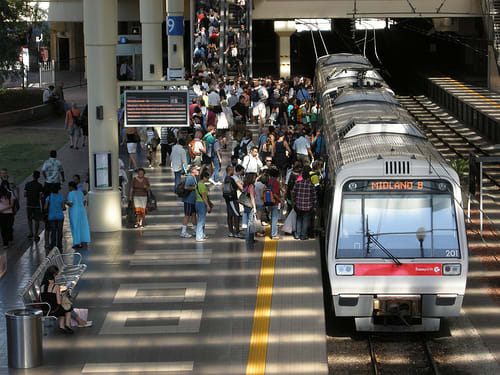
Photo credit: David A. Villa via Flickr - Creative Commons.
The use of smart transportation systems across the globe are likely to continue to grow even as public infrastructure spending flattens, or even declines in many cases, according to a new report.
The intelligent transportation systems (ITS) sector is now going through an evolution driven by the maturation of communications technologies and their increasing adoption in major cities worldwide. The widespread availability of high-speed networks, both fixed and wireless, along with the ability to embed intelligence in physical objects throughout the urban environment and the diffusion of mobile devices that can send and receive real-time vehicle or infrastructure information, is driving the adoption of smart transportation systems in cities across the developed world and in major emerging economies.
According to the report, released by the cleantech market intelligence firm Pike Research, global investment in four key applications for smart transportation systems will total $13.1 billion between 2011 and 2017.
"Even as governments seek to reduce their debt, ITS will not see significant cutbacks and will, in fact, benefit as transportation agencies seek to optimize their existing infrastructure, rather than fund major new capital projects," says senior analyst Lisa Jerram. "Cities, transit operators, and other owners of transportation assets see smart transportation technologies as tools to help them enhance mobility, reduce fuel consumption and emissions, improve safety and strengthen economic competitiveness."
The area of heaviest investment in smart transportation will be traffic management systems, which encompass a range of applications, including traveler information, congestion charging and adaptive signaling. By the end of the forecast period, these systems will be ubiquitous, with virtually every major city offering such a service. What will change over the forecast period is that these systems will become increasingly dynamic, with cities adding alternate route instructions or predictive traffic easement.
Pike Research's report, "Smart Transportation Systems," focuses on four key smart transportation sectors: traffic management systems, smart charging for plug-in electric vehicles, public transportation systems and vehicle-to-vehicle systems.
The study provides a comprehensive examination of market drivers for smart transportation infrastructure investment, including an assessment of the various approaches being taken in key countries around the world. Key industry players are profiled and market forecasts for each region are provided through 2017. An Executive Summary of the report is available for free download on the firm's website.
More Paratransit

Biz Briefs: RIPTA Unveils New Frontrunners, Clevland RTA Adds New Siemens, and More
In METRO's latest installment, we take a look at recent news from Siemens, Prevost, Dodge, and more partnerships making headlines across the transportation sector.
Read More →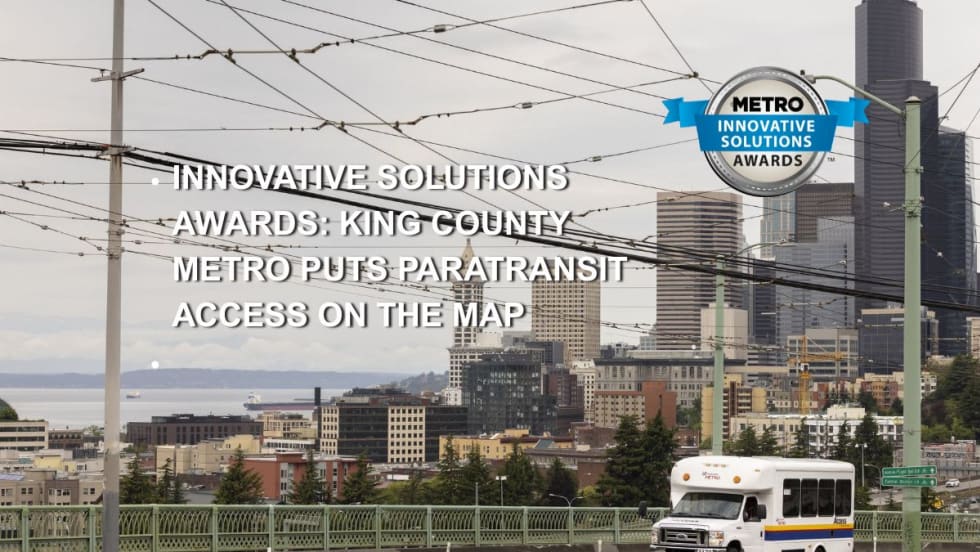
King County Metro Makes ADA Paratransit Easier to Navigate
METRO's Innovative Solutions Award winner replaces complex service-area descriptions with an accessible, interactive map that puts paratransit information directly in customers’ hands.
Read More →
Jacksonville’s NAVI Project Charts a New Course for Autonomous Public Transportation
Through its NAVI program, JTA is showing how autonomous vehicles, intelligent infrastructure, and coordinated operations can work together to deliver everyday public transportation.
Read More →
Driving Smarter Paratransit
John Hanlon shares how AlphaRoute is leveraging AI-powered technology to help paratransit providers optimize operations, support frontline staff, and enhance the rider experience.
Read More →
METRO Magazine Announces 2026 Innovative Solutions Awards Winners
Projects Recognized for Advancing Mobility Through Technology, Accessibility, Workforce Innovation, and Operational Excellence
Read More →
Biz Briefs: STV teams with Amtrak, Motorcoach Operators Boost Fleet and Land Contracts, and More
From manufacturers and suppliers to transit agencies and motorcoach operators, these updates offer a snapshot of the projects, partnerships and business moves driving the industry forward.
Read More →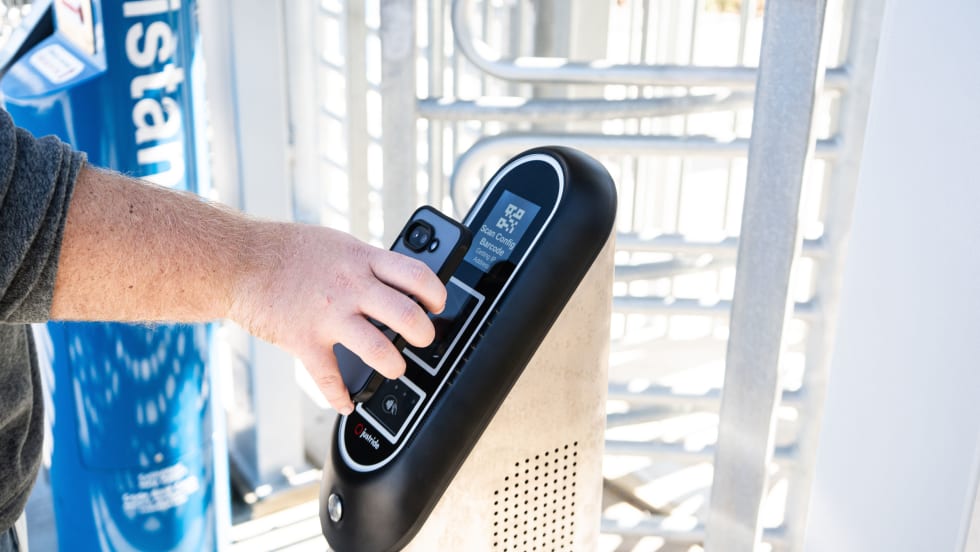
Biz Briefs: Masabi Teams with St. Louis Metro and More
In METRO's latest installment, we take a look at recent news from Transdev, Hitachi, and more partnerships making headlines across the transportation sector.
Read More →
New York MTA Leverages Zoning Program to Advance Station Accessibility
Accessibility enhancements at Nevins St Station will be financed through a development agreement tied to the MTA's Zoning for Accessibility initiative.
Read More →
Reinventing Fleet Maintenance with Real-time Visibility and AI
Transit leaders need to know what needs fixing, where to look, who is responsible, when work is completed, and what it costs without having to chase information across disconnected systems.
Read More →
SamTrans Sets Priorities for Potential Connect Bay Area Revenue
The board-approved framework allocates future funding to maintaining service, rider improvements, equity initiatives, and infrastructure repairs.
Read More →