



Rhode Island opens airport multi-modal facility
The $267 million InterLink provides for the area's first-ever connection between local bus service and the airport, rail service and rental cars. The FHWA provided $124.6 million in direct funding and the U.S. DOT provided a $42 million loan from its TIFIA program.

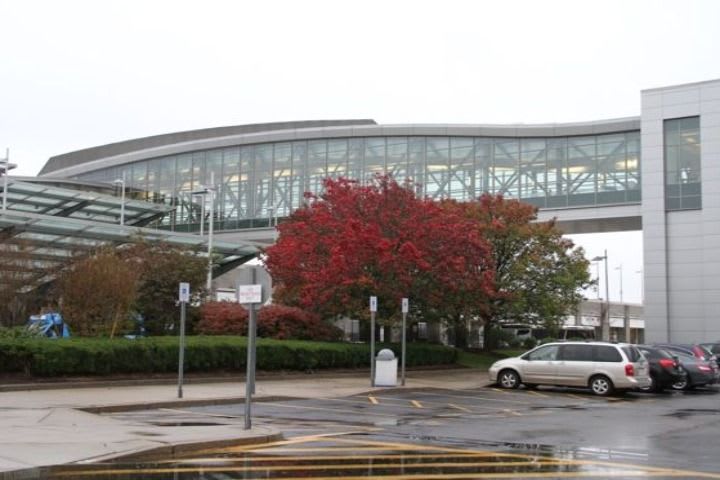
Photo courtesy of Chuck Aube, Rhode Island Department of Transportation.
[IMAGE]Interlink-Ribbon-CuttingWEB-6.jpg[/IMAGE] A new intermodal transportation facility, Interlink, designed to improve convenience for airport users, the facility connects airplanes, trains, buses and cars was opened Wednesday at Warwick, R.I.-based T.F. Green Airport.
"By providing an alternative to driving on I-95 and surrounding roads and streets, this world-class facility will ease area traffic congestion, strengthen the airport's role as an economic hub for Rhode Island and improve convenience and safety for the thousands who rely on the airport each day," said U.S. Transportation Secretary Ray LaHood.
The InterLink, one of the state's largest transportation projects, connects people with several options for getting where they need to go, including a consolidated rental car facility, serving both the airport and, later this year, Massachusetts Bay Transportation Authority commuter trains traveling between Providence, Warwick and Boston. It also provides for the area's first-ever connection between local bus service and the airport, rail service and rental cars.
The project's 1,200-foot-long Skywalk spans the airport's upper level and connects to the airport terminal at the third floor. It uses high-efficiency glass, heating and ventilation and light fixtures to help keep energy costs low.
The InterLink also features a six-level garage with 2,600 parking spaces and a fueling platform for rental cars. Pre-casting its nearly 3,500 concrete pieces in Connecticut and assembling them on site reduced construction time and improved the garage's overall quality.
The Federal Highway Administration provided $124.6 million in direct funding for the InterLink — formerly known as the Intermodal Facility — and the U.S. DOT provided a $42 million loan from its Transportation Infrastructure Finance and Innovation Act program, totaling more than half of the project's $267 million cost. The remainder of the project's funds came from user fees and state matching grants and bonds.
More New Mobility

From Hardware to Digital Partner: Luminator Charts Its Next Chapter
CEO Magnus Friberg discusses Luminator’s shift toward becoming a digital partner, the growing importance of software and interoperability, and how AI can help agencies improve operations and passenger experience.
Read More →
Biz Briefs: Alstom Lands Canadian Contract, LYT to Supply California TSP, and More
In METRO's latest installment, we take a look at recent news from Complete Coach Works, Beep, FlixBus, and more partnerships making headlines across the transportation sector.
Read More →
CharterUP’s Armir Harris on Technology, AI, and the Future of Group Mobility
In a recent episode of METROspectives, CharterUP Founder/CEO Armir Harris discussed the company’s evolution from an online charter bus marketplace into a technology platform supporting public- and private-sector mobility and much more.
Read More →
Jacksonville’s NAVI Project Charts a New Course for Autonomous Public Transportation
Through its NAVI program, JTA is showing how autonomous vehicles, intelligent infrastructure, and coordinated operations can work together to deliver everyday public transportation.
Read More →
Biz Briefs: Luminator Marks Milestone and More
From manufacturers and suppliers to transit agencies and motorcoach operators, these updates offer a snapshot of the projects, partnerships and business moves driving the industry forward.
Read More →
New Tricks for Old Bureaucracies: Joshua Schank on Making Transit Innovation Stick
Former LA Metro Chief Innovation Officer Joshua Schank discusses why good ideas aren't enough, how transit agencies can overcome resistance to change, and why today's challenges demand more innovation.
Read More →
How DART's GoPass Is Redefining Regional Mobility
Serving 14 transit agencies, GoPass simplifies multimodal travel by allowing riders to plan, pay for, and manage an entire trip through one app.
Read More →
Biz Briefs: OCTA Taps Clean Energy for Hydrogen Station, Stadler to Supply Via Rail Vehicles, and More
From manufacturers and suppliers to transit agencies and motorcoach operators, these updates offer a snapshot of the projects, partnerships and business moves driving the industry forward.
Read More →CharterUP Expands Into New Mobility and Autonomous Transportation
Vice President of New Mobility Stephen Joos discusses how CharterUP is leveraging its nationwide transportation network, technology platform, and autonomous vehicle partnerships to expand into workforce mobility, campus shuttles, and transit solutions.
Read More →
METRO Magazine Announces 2026 Innovative Solutions Awards Winners
Projects Recognized for Advancing Mobility Through Technology, Accessibility, Workforce Innovation, and Operational Excellence
Read More →