



Richmond-to-Raleigh high-speed rail proposal gets all clear
The 162-mile route between the two cities in North Carolina and Virginia would utilize existing and former rail lines for approximately 60% of the route and is planned to be free from at-grade crossings of track and roads.

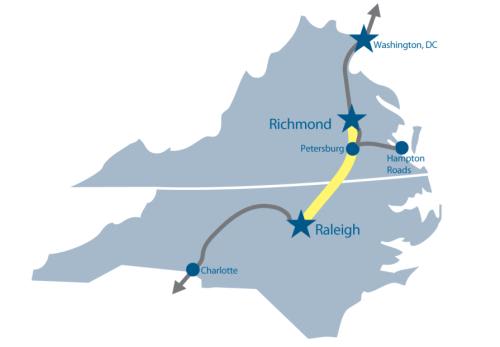
A map of the proposed high-speed rail line.
A map of the proposed high-speed rail line.
The Federal Railroad Administration (FRA), the State of North Carolina and the Commonwealth of Virginia signed off on the Final Environmental Impact Statement (FEIS) for the proposed Richmond to Raleigh (R2R) passenger rail line along the Southeast Corridor. The completion of the FEIS is one of the final steps necessary before construction of the project can move forward once funding is secured.
“Without a strong passenger rail system, the Southeast’s growth will be choked by congestion for a very long time,” U.S. Transportation Secretary Anthony Foxx said. “North Carolina, Virginia and the Department of Transportation have worked together to bring us closer to high-speed rail connecting Richmond and Raleigh, and I urge everyone involved to continue pushing this effort forward. High-speed rail in this region is not a luxury but a necessity.”
The 162-mile route between the two cities would utilize existing and former rail lines for approximately 60% of the route and is planned to be free from at-grade crossings of track and roads. This route is part of a larger multi-state planning effort to provide high-speed passenger service between Washington, D.C., and Atlanta.
In July, Secretary Foxx announced that the Department of Transportation would invest approximately $1 million to develop a regional long-term vision for the corridor and engage states and stakeholders to help the region form a governance organization that can sustain planning efforts and implement the vision.
“Today brings us closer to breaking ground on this critical project for one of the fastest growing areas of the country. The project will improve safety and reliability, reduce the travel time between Richmond and Raleigh, and increase opportunity for jobs and growth in the Southeast,” FRA Acting Administrator Sarah Feinberg said.
A recent U.S. Department of Transportation report, “Beyond Traffic,” in turn found that our country will add 70 million more people by 2045, and that the Southeast will indeed absorb a significant portion of that growth. The FEIS includes responses to comments from citizens, elected officials, residents, businesses and other stakeholders that have been involved in the process.
More Rail
Amtrak, CN Reach Agreements to Strengthen Passenger Rail Service, Safety
The agreement resolves a more than decade-long proceeding before the Surface Transportation Board concerning the terms and conditions for Amtrak services, such as the City of New Orleans, Illini/Saluki, and Wolverine.
Read More →
New York MTA Advances Final Contract for Second Avenue Subway Expansion
Contract Four is the largest in the Second Avenue Subway Phase 2 project and includes construction of station infrastructure, tracks, and signals for the subway expansion, MTA officials said. Work on Contract Four will begin in 2027.
Read More →
San Diego MTS Breaks Monthly Trolley Ridership Record
Agency officials said July’s ridership indicates MTS’s continued recovery from the pandemic.
Read More →
Report Examines NJ TRANSIT Reliability, Funding Challenges
The Garden State Initiative analysis examines the roles of Amtrak infrastructure, fleet management, and agency operations while recommending a more performance-based approach to improving reliability.
Read More →
Stadler, CapMetro Sign Long-Term Rail Fleet Support Agreement
Beginning in 2027, Stadler will provide on-site technical expertise, spare parts support, training, and obsolescence management to help extend the reliability and longevity of CapMetro’s GTW fleet.
Read More →
Biz Briefs: Alstom Lands Canadian Contract, LYT to Supply California TSP, and More
In METRO's latest installment, we take a look at recent news from Complete Coach Works, Beep, FlixBus, and more partnerships making headlines across the transportation sector.
Read More →
CATS Gold Line Marks 5 Years of Service, 2.8M Passenger Trips
With a six-mile expansion planned, the Charlotte streetcar is positioned to connect more neighborhoods and major transit hubs across the region.
Read More →
Why Simulating Pedestrian Movement Has Become Essential for Modern Rail Stations
Pedestrian microsimulation is helping rail planners identify bottlenecks, test station designs, and prepare complex transit hubs for growing passenger volumes.
Read More →
Amtrak Begins Major Construction at New York’s Sunnyside Yard
The new maintenance facility will support Amtrak’s Airo trainsets while improving maintenance efficiency and turnaround times in New York.
Read More →
Chicago Leaders Unveil Plans for O’Hare Airport Express Train
The privately developed project would offer a 15-minute trip between downtown and O’Hare’s Terminal 2, with trains operating every 15 minutes on a dedicated track. The service would use battery-electric trains and three existing freight rail rights-of-way.
Read More →