




RELATED: [Article] 'The Uber Effect': Will New Ride Services Reinvent Transit?
Ridesharing systems could cut greenhouse gases, study says
The report, which is especially relevant for transportation and environmental planners, was developed bythe Mineta Transportation Institute.
October 22, 2015
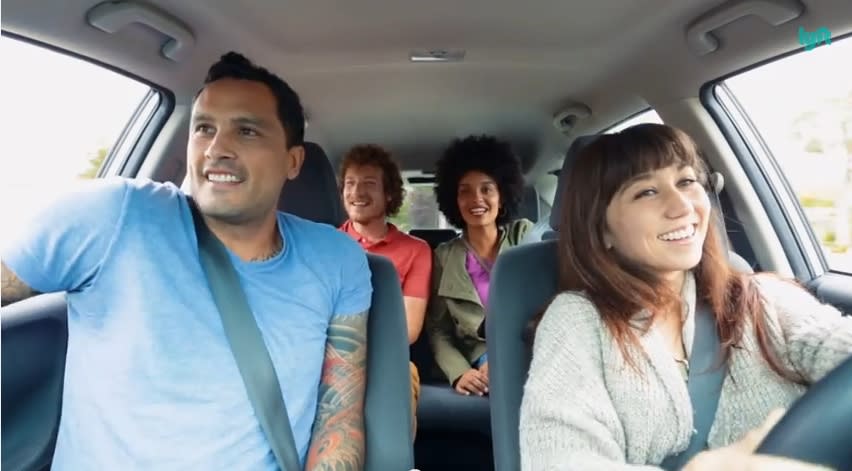
Lyft
2 min to read

Lyft
Can greenhouse gases be reduced by promoting ride sharing services and battery-electric vehicles? Could they sufficiently reduce vehicle miles traveled (VMT) to make a significant environmental impact? That’s what researchers at the Mineta Transportation Institute (MTI) wanted to know.
Their peer-reviewed report, Synergistic Integration of Transportation Demand Management Strategies (Land Use, Transit, and Auto Pricing) with New Technologies and Services (Battery Electric Vehicles and Dynamic Ridesharing) to Enhance Reductions in VMT and GHG, provides insight about the many possibilities.
The report, which is especially relevant for transportation and environmental planners, was developed by Principal investigator, Caroline Rodier, PhD, working with Farzad Alemi and Dylan Smith.
“Our findings suggest that dynamic ridesharing, such as Uber and Lyft, could significantly reduce VMT and related greenhouse gas emissions if travelers are
willing to pay with their time and money to use the dynamic ridesharing system,” Rodier said.
She noted that the combination of dynamic ridesharing, along with the transit-oriented
development (TOD) and VMT Fee scenarios, suggests some policy combinations that may be more effective than dynamic ridesharing alone but perhaps more politically palatable.
“For example,” said Rodier, “a moderately used regional dynamic ridesharing with 10 percent increase in VMT fees may produce reductions in VMT on the order of 11 percent compared with a business-as-usual scenario in one horizon year.”
Changes could be greatest in faster growing areas The authors used the San Francisco Bay Area Metropolitan Transportation Commission’s activity-based microsimulation travel demand model for 2010. A business-as-usual (Base Case),
transit-oriented development, and auto pricing (VMT Fee) scenarios are simulated with and without high, medium, and low dynamic ridesharing participation levels and
battery electric vehicles (BEV) driving ranges.
Results of the BEV simulations suggest that TODs may increase the market for BEVs by less than 1% in the San Francisco Bay Area. In addition, auto pricing policies may increase the market by as much as 7%. However, it is possible that larger changes are feasible over time in faster growing regions where development is currently at low density levels (for example, the Central Valley in California). The VMT Fee scenarios show larger increases in the potential market for BEV by as much as 7%.
More New Mobility

From Hardware to Digital Partner: Luminator Charts Its Next Chapter
CEO Magnus Friberg discusses Luminator’s shift toward becoming a digital partner, the growing importance of software and interoperability, and how AI can help agencies improve operations and passenger experience.
Read More →
Biz Briefs: Alstom Lands Canadian Contract, LYT to Supply California TSP, and More
In METRO's latest installment, we take a look at recent news from Complete Coach Works, Beep, FlixBus, and more partnerships making headlines across the transportation sector.
Read More →
CharterUP’s Armir Harris on Technology, AI, and the Future of Group Mobility
In a recent episode of METROspectives, CharterUP Founder/CEO Armir Harris discussed the company’s evolution from an online charter bus marketplace into a technology platform supporting public- and private-sector mobility and much more.
Read More →
Jacksonville’s NAVI Project Charts a New Course for Autonomous Public Transportation
Through its NAVI program, JTA is showing how autonomous vehicles, intelligent infrastructure, and coordinated operations can work together to deliver everyday public transportation.
Read More →
Biz Briefs: Luminator Marks Milestone and More
From manufacturers and suppliers to transit agencies and motorcoach operators, these updates offer a snapshot of the projects, partnerships and business moves driving the industry forward.
Read More →
New Tricks for Old Bureaucracies: Joshua Schank on Making Transit Innovation Stick
Former LA Metro Chief Innovation Officer Joshua Schank discusses why good ideas aren't enough, how transit agencies can overcome resistance to change, and why today's challenges demand more innovation.
Read More →
How DART's GoPass Is Redefining Regional Mobility
Serving 14 transit agencies, GoPass simplifies multimodal travel by allowing riders to plan, pay for, and manage an entire trip through one app.
Read More →
Biz Briefs: OCTA Taps Clean Energy for Hydrogen Station, Stadler to Supply Via Rail Vehicles, and More
From manufacturers and suppliers to transit agencies and motorcoach operators, these updates offer a snapshot of the projects, partnerships and business moves driving the industry forward.
Read More →CharterUP Expands Into New Mobility and Autonomous Transportation
Vice President of New Mobility Stephen Joos discusses how CharterUP is leveraging its nationwide transportation network, technology platform, and autonomous vehicle partnerships to expand into workforce mobility, campus shuttles, and transit solutions.
Read More →
METRO Magazine Announces 2026 Innovative Solutions Awards Winners
Projects Recognized for Advancing Mobility Through Technology, Accessibility, Workforce Innovation, and Operational Excellence
Read More →