



RIPTA, Government Leaders Celebrate Launch of New Passenger Facility
The new building will improve the passenger experience for both bus and rail passengers.

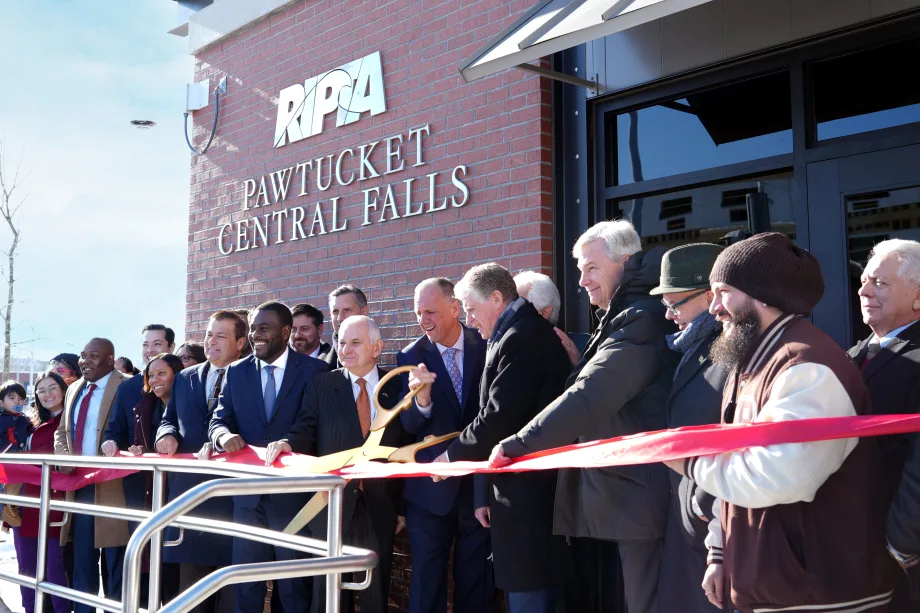
Governor McKee allocated $5 million for the construction of this 2,600-square-foot passenger facility building within his FY23 budget.
Governor Dan McKee, members of the State’s Congressional delegation and General Assembly, the Federal Transit Administration (FTA), municipal leaders, and the Rhode Island Public Transit Authority (RIPTA) gathered to celebrate the opening of the new passenger amenity building at the Pawtucket-Central Falls Transit Center.
The new passenger facility features public restrooms, driver restrooms, a break room, a waiting area with seating and real-time passenger information screens, and a security office. RIPTA will also have a staffed customer service window to assist riders as needed.
The new building will improve the passenger experience for both bus and rail passengers.
“We’re excited to welcome passengers to the new facility at the Pawtucket-Central Falls Transit Center, which represents the future we’re building — a transit system that’s modern, reliable, and centered on the people who use it every day,” said RIPTA CEO Christopher Durand. “With amenities like public restrooms, comfortable waiting areas, real-time information, and an on-site customer service window, this investment reinforces our commitment to providing a safe, accessible, and welcoming hub for both bus and rail customers.”
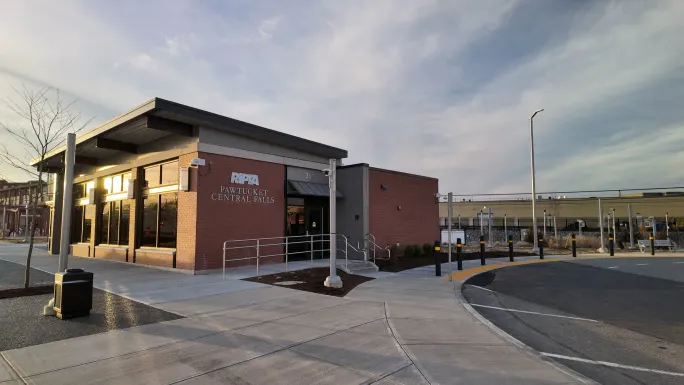
The new passenger facility features public restrooms, driver restrooms, a break room, a waiting area with seating and real-time passenger information screens, and a security office.
Funding for Project
Governor McKee allocated $5 million for the construction of this 2,600-square-foot passenger facility building within his FY23 budget. Bentley Builders served as the general contractor constructing the building, and BL Companies designed the facility.
“I’m proud to have been a day-one supporter of the Pawtucket-Central Falls Transit Center, including providing state funding in my budget to help advance the new passenger amenities building,” said Governor McKee. “This project complements the investments my administration has made across Pawtucket — from Centreville Bank Stadium to new housing and modern schools. Together, these projects will drive economic activity, support job growth, and create new opportunities for our entire state. I’m grateful to our partners for their collaboration.”
More Bus

New York MTA Plans Largest Bus Fleet Upgrade in More Than a Decade
The agency is seeking manufacturers for 650 new CNG buses to replace aging vehicles, improve reliability, and advance its broader fleet modernization strategy.
Read More →
Building a Flexible Path to Transit Electrification
John Hroncich discusses BAE Systems’ modular and scalable approach, lessons learned from decades of real-world operations, and how agencies can identify electrification strategies that fit their fleets.
Read More →
Bus Tech Talk: Keeping Transit Technicians Ahead of the Technology Curve
LA Metro’s Obed Mejia discusses technician training, evolving maintenance technology, fleet replacement, and strategies for getting the most out of today’s transit fleets.
Read More →
Biz Briefs: RIPTA Unveils New Frontrunners, Clevland RTA Adds New Siemens, and More
In METRO's latest installment, we take a look at recent news from Siemens, Prevost, Dodge, and more partnerships making headlines across the transportation sector.
Read More →
People Movement: Holly Arnold Joins Transdev and More
In this edition, we also cover recent appointments and announcements at Pace, CamTran, MCI, and more, showcasing the individuals helping to shape the future of transportation.
Read More →
The High Cost of Transit Buses: Industry Leaders Look to Procurement Reform
Transit leaders and policymakers examine how standardized bus designs, streamlined procurement, and predictable funding could help agencies stretch budgets and deliver better service.
Read More →
The Business Voice Behind Public Transportation
As chair of APTA’s Business Members Board of Governors, Ray Melleady explains how more than 850 business members are partnering with transit agencies to advance funding, innovation, and industry-wide collaboration.
Read More →
From Surviving to Thriving: Building Stronger Transportation Organizations
Bus Business Consultants founder Brian Dickson shares lessons on leadership, organizational health, and creating options for long-term success in a changing transportation industry.
Read More →
Finding the ‘Happy Medium’: Optimizing Maintenance Without Sacrificing Reliability
The key to maintenance optimization isn’t doing less work—it’s doing the right work at the right time on the right assets.
Read More →
LA Metro, City of West Hollywood, and Partners Advance Smarter Bus Lane Enforcement
The award-winning partnership combines AI-powered detection with human oversight to improve bus reliability, accessibility, and enforcement efficiency.
Read More →