




Read More: Transdev, RTC of Southern Nevada Launch New Partnership
RTC of Southern Nevada Celebrates First Hydrogen Fuel Cell Electric Buses
At the event, which took place at the University of Nevada, Las Vegas (UNLV) Black Fire Innovation, one of the two 40-foot vehicles was unveiled.
August 18, 2023
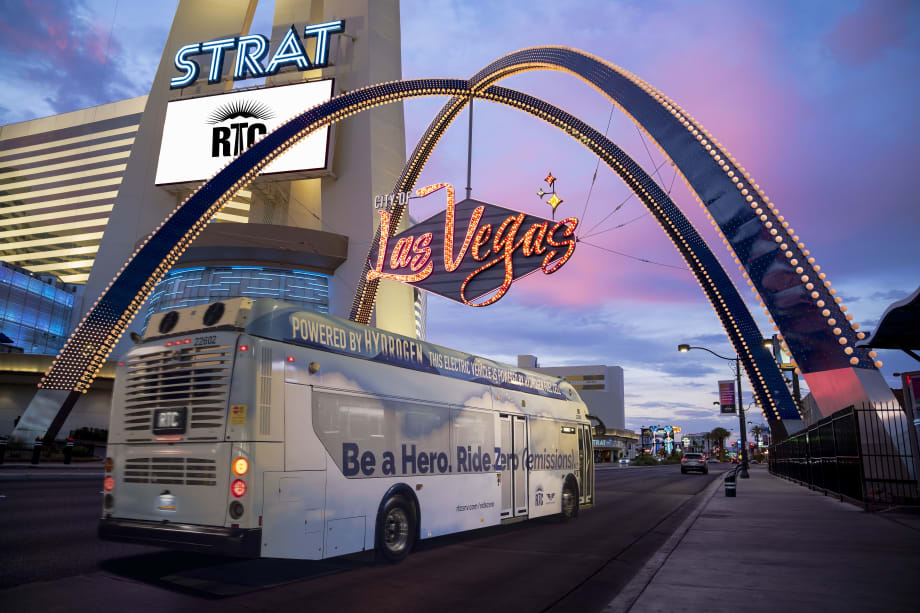
The technologically advanced vehicles were funded with a $3.8-million Low or No Emission Grant from the U.S. Department of Transportation.
Photo: RTC of Southern Nevada
2 min to read
The Regional Transportation Commission of Southern Nevada (RTC) announced the addition of two hydrogen fuel cell electric buses to its fleet at a recent celebration.
At the event, which took place at the University of Nevada, Las Vegas (UNLV) Black Fire Innovation, one of the two 40-foot vehicles was unveiled with the help of U.S. Senator Catherine Cortez Masto (D-NV); U.S. Representative Susie Lee (NV-03); Nevada Senate President Pro Tempore Pat Spearman; RTC Chair and Clark County Commissioner Justin Jones and RTC CEO MJ Maynard.
“I launched my Innovation State Initiative to bring new jobs to Nevada and promote emerging clean energy technologies just like these new hydrogen fuel cell electric buses,” said Masto. “These buses are easier to maintain, quieter, and help us combat climate change. I was proud to work with RTC of Southern Nevada to help secure funding to get these new buses on the streets.”
Funding for the Hydrogen Fuel Cell Electric Buses
The technologically advanced vehicles were funded with a $3.8 million Low or No Emission Grant from the U.S. Department of Transportation.
The grant also provides funding to train staff to maintain and operate the new technology.
“As Southern Nevada steers towards a greener future, embracing sustainable transportation options is a responsible environmental choice that drives our community forward,” said Jones. “By investing in sustainable technology, we’re creating green-collar jobs that benefit both our environment and our economy.”
How the Technology Works
The new fuel cell buses are powered by compressed hydrogen gas. The fuel cell combines hydrogen and oxygen to generate electricity through an electrochemical process. The only resulting by-product is water.
This technology has multiple advantages compared to other power sources. Hydrogen fuel cells do not release greenhouse gases and create little to no noise while the bus is idle and in motion.
Fuel cell vehicles can be fueled in less than fifteen minutes and can operate for longer periods of time, which will support the RTC’s operating routes.
“We are extremely grateful to our federal delegation for securing funding for these two hydrogen fuel cell electric buses,” said Maynard. “We have long committed to investment in innovative transit technology to reduce our emissions footprint here in Southern Nevada. This technology, which is new to Southern Nevada, helps address our sustainability goal, including moving toward a zero-emissions fleet.”
Seven additional 60-foot, hydrogen fuel cell buses have been ordered and will be delivered to Southern Nevada in the fall of 2024.
More Zero Emissions
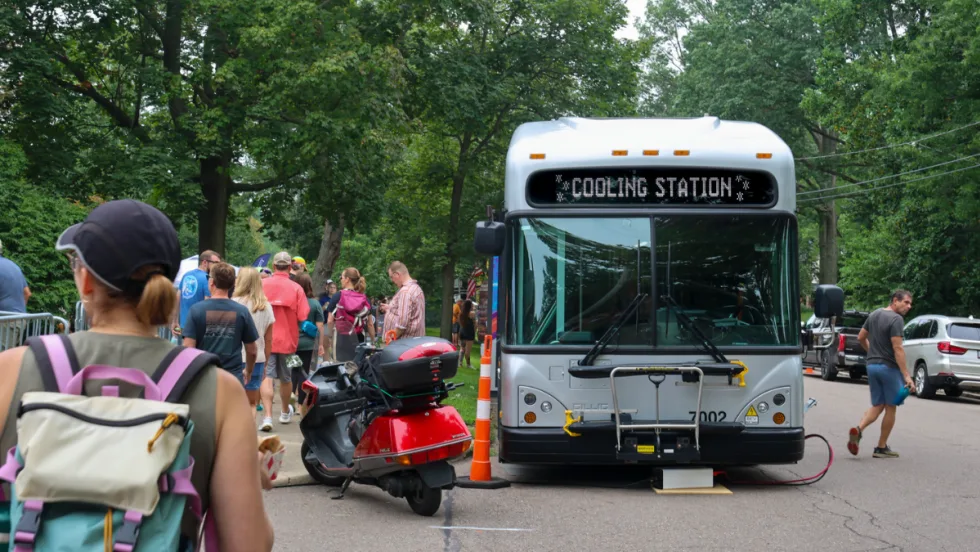
Ohio’s METRO RTA Turns Electric Buses into Mobile Power Sources at PorchROKR
See how three Gillig battery-electric buses powered festival stages while the agency’s new Park & Ride service carried approximately 1,000 attendees, demonstrating another potential use for transit agencies’ electric fleets.
Read More →
CALSTART and Forth Combine to Form Catalyst Mobility
The new name represents a renewed vision for the nonprofit focused on advancing clean, equitable, and affordable transportation solutions that move people and goods.
Read More →
Building a Flexible Path to Transit Electrification
John Hroncich discusses BAE Systems’ modular and scalable approach, lessons learned from decades of real-world operations, and how agencies can identify electrification strategies that fit their fleets.
Read More →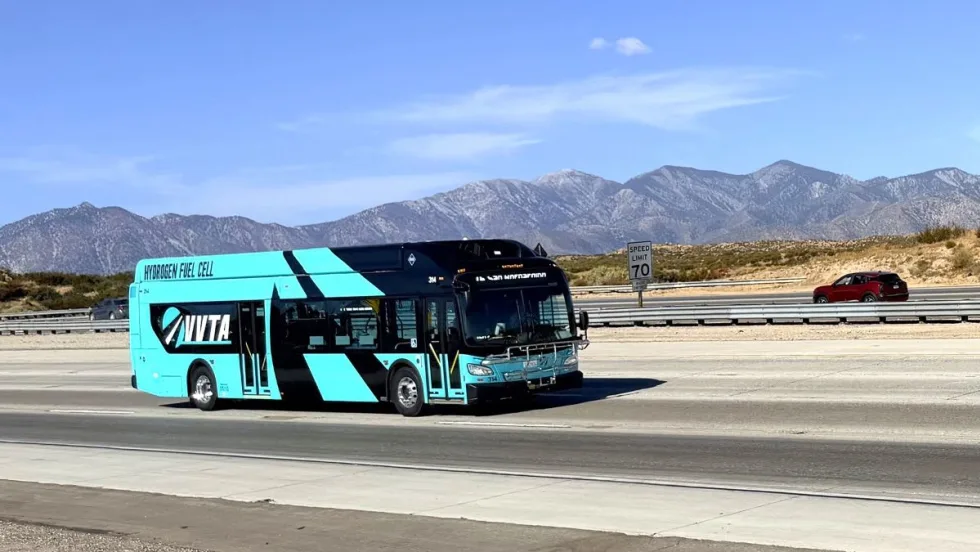
California's VVTA Begins Phased Rollout of Hydrogen Fuel Cell Buses
The agency is introducing 13 zero-emission buses into revenue service while evaluating performance across its urban, rural, and long-distance routes.
Read More →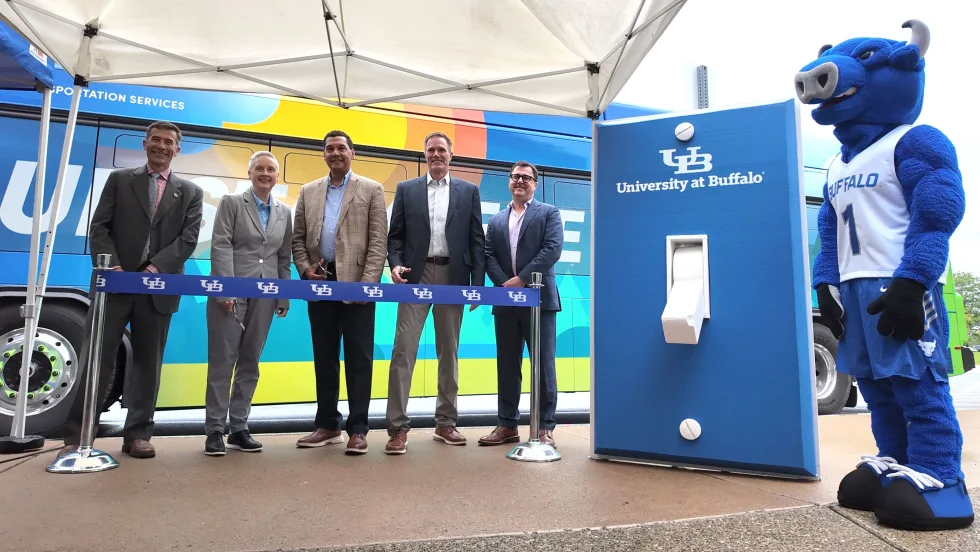
Inside Look: University at Buffalo Puts First 8 Electric Buses Into Stampede Service
UB, transportation solutions provider WeDriveU, and fleet electrification specialist Zenobē marked the deployment in the presence of students, university administrators, and local officials.
Read More →
Biz Briefs: OCTA Taps Clean Energy for Hydrogen Station, Stadler to Supply Via Rail Vehicles, and More
From manufacturers and suppliers to transit agencies and motorcoach operators, these updates offer a snapshot of the projects, partnerships and business moves driving the industry forward.
Read More →
AC Transit’s Cecil Blandon on Building the Next Generation of Transit Maintenance Leaders
The agency’s maintenance chief discusses leadership, workforce development, zero-emission technology, and preparing technicians for the future of public transportation.
Read More →
CTDOT Taps STV for Electric Bus Facility Design
The firm will work with CTDOT and RVT to define the facility layout, operational requirements, and long-term flexibility for RVT’s growing electric fleet.
Read More →
Chicago’s Pace Deploys 24 Hybrid-Electric Buses in Will County
The new buses reduce emissions and fuel consumption while advancing the agency's long-term goal of transitioning to a fully zero-emission fleet.
Read More →
DASH Breaks Ground on First On-Route Electric Bus Chargers in D.C. Region
The fast-charging infrastructure will help extend electric bus range, improve fleet utilization, and support DASH's goal of transitioning to a fully zero-emission fleet.
Read More →