



RTD survey finds public cautious about using transit
Respondents were asked to rate six activities according to their perceived level of safeness.

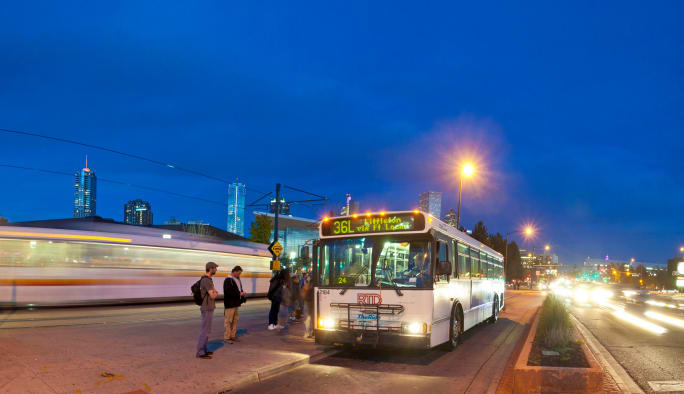
A total of 2,662 people participated in the survey, which was made available on the RTD website in English and Spanish and through various social media channels. RTD
A Denver Regional Transportation District (RTD) survey of nearly 2,700 people earlier this month showed that the public remains apprehensive about engaging in social activities amid the spread of the coronavirus, including riding RTD services. The majority of those who had not used transit in the past 30 days said they will take a wait-and-see approach to the pandemic before riding again.
These are some of the key findings from the survey, conducted online for a weeklong period beginning May 4. RTD collected feedback from customers to assess their attitudes surrounding the virus, including their thoughts about using transit services. A total of 2,662 people participated in the survey, which was made available on the RTD website in English and Spanish and through various social media channels. The agency will use the findings to inform its recovery efforts moving forward.
Respondents were asked to rate six activities according to their perceived level of safeness. Riding RTD was deemed the least safe of the activities people might participate in during the pandemic, relative to the other choices provided in the survey. These were grocery shopping, visiting a drugstore or pharmacy, visiting friends, visiting family, and exercising outside.
The survey also sought feedback from respondents about what will need to happen for them to feel safer riding RTD services. More than 2,400 open-ended responses to this question were submitted, all of which were reviewed and categorized by RTD’s market research team.
The most prominent themes expressed in response to this question include:
requiring personal protective equipment (PPE) such as face coverings for operators and passengers
assurance that RTD vehicles are cleaned and sanitized frequently and thoroughly
observance of social distancing on vehicles
a significant decline in the number of new COVID-19 cases
the creation of a vaccine
a limit on the number of passengers on vehicles
increasing or restoring service levels to minimize the risk of crowding
widespread availability of testing
providing sanitizer for passengers
addressing homelessness on vehicles
RTD has enacted many of the measures the public identified. All the agency’s bus and rail operators are required to wear face coverings, and RTD has called on its riders to take responsibility for the safety of themselves and others by doing the same. The agency is cleaning and sanitizing all vehicles each day using an EPA-approved emerging-virus disinfectant. To maintain proper social distancing between operators and riders, RTD last month suspended fare collection and switched to rear-door boarding and exiting on most buses. The agency’s staff has been monitoring passenger loads across the system and working to minimize the number of passengers on vehicles. RTD staff are in regular communications with health officials and are closely following the latest health care guidance to ensure an appropriate response to the coronavirus.
To read the entire feedback summary, including a detailed breakdown of the findings, click here.
More Management

METRO Opens Submissions for 2026 Motorcoach Awards
Nominations are now being accepted for METRO Magazine’s Operator of the Year and Innovative Operator of the Year awards.
Read More →
New York MTA Advances Final Contract for Second Avenue Subway Expansion
Contract Four is the largest in the Second Avenue Subway Phase 2 project and includes construction of station infrastructure, tracks, and signals for the subway expansion, MTA officials said. Work on Contract Four will begin in 2027.
Read More →
Transit Agencies Highlight Safety Gains at National Summit
Leaders from 15 major transit systems shared crime-reduction results and safety initiatives while discussing the role of continued federal support.
Read More →

NITA Names New Leadership, Expands Reduced-Fare Program at First Board Meeting
The new regional transit authority appointed its first board chair and interim executive director while extending reduced fares across CTA, Metra, and Pace for eligible riders.
Read More →
Beyond the Checklist: A Structured Approach to Transit Maintenance
Reliability-Centered Maintenance helps transit agencies move beyond routine checklists to focus limited resources on the assets and failures that have the greatest impact on safety, reliability, and service.
Read More →
APTA 2026 Nominating Committee Selects Leadership Slate, Names Chair and Vice Chair Nominees
Leadership changes will help shape the association’s priorities and its representation of the transportation industry during the 2026–2027 term.
Read More →
DART Launches Major Security, Fare Enforcement Initiative
The 90-day demonstration will deploy coordinated security teams at five light rail stations while testing controlled access and gathering data to guide future investments.
Read More →
Advancing Fare Collection Through Technology and Innovation
Learn about delivering 1300 gates at 91 stations while managing fare evasion. Explore the large scale deployment, solution customization and real-world results that affect the region. Prepare for deployment in your region now.
Read More →
Game Day in Motion: Moving Millions During the 2026 World Cup
Between packed transit stations and team motorcoaches, see how agencies and operators across North America tackled the transportation demands of the 2026 FIFA World Cup.
Read More →
Surface Transportation Extension Averts Shutdown, Leaves Transit Funding Gap
The stopgap keeps federal transportation programs moving, but missing advance funding could complicate the transit and rail projects agencies are planning next.
Read More →