




RELATED: Report finds 62% of Portlanders view e-scooters favorably
San Diego Mayor proposes regs for dockless scooters, bikes
Policies would slow down devices in popular public spaces, hold operators accountable and charge annual fees.
February 18, 2019

Using geofencing technology, dockless scooter and bike operators will be required to slow their devices down to eight miles per hour in designated high-pedestrian traffic zones around the city, per proposed regulations. Photo: Lime
3 min to read

Using geofencing technology, dockless scooter and bike operators will be required to slow their devices down to eight miles per hour in designated high-pedestrian traffic zones around the city, per proposed regulations. Photo: Lime
San Diego Mayor Kevin L. Faulconer released a set of proposed regulations for dockless scooters and bicycles to address public safety concerns by slowing the devices down in heavily-trafficked public spaces, establish clear rules of the road to hold operators accountable, and charge an annual fee for each device.
The proposed regulations cover six primary areas — limiting the maximum speed of motorized scooters in designated zones, vehicle staging and parking, rider education, data sharing, fees, and legal indemnification for the City of San Diego.
Proposed regulations include:
Permit and Fees: Each company wishing to operate within city limits will be issued a six-month permit and will be required to pay $150 per device annually. Operators will only be allowed to amend or renew their permit, including increasing the size of their fleet, during the permit issuance months of January and June. Companies offering an approved equity program can receive a $15 per device reduction in their annual fee.
Operators will also be required to pay a “performance bond,” which can be returned in the event they cease operation in San Diego and remove their devices.

Policies proposed by the Mayor of San Diego would slow down devices in popular public spaces, hold operators accountable and charge annual fees. Photo: Bird
Limiting Speed: Using geofencing technology, operators will be required to slow their devices down to eight miles per hour in designated high-pedestrian traffic zones around the city, including the boardwalks in Mission Beach, Pacific Beach, and La Jolla beach areas.
In two other areas in downtown San Diego, scooters will be required to slow to three miles per hour, with riders being notified they are in a no-ride zone.
Staging and Parking: Operators may stage their devices in groups of up to four, and there must be 40 feet between groups of staged devices. They will also be prohibited from staging in school zones and hospital zones.
Additionally, users will be prohibited from ending their rides in some areas, including the beach area boardwalks, the perimeter of Petco Park and the north and south Embarcadero walks in Downtown.
The city will encourage residents to report misplaced or abandoned bikes and scooters through the “Get It Done” application. Operators will be notified of the reports and will have three hours to remove the devices or face potential impound and associated fees.
City Indemnification: Each operator will be required to indemnify the city from liability claims and each will need to hold a liability insurance policy.
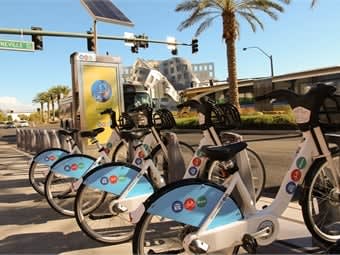
Photo: Regional Transportation Commission of Southern Nevada
Rider Education: Prior to each use, companies will be required to educate riders of local and state vehicle and traffic codes and the cost of a citation for violating those laws. Each device also will need to be clearly labeled “Riding on Sidewalks is Prohibited” and include operator age requirements.
Data Sharing: The operators will provide the city with detailed monthly reports that will be useful for Climate Action Plan monitoring and mobility planning, including but not limited to:
Deployed device data, including fleet size, and utilization rates.
Trip information, including start/end points, routes, distances, and duration.
Parking information.
Reported incidents and actions taken.
Reported obstructions/hazards and actions taken.
Maintenance activities.
The proposed ordinance will be discussed at the City Council’s Feb. 20 Active Transportation and Infrastructure Committee meeting.
More New Mobility

From Hardware to Digital Partner: Luminator Charts Its Next Chapter
CEO Magnus Friberg discusses Luminator’s shift toward becoming a digital partner, the growing importance of software and interoperability, and how AI can help agencies improve operations and passenger experience.
Read More →
Biz Briefs: Alstom Lands Canadian Contract, LYT to Supply California TSP, and More
In METRO's latest installment, we take a look at recent news from Complete Coach Works, Beep, FlixBus, and more partnerships making headlines across the transportation sector.
Read More →
CharterUP’s Armir Harris on Technology, AI, and the Future of Group Mobility
In a recent episode of METROspectives, CharterUP Founder/CEO Armir Harris discussed the company’s evolution from an online charter bus marketplace into a technology platform supporting public- and private-sector mobility and much more.
Read More →
Jacksonville’s NAVI Project Charts a New Course for Autonomous Public Transportation
Through its NAVI program, JTA is showing how autonomous vehicles, intelligent infrastructure, and coordinated operations can work together to deliver everyday public transportation.
Read More →
Biz Briefs: Luminator Marks Milestone and More
From manufacturers and suppliers to transit agencies and motorcoach operators, these updates offer a snapshot of the projects, partnerships and business moves driving the industry forward.
Read More →
New Tricks for Old Bureaucracies: Joshua Schank on Making Transit Innovation Stick
Former LA Metro Chief Innovation Officer Joshua Schank discusses why good ideas aren't enough, how transit agencies can overcome resistance to change, and why today's challenges demand more innovation.
Read More →
How DART's GoPass Is Redefining Regional Mobility
Serving 14 transit agencies, GoPass simplifies multimodal travel by allowing riders to plan, pay for, and manage an entire trip through one app.
Read More →
Biz Briefs: OCTA Taps Clean Energy for Hydrogen Station, Stadler to Supply Via Rail Vehicles, and More
From manufacturers and suppliers to transit agencies and motorcoach operators, these updates offer a snapshot of the projects, partnerships and business moves driving the industry forward.
Read More →CharterUP Expands Into New Mobility and Autonomous Transportation
Vice President of New Mobility Stephen Joos discusses how CharterUP is leveraging its nationwide transportation network, technology platform, and autonomous vehicle partnerships to expand into workforce mobility, campus shuttles, and transit solutions.
Read More →
METRO Magazine Announces 2026 Innovative Solutions Awards Winners
Projects Recognized for Advancing Mobility Through Technology, Accessibility, Workforce Innovation, and Operational Excellence
Read More →