



San Diego upgrades Blue Line with low-floor trolley cars
Other amenities include larger windows, higher ceilings, improved lighting, dedicated seating access for special needs passengers, and more room for standing passengers.

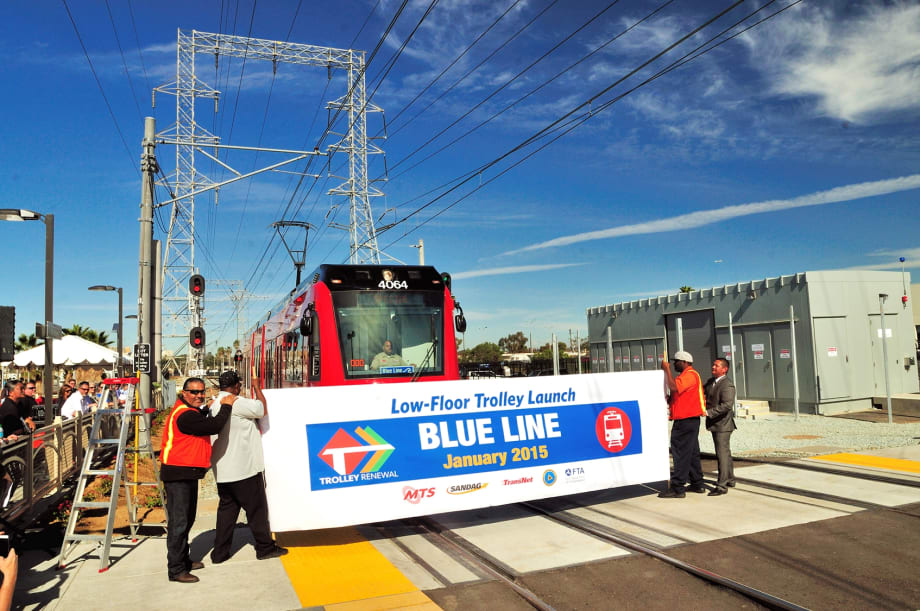
San Diego MTS low-floor Blue Line Trolley
San Diego MTS low-floor Blue Line Trolley
The San Diego Metropolitan Transit System (MTS) introduced its new low-floor Trolley cars on the Blue Line providing more than 50,000 weekday passengers with faster trips, easier boarding and more comfortable rides.
RELATED:(Video) Riders with disabilities get around town with San Diego MTS
Running from the U.S.-Mexico border through Downtown San Diego, the Blue Line is the busiest transit line in the San Diego region, providing more than 15 million passenger trips in FY 2014.
To mark the start of low-floor service on the Blue Line, the Metropolitan Transit System (MTS), the San Diego Association of Governments (SANDAG) along with local dignitaries, community members and contractors held a celebration at the 8th Street Station in National City on Tuesday, Jan. 27.
“This is a significant milestone for our region’s Trolley network,” said MTS Board Chairman Harry Mathis. “The low-floor design will make our entire transit system more efficient. Additionally, upgrades at Blue Line stations – such as 8th Street and 24th Street – will vastly improve bus and Trolley connections.”
The new Siemens-built low-floor Trolleys will improve operational efficiency by eliminating steps and mechanical lifts for people with disabilities. Trolley platforms are now nearly level with the floor of the Trolley, making boarding and deboarding much easier for all passengers. An integrated access ramp for people with mobility devices also deploys easily. This new feature eliminates the need for mechanical lifts that slowed boarding and caused delays.
Other amenities include larger windows, higher ceilings, improved lighting, dedicated seating access for special needs passengers, and more room for standing passengers. MTS now operates 76 low-floor trolley cars throughout the entire system and up to 28 will be dedicated to operations on the Blue Line daily.
Trolley Renewal began in fall 2010. All the station improvements are on track to be completed this spring. Additional track and signal work is expected to be finished later this year.
The launch of low-floor service on the Blue Line is part of a $600 million effort to modernize the entire Trolley system. Trolley Renewal is funded primarily by California Proposition 1B bond funds and TransNet, the regional half-cent sales tax for transportation administered by SANDAG. In addition to low-floor cars, Trolley Renewal included new station platforms, next-arrival electronic signs, signaling systems, overhead catenary wires, larger shelters and track replacement.
More Rail

CSA Group Releases Climate Resilience Standard for Transit, Passenger Rail
Developed with support from the Standards Council of Canada, CSA D700 guides assessing climate-related risks and planning adaptation measures for transit and passenger rail systems.
Read More →
LA Metro September Ridership Climbs 3.9%, Led by Rail Growth
The agency recorded more than 27.2 million boardings, with rail ridership increasing 12.4% year over year and the D Line posting the largest gains.
Read More →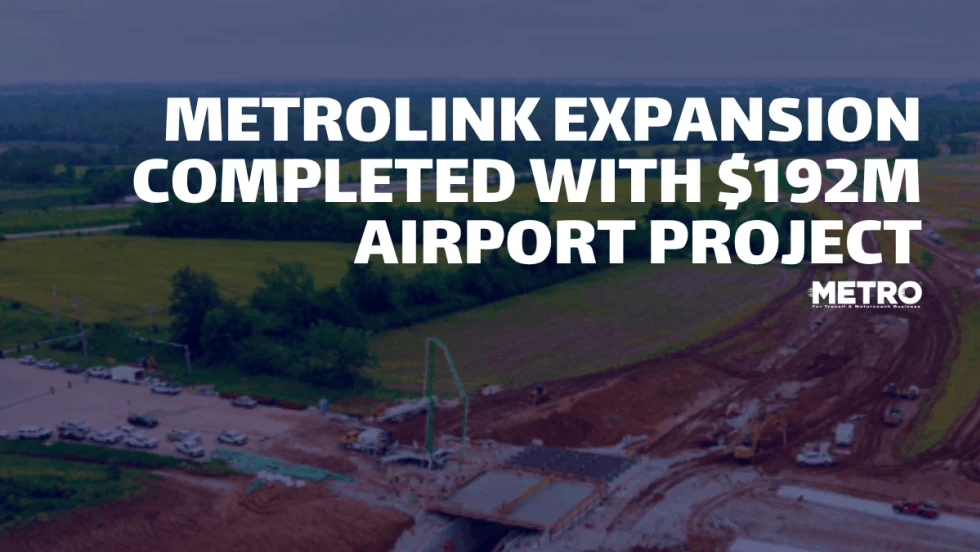
First Full MetroLink Rail Expansion Completed in 20 Years with $192M Airport Project
The project links two St. Louis-area airports by light rail while adding roadway and bike trail connections to improve regional access and mobility.
Read More →
Utilimarc Launches SmartReplace to Optimize Fleet Replacement Decisions
AI-powered SmartReplace helps fleets prioritize vehicle replacements, model budget scenarios, and build more defensible long-term strategies.
Read More →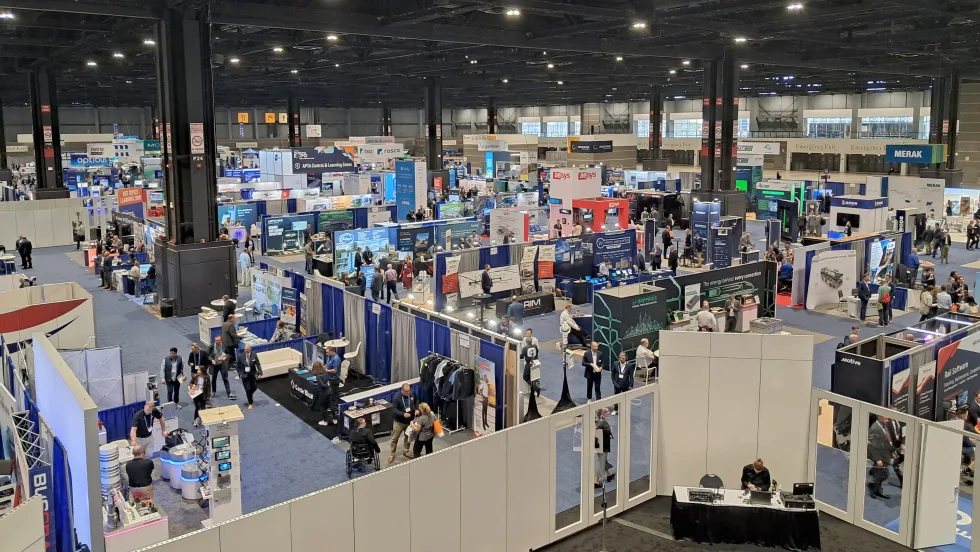
Scenes from APTA TRANSform & EXPO 2026
Transit leaders, manufacturers, and industry professionals gathered in Chicago to explore new technologies, share ideas, and discuss the future of public transportation.
Read More →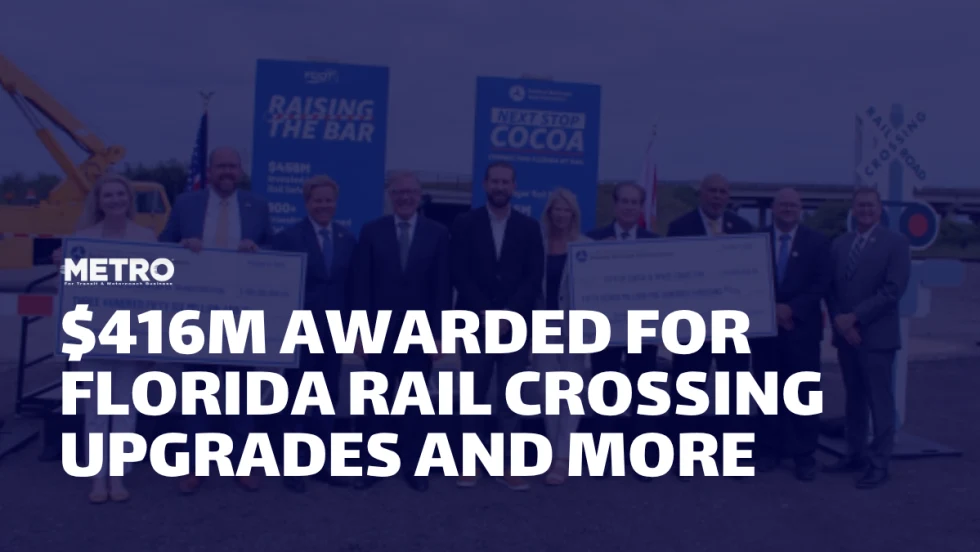
USDOT Awards $416 Million for Florida Rail Crossing Safety Upgrades, New Brightline Station
The projects aim to reduce risks for motorists and pedestrians at rail crossings while expanding passenger rail access along Florida’s Space Coast.
Read More →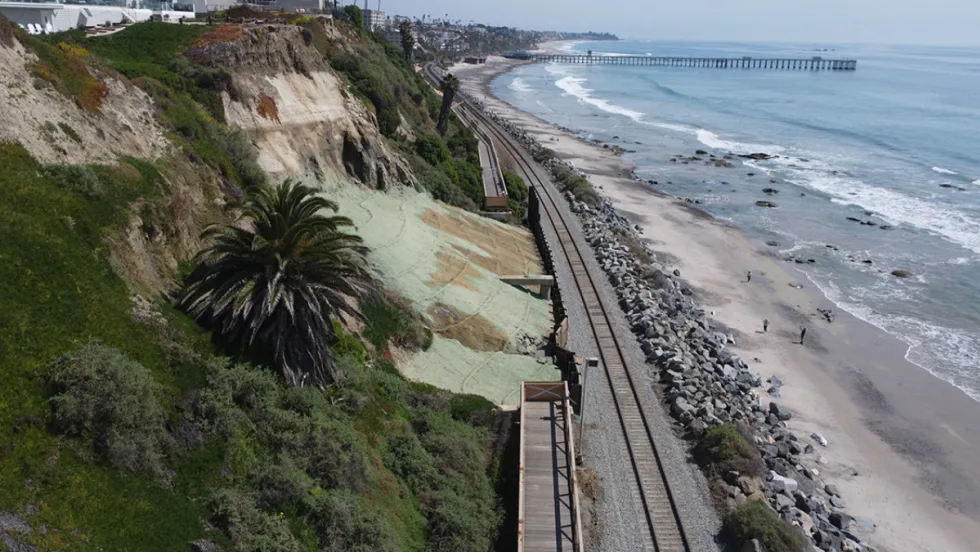
OCTA Declares Emergency to Protect Rail Corridor From Coastal Erosion
The California agency is accelerating shoreline protection and plans to place approximately 690,000 cubic yards of sand along the San Clemente coast to protect a key passenger and freight rail link.
Read More →
More Than a Summer Job: Building the Next Generation of Transit Talent
The Delaware River Port Authority and PATCO have transformed their internship program into a hands-on professional development experience that introduces students to the breadth of transportation careers — and creates a pipeline for future employees.
Read More →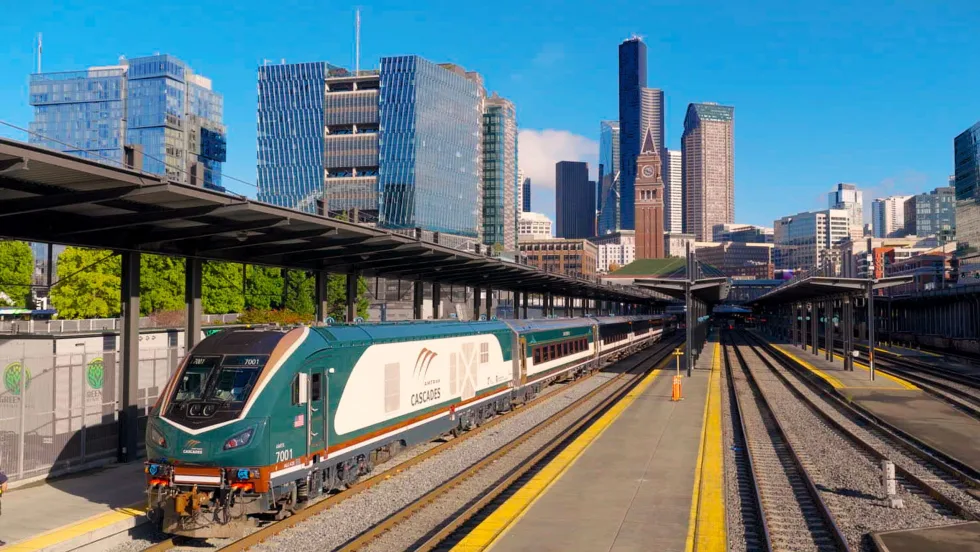
Airo Trains Make Their Amtrak Cascades Debut in the Pacific Northwest
Effective immediately, two cutting-edge Airo trainsets will join the Amtrak Cascades route, operating four daily trips between Vancouver, B.C., Seattle, Portland, and Eugene, Oregon, marking the first introduction of Airo trains into passenger service anywhere in the country.
Read More →
Florida's Brightline Announces Financial Restructuring
Brightline Florida says train operations will continue as normal as certain parent entities enter Chapter 11 and financial stakeholders provide $490 million in new long-term capital.
Read More →