



Software company to begin testing self-driving cars in Boston
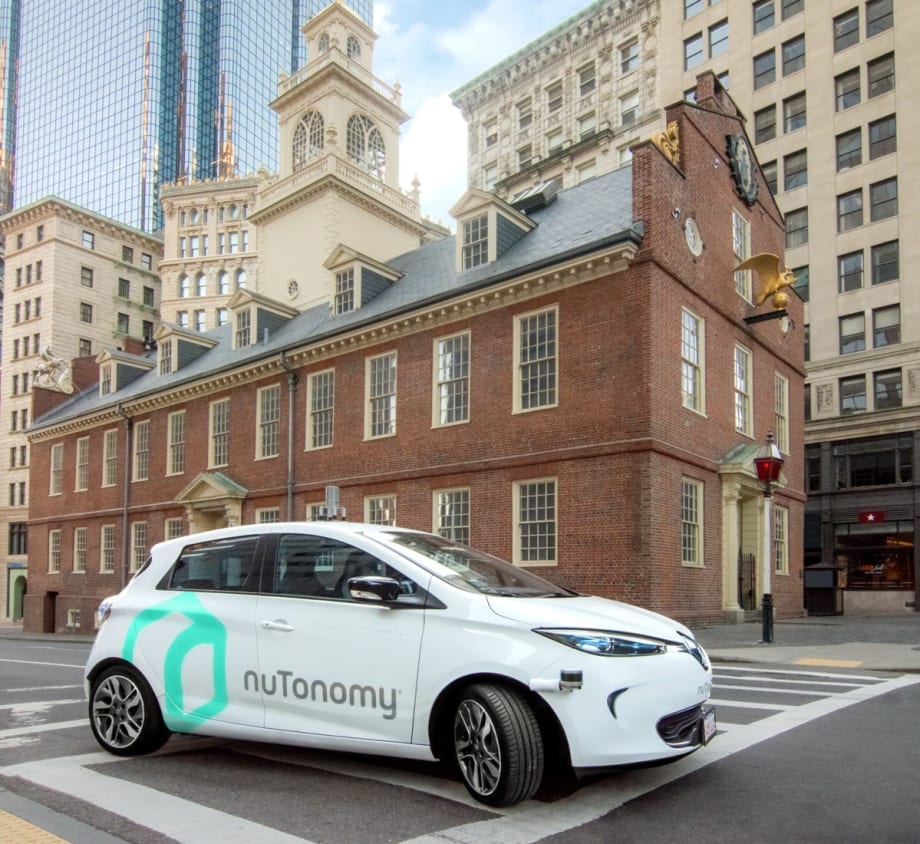
nuTonomy will begin testing its self-driving Renault Zoe electric vehicle before the end of the year in the Raymond L. Flynn Marine Park in the Seaport section of the city.

nuTonomy
nuTonomy
nuTonomy, a developer of software for self-driving cars, announced it will begin testing its fleet of self-driving cars on specific public streets in a designated area of Boston.
The company will begin testing its self-driving Renault Zoe electric vehicle before the end of the year in the Raymond L. Flynn Marine Park in the Seaport section of the city. nuTonomy outfits its vehicles with a software system, which has been integrated with high-performance sensing and computing components, to enable safe operation without a driver.
During the Boston road tests, nuTonomy’s software system will learn local signage and road markings while gaining a deeper understanding of pedestrian, cyclist, and driver behavior and interaction across a complex urban driving environment. An engineer from nuTonomy will ride in the vehicle during testing to observe system performance and assume control if needed. The company plans to work with government officials to expand the testing area to other parts of the city in the near future.
nuTonomy
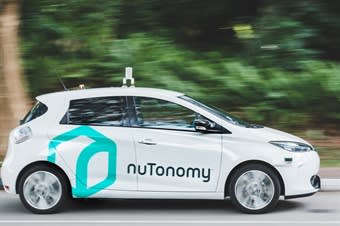
nuTonomy recently forged a partnership with Grab, Southeast Asia’s leading ride-hailing app, to support the expansion of nuTonomy’s on-going public trial of self-driving cars in Singapore, the first such public trial in the world. The trial is giving select Grab users a chance to experience the full end-to-end experience of e-hailing and riding in a nuTonomy self-driving vehicle in and around Singapore’s one-north business district.
The testing in Boston will enable nuTonomy to build on the knowledge it has gained from the public road tests and public trials it has been conducting in Singapore. The company plans to launch its self-driving mobility-on-demand service in Singapore in 2018.
More New Mobility

From Hardware to Digital Partner: Luminator Charts Its Next Chapter
CEO Magnus Friberg discusses Luminator’s shift toward becoming a digital partner, the growing importance of software and interoperability, and how AI can help agencies improve operations and passenger experience.
Read More →
Biz Briefs: Alstom Lands Canadian Contract, LYT to Supply California TSP, and More
In METRO's latest installment, we take a look at recent news from Complete Coach Works, Beep, FlixBus, and more partnerships making headlines across the transportation sector.
Read More →
CharterUP’s Armir Harris on Technology, AI, and the Future of Group Mobility
In a recent episode of METROspectives, CharterUP Founder/CEO Armir Harris discussed the company’s evolution from an online charter bus marketplace into a technology platform supporting public- and private-sector mobility and much more.
Read More →
Jacksonville’s NAVI Project Charts a New Course for Autonomous Public Transportation
Through its NAVI program, JTA is showing how autonomous vehicles, intelligent infrastructure, and coordinated operations can work together to deliver everyday public transportation.
Read More →
Biz Briefs: Luminator Marks Milestone and More
From manufacturers and suppliers to transit agencies and motorcoach operators, these updates offer a snapshot of the projects, partnerships and business moves driving the industry forward.
Read More →
New Tricks for Old Bureaucracies: Joshua Schank on Making Transit Innovation Stick
Former LA Metro Chief Innovation Officer Joshua Schank discusses why good ideas aren't enough, how transit agencies can overcome resistance to change, and why today's challenges demand more innovation.
Read More →
How DART's GoPass Is Redefining Regional Mobility
Serving 14 transit agencies, GoPass simplifies multimodal travel by allowing riders to plan, pay for, and manage an entire trip through one app.
Read More →
Biz Briefs: OCTA Taps Clean Energy for Hydrogen Station, Stadler to Supply Via Rail Vehicles, and More
From manufacturers and suppliers to transit agencies and motorcoach operators, these updates offer a snapshot of the projects, partnerships and business moves driving the industry forward.
Read More →CharterUP Expands Into New Mobility and Autonomous Transportation
Vice President of New Mobility Stephen Joos discusses how CharterUP is leveraging its nationwide transportation network, technology platform, and autonomous vehicle partnerships to expand into workforce mobility, campus shuttles, and transit solutions.
Read More →
METRO Magazine Announces 2026 Innovative Solutions Awards Winners
Projects Recognized for Advancing Mobility Through Technology, Accessibility, Workforce Innovation, and Operational Excellence
Read More →