



St. Louis Metro contracts with private security team to monitor system
Agency working with G4S to implement a mobile deployment strategy that more adequately reflects the travel of its transit customers.

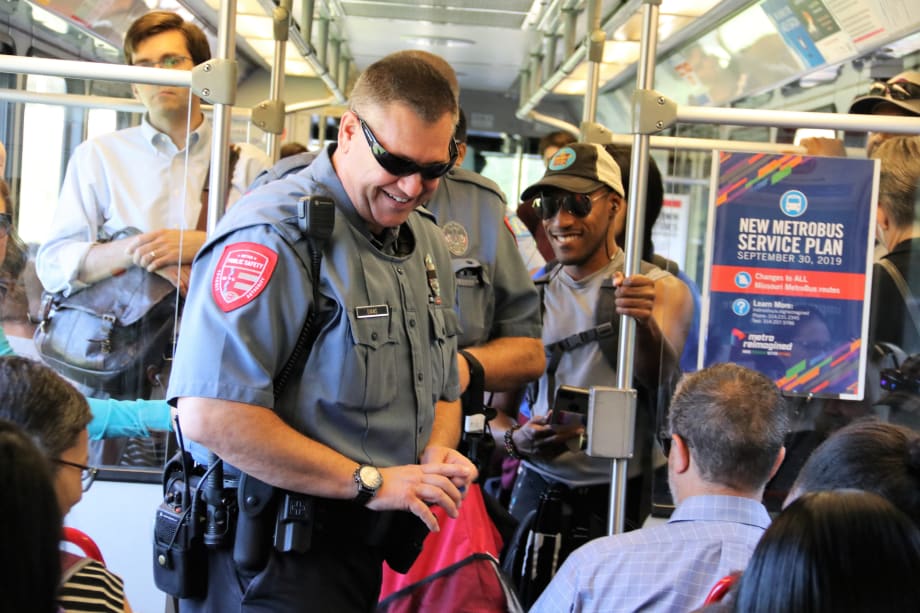
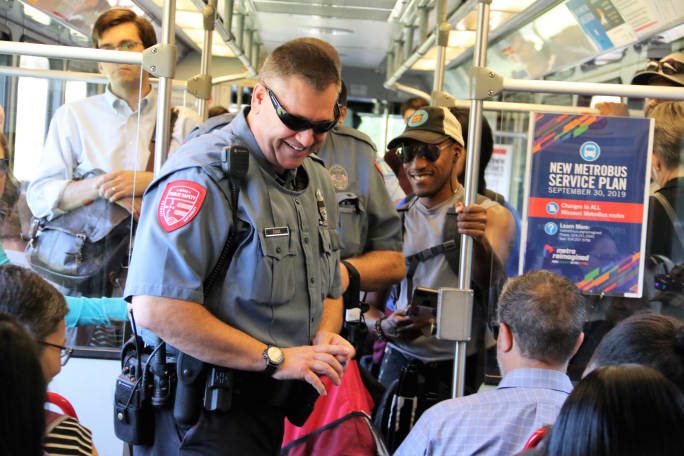
Former Metro Transit Public Safety Officers are now called Transit Security Specialists. Metro Transit
Contract security guard services will be provided on the St. Louis-based Metro Transit system by a new company beginning on April 1. Global security firm G4S Secure Solutions competed for and was awarded the contract which was approved by the Bi-State Development Board of Commissioners in December 2019. Bi-State Development operates the Metro Transit system in eastern Missouri and southwestern Illinois.
Metro Transit is working with G4S to implement a mobile deployment strategy that more adequately reflects the travel of its transit customers. It was announced initially that G4S would start on February 1. That date was adjusted to April 1 to allow for a more reasonable time frame for the hiring, background checks and the training of G4S security guards who will be assigned to the Metro Transit system.
When G4S security guards show up for work on April 1 on their first day on the Metro Transit system, transit riders will immediately notice they will be wearing new highly visible uniforms. Customers are already seeing some Metro Transit team members wearing new highly visible uniforms. Former Metro Transit Public Safety Officers who are now called Transit Security Specialists started wearing those uniforms on the system on January 20.
With these new uniforms, Transit Security Specialists are easier to spot as they patrol the system and engage with passengers, providing a more visible and accessible security presence on MetroLink trains, MetroBus vehicles, at MetroLink stations and at Metro Transit Centers. The team is becoming more visible and more importantly, the uniforms help reassure Metro Transit passengers that Transit Security Specialists are on the transit system looking out for them.
The new highly visible uniforms and the new contract with G4S are just two of the many changes that Metro Transit has been working closely on with the East-West Gateway Council of Governments, WSP, regional elected officials, and Metro’s three professional police departments – St. Louis County Police, St. Louis Metropolitan Police and St. Clair County Sheriff’s Department. The group is in the process of finalizing a regional security plan that is scheduled to be completed next month.
More Security and Safety

Transit Agencies Highlight Safety Gains at National Summit
Leaders from 15 major transit systems shared crime-reduction results and safety initiatives while discussing the role of continued federal support.
Read More →
DART Launches Major Security, Fare Enforcement Initiative
The 90-day demonstration will deploy coordinated security teams at five light rail stations while testing controlled access and gathering data to guide future investments.
Read More →
RTD Launches NextRide App to Consolidate Trip Planning, Fares, Security Reporting
The app expands on RTD’s existing NextRide web application and allows customers to view real-time vehicle locations and service alerts, purchase and store digital fares, and access customer support.
Read More →

TAPTCO Updates OSHA Compliance Training for Transit Maintenance Operations
The revamped program addresses 26 OSHA standards for maintenance facilities, with TAPTCO pointing to training, documentation, and everyday shop hazards as continuing challenges for transit operations.
Read More →
How VaporVision Adds Value to Transit Door Systems
Wabtec engineers explain how the system improves doorway detection, strengthens diagnostics and gives transit agencies and OEMs greater operating flexibility.
Read More →
FRA Announces $5.3B in Rail Investments, Including $2B for Amtrak
Funding will support grade-crossing improvements, infrastructure upgrades, and new Amtrak equipment in 23 states.
Read More →
Chicago, Maryland Expand Non-Law-Enforcement Safety, Rider Support
The CTA and MTA are launching new programs aimed at de-escalation, crisis response, rider assistance, and greater transparency.
Read More →
LA Metro, City of West Hollywood, and Partners Advance Smarter Bus Lane Enforcement
The award-winning partnership combines AI-powered detection with human oversight to improve bus reliability, accessibility, and enforcement efficiency.
Read More →
LA Metro Reports 57% Decline in Homelessness on Transit System Since 2024
The agency's latest homelessness count offers new data on how care-based services and cross-sector partnerships can complement traditional transit security strategies.
Read More →
FTA Launches 'Transit Moves America' Dashboard to Highlight Agency Safety and Performance
The online dashboard transforms National Transit Database information into a public-facing resource that allows users to compare transit agencies on key operational and safety metrics.
Read More →