



BART to Launch Ambassador Program on Trains for Safety & Security
Uniformed personnel will be equipped with radios to report safety and security concerns or biohazards.

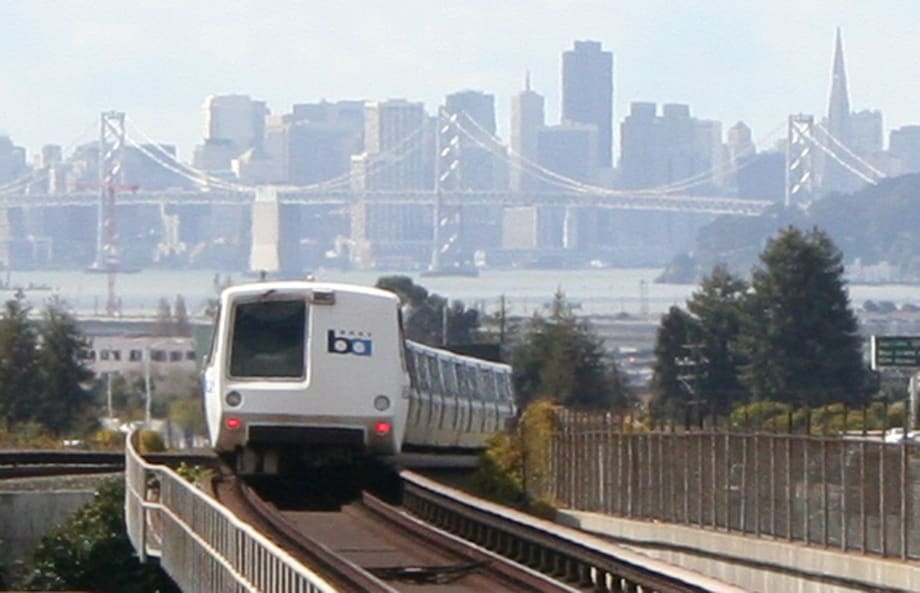
BART will increase the presence of uniformed personnel on trains to address customers’ concerns about safety and security.
Phoyo: BART
BART will launch an ambassador program next month to increase the presence of uniformed personnel on trains to address customers’ concerns about safety and security. The BART Board voted unanimously today to move forward with a six-month pilot program that’s targeted to begin February 10th.
The ambassadors will be recruited from the ranks of the BART Police Department’s Community Service Officers, non-sworn personnel who perform a variety of police services. The ambassadors will receive additional de-escalation and anti-bias training.
“This team will be police employees and trained to provide a sense of safety and security for our riders on-board trains and deter crime,” said Interim Police Chief Ed Alvarez. “I worked closely with our Board members, the General Manager, and police unions to develop a program that is responsive to our riders and is able to launch seamlessly, safely, and quickly.”
RELATED: BART recognizes rider's heroism during fatal attack
The ten ambassadors will walk trains in teams of two, seven-days-a-week from 2 pm to midnight, with extra coverage on Saturdays. They will focus their patrols on the most heavily travelled section of the system, the transbay corridor between 12th St. Oakland and Civic Center stations. During crowded evening commute hours, they will increase their coverage areas to other sections of the system such as Coliseum to Union City and Walnut Creek to Pittsburg/Bay Point.
“Our ambassadors will serve as extra eyes and ears on-board trains,” said BART Board President Lateefah Simon. “It’s a promising, first-of-its kind program at BART that will provide a welcoming presence focused on customer service and curbing inappropriate behavior.”
The ambassadors will wear easily-identifiable uniforms distinct from those of Community Service Officers or Fare Inspectors. They will be equipped with radios to report safety and security concerns or biohazards. The ambassadors will also be trained to respond to customers’ questions, complaints or requests for service. They will observe and report and call upon an officer when enforcement is needed.
“I am pleased existing Community Service Officers who are vetted, hired, trained and supervised by sworn police officers will be on trains on nights and weekends,” said BART Director Debora Allen. “I’ve been urging BART to add additional layers of security on board trains since I was elected to the board, and our vote today is a step in the right direction.”
The Board voted to fund the six-month pilot at a cost of $690,000 as well as an additional $810,000 to expand the paid area at Coliseum Station and enclose the elevator, using a new swing-style prototype faregate, into the paid area to prevent fare evasion.
More Rail

New York MTA Advances Final Contract for Second Avenue Subway Expansion
Contract Four is the largest in the Second Avenue Subway Phase 2 project and includes construction of station infrastructure, tracks, and signals for the subway expansion, MTA officials said. Work on Contract Four will begin in 2027.
Read More →
San Diego MTS Breaks Monthly Trolley Ridership Record
Agency officials said July’s ridership indicates MTS’s continued recovery from the pandemic.
Read More →
Report Examines NJ TRANSIT Reliability, Funding Challenges
The Garden State Initiative analysis examines the roles of Amtrak infrastructure, fleet management, and agency operations while recommending a more performance-based approach to improving reliability.
Read More →
Stadler, CapMetro Sign Long-Term Rail Fleet Support Agreement
Beginning in 2027, Stadler will provide on-site technical expertise, spare parts support, training, and obsolescence management to help extend the reliability and longevity of CapMetro’s GTW fleet.
Read More →
Biz Briefs: Alstom Lands Canadian Contract, LYT to Supply California TSP, and More
In METRO's latest installment, we take a look at recent news from Complete Coach Works, Beep, FlixBus, and more partnerships making headlines across the transportation sector.
Read More →
CATS Gold Line Marks 5 Years of Service, 2.8M Passenger Trips
With a six-mile expansion planned, the Charlotte streetcar is positioned to connect more neighborhoods and major transit hubs across the region.
Read More →
Why Simulating Pedestrian Movement Has Become Essential for Modern Rail Stations
Pedestrian microsimulation is helping rail planners identify bottlenecks, test station designs, and prepare complex transit hubs for growing passenger volumes.
Read More →
Amtrak Begins Major Construction at New York’s Sunnyside Yard
The new maintenance facility will support Amtrak’s Airo trainsets while improving maintenance efficiency and turnaround times in New York.
Read More →
Chicago Leaders Unveil Plans for O’Hare Airport Express Train
The privately developed project would offer a 15-minute trip between downtown and O’Hare’s Terminal 2, with trains operating every 15 minutes on a dedicated track. The service would use battery-electric trains and three existing freight rail rights-of-way.
Read More →
OCTA Maps Out 30-Year Strategy to Protect Coastal Rail Corridor
The draft feasibility report identifies strategies to protect the coastal rail line for decades as the agency continues near-term stabilization and sand placement efforts.
Read More →