The consultant will spearhead crucial battery-electric bus charging infrastructure upgrades at the South Base Maintenance and Bus Yard and the replacement of 12 traction power substations along the MAX Blue Line.
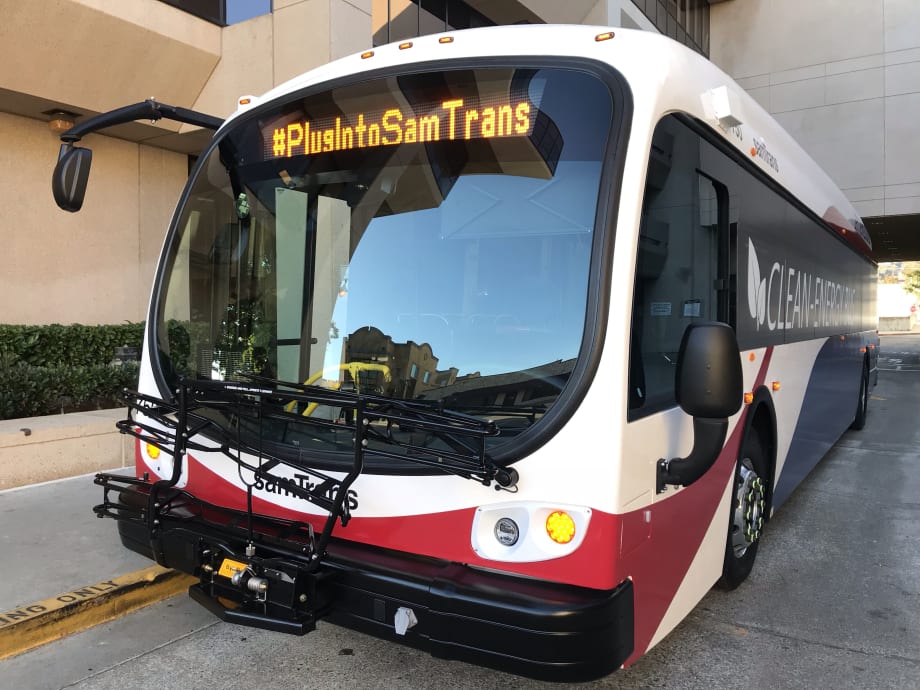
SamTrans procured 37 BEBs to replace end-of-life diesel buses, prompting the urgent need for charging infrastructure at its South Base division.
Photo: SamTrans
2 min to read
STV signed contracts with California’s San Mateo County Transit District (SamTrans) to spearhead crucial battery-electric bus (BEB) charging infrastructure upgrades at the District’s South Base Maintenance and Bus Yard and Portland, Ore.’s TriMet to spearhead the replacement of 12 traction power substations along the District’s Metropolitan Area Express (MAX) Blue Line.
The SamTrans BEB Transition
The agency recently procured 37 BEBs to replace end-of-life diesel buses, prompting the urgent need for charging infrastructure at its South Base division.
Ad Loading...
The project is a key element of SamTrans’ Innovative Clean Transit Plan, which guides the District’s transition to a 100% zero-emission fleet.
Aiming to establish a total of 147 bus charging stations at South Base, the ambitious endeavor will be executed in two phases, with Phase 1 focusing on the first 37 stations and Phase 2 incorporating the remaining 110 stations.
STV will provide comprehensive engineering and architectural design services for all 147 charging stations, along with charging infrastructure, transit operations, maintenance equipment, and transit technology.
STV’s SamTrans Contract
STV secured this project as its first task order under its current six-year general engineering on-call contract with SamTrans, awarded in June 2023.
The project represents an integral component of California’s broader efforts to advance zero-emission transportation and combat climate change.
Ad Loading...
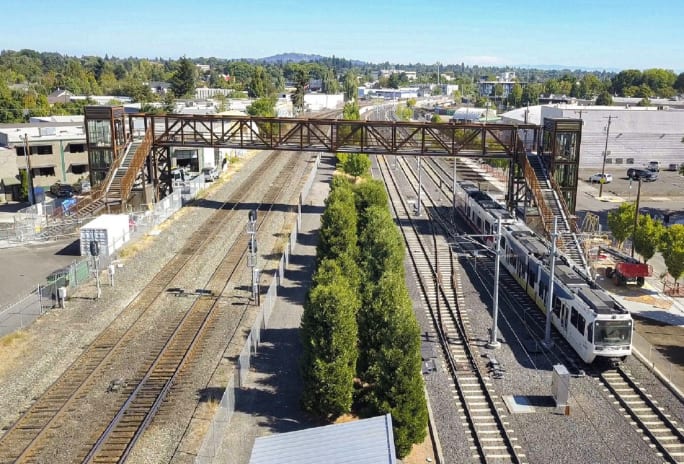
TriMet aims to enhance availability, equipment access, reliability, and overall safety, while reducing ongoing maintenance costs and the risk of service disruptions.
Photo: TriMet
TriMet’s MAX Blue Line Project
The MAX Blue Line represents the longest route in TriMet’s light rail network, spanning approximately 33 miles and serving 48 stations between Hillsboro, Beaverton, Portland, and Gresham.
Originally installed in 1983, the Blue Line’s substations are nearing the end of their expected service lives. By undertaking their replacement, TriMet aims to enhance availability, equipment access, reliability, and overall safety, while reducing ongoing maintenance costs and the risk of service disruptions.
STV will oversee the substations’ structural, civil, and systems design, as well as project controls for traction power design and civil site improvements. The firm will also provide overall project management, leading a team of eight consultants.
Hosted by the COTA from September 10 to 13, the Summit carried the theme “Celebrating 10 Years of Excellence, Leadership, and Impact,” with every part of the program honoring the people, agencies, and partners who built LIT over its first decade.
In this edition, we also cover recent appointments and announcements at the Wabtec, SilverRide, HNTB, and more, showcasing the individuals helping to shape the future of transportation.
Contract Four is the largest in the Second Avenue Subway Phase 2 project and includes construction of station infrastructure, tracks, and signals for the subway expansion, MTA officials said. Work on Contract Four will begin in 2027.
The new regional transit authority appointed its first board chair and interim executive director while extending reduced fares across CTA, Metra, and Pace for eligible riders.
Reliability-Centered Maintenance helps transit agencies move beyond routine checklists to focus limited resources on the assets and failures that have the greatest impact on safety, reliability, and service.
The 90-day demonstration will deploy coordinated security teams at five light rail stations while testing controlled access and gathering data to guide future investments.
Learn about delivering 1300 gates at 91 stations while managing fare evasion. Explore the large scale deployment, solution customization and real-world results that affect the region. Prepare for deployment in your region now.