




RELATED: Via, PANYNJ launch shared-ride service from LaGuardia
Sustainability benefits come from sharing AV services, not tech
Improving sustainability of shared rides does not require self-driving vehicles, but rather a focus on existing technology we have today.
November 26, 2019
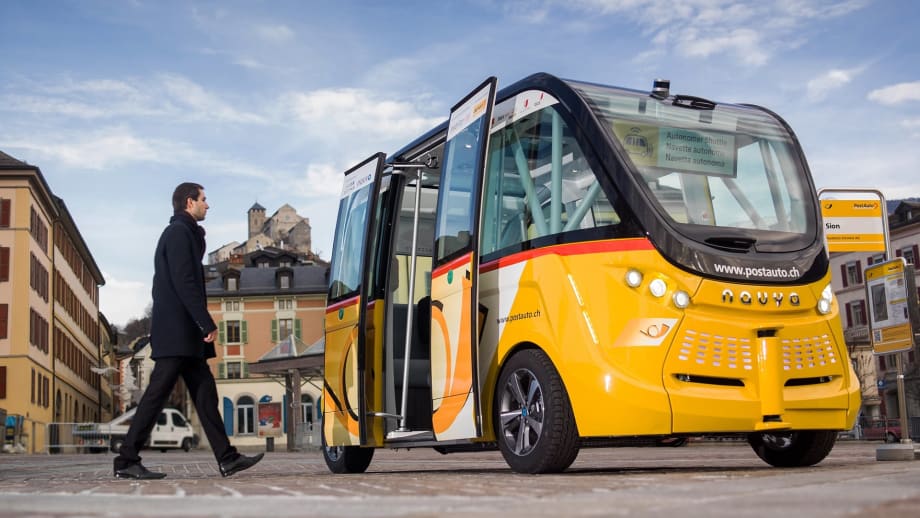
Improving sustainability of shared rides does not require self-driving vehicles, but rather a focus on existing technology we have today, a new report says.
Navya
2 min to read
Improving sustainability of shared rides does not require self-driving vehicles, but rather a focus on existing technology we have today, a new report says.
Navya
Could pooled ride-sharing and autonomous vehicle technology improve sustainability? Probably. But the key finding of new research is that sustainability benefits come not from the technology that allows cars to drive themselves, but from the fact that passengers are using a service to share the ride.
Louis A. Merlin, assistant professor in the School of Urban and Regional Planning at Florida Atlantic University, explores that potential in the article, “Transportation Sustainability Follows from More People in Fewer Vehicles, Not Necessarily Automation” published in the Journal of the American Planning Association (Vol. 85. No. 4). Merlin reminds readers that shifting to sustainable transportation is not a distant dream but rather a present reality with centralized fleet coordination technology and pooled rides.
Merlin’s definition of “pooled-ride services” includes traditional modes such as carpooling and vanpooling, and modern ride-hailing services such as Uber Pool and Lyft Shared that use centralized fleet coordination to group together riders traveling to and from nearby locations. Drawing from several studies, Merlin highlights the multiple benefits of increased use of pooled-ride services. With more people in fewer vehicles with a coordinated route to their destinations, pooled-ride services can:
Reduce congestion by minimizing the total number of vehicles on the road
Eliminate “deadheading,” or vehicle miles of travel an automobile spends looking for a passenger
Reduce travel costs
Reduce environmental impact
Supplement existing public transit systems in a “first mile/last mile” model
Provide more equitable access to sustainable transportation as riders share the cost of the trip
Currently, less than 10% of transportation network company trips are pooled, indicating opportunity to increase the use of pooled rides. In addition to supporting more comprehensive research of ride-sharing services, planners can help by advocating for transportation policies that encourage the growth of pooled-ride services. Examples include policies to accommodate parking pricing, congestion pricing, VMT fees, and other forms of user-pay financing. This is also an opportunity for planners to reorganize the structures that govern transportation with an eye toward broader goals of expanding equity and reducing environmental impact.
Merlin asserts that improving sustainability of shared rides does not require self-driving vehicles, but rather a focus on the existing technology we have today.
More New Mobility

From Hardware to Digital Partner: Luminator Charts Its Next Chapter
CEO Magnus Friberg discusses Luminator’s shift toward becoming a digital partner, the growing importance of software and interoperability, and how AI can help agencies improve operations and passenger experience.
Read More →
Biz Briefs: Alstom Lands Canadian Contract, LYT to Supply California TSP, and More
In METRO's latest installment, we take a look at recent news from Complete Coach Works, Beep, FlixBus, and more partnerships making headlines across the transportation sector.
Read More →
CharterUP’s Armir Harris on Technology, AI, and the Future of Group Mobility
In a recent episode of METROspectives, CharterUP Founder/CEO Armir Harris discussed the company’s evolution from an online charter bus marketplace into a technology platform supporting public- and private-sector mobility and much more.
Read More →
Jacksonville’s NAVI Project Charts a New Course for Autonomous Public Transportation
Through its NAVI program, JTA is showing how autonomous vehicles, intelligent infrastructure, and coordinated operations can work together to deliver everyday public transportation.
Read More →
Biz Briefs: Luminator Marks Milestone and More
From manufacturers and suppliers to transit agencies and motorcoach operators, these updates offer a snapshot of the projects, partnerships and business moves driving the industry forward.
Read More →
New Tricks for Old Bureaucracies: Joshua Schank on Making Transit Innovation Stick
Former LA Metro Chief Innovation Officer Joshua Schank discusses why good ideas aren't enough, how transit agencies can overcome resistance to change, and why today's challenges demand more innovation.
Read More →
How DART's GoPass Is Redefining Regional Mobility
Serving 14 transit agencies, GoPass simplifies multimodal travel by allowing riders to plan, pay for, and manage an entire trip through one app.
Read More →
Biz Briefs: OCTA Taps Clean Energy for Hydrogen Station, Stadler to Supply Via Rail Vehicles, and More
From manufacturers and suppliers to transit agencies and motorcoach operators, these updates offer a snapshot of the projects, partnerships and business moves driving the industry forward.
Read More →CharterUP Expands Into New Mobility and Autonomous Transportation
Vice President of New Mobility Stephen Joos discusses how CharterUP is leveraging its nationwide transportation network, technology platform, and autonomous vehicle partnerships to expand into workforce mobility, campus shuttles, and transit solutions.
Read More →
METRO Magazine Announces 2026 Innovative Solutions Awards Winners
Projects Recognized for Advancing Mobility Through Technology, Accessibility, Workforce Innovation, and Operational Excellence
Read More →