




RELATED: Europe's Air Pollution Issues and Some Cities' Solutions
Texas A&M working with EPA to optimize fleet performance
The research team will monitor the engine (speed, RPM, load, and other parameters) data along with GPS information in order to analyze the bus fleet drive cycles, and identify characteristics such as idle time and speed distribution.
December 12, 2016
Texas A&M University
3 min to read
Texas A&M University
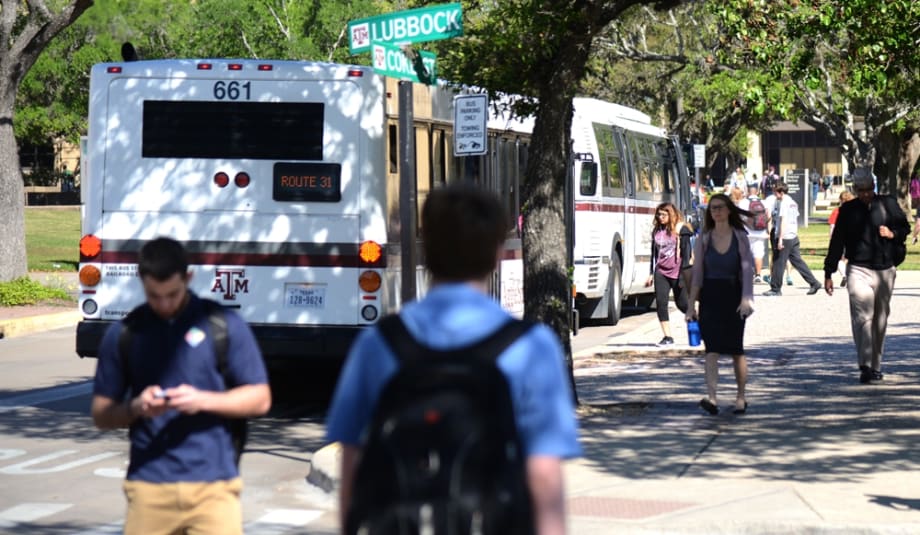
The Texas A&M Transportation Institute (TTI), in cooperation with the U.S. Environmental Protection Agency (EPA), recently kicked off a project to study the drive cycles of the Texas A&M University fleet buses that serve the campus and surrounding areas. The agencies are working together through a cooperative research and development agreement (CRADA).
“Texas A&M Transportation Services is excited to collaborate with our partners on such an important and far ranging research project,” said Associate VP Peter Lange, Transportation Services. “Providing opportunities to collect important data through advanced technologies has the potential to improve the overall efficiency of our transportation systems and lessen our impact on the environment,” he said.
The research team will use portable activity measurement system (PAMS) devices plugged into 15 vehicles that will monitor the engine (speed, RPM, load, and other parameters) data along with GPS information in order to analyze the bus fleet drive cycles, and identify characteristics such as idle time and speed distribution. The PAMS loggers are small devices that plug into the vehicle and gather information that is being broadcast by the engine.
“The benefits from analyzing the drive cycles of the buses are the potential for fuel consumption and emissions reductions,” said TTI Environment and Air Quality Division Head Joe Zietsman. “By analyzing the drive cycles, we will look to identify solutions that could lead to reducing the fuel consumption and emissions of the buses. These solutions could be more efficient route planning, changes in overall routes, or driver behavior training for more efficient driving.”
The PAMS devices will be installed in the buses for approximately 2–3 months for each vehicle, and the data will be downloaded on a weekly basis.
Beyond the local benefits and insight gained from this project, results from this study can potentially be used by the U.S. EPA to enhance EPA’s Motor Vehicle Emission Simulator (MOVES), a state-of-the-science tool that uses real-world data to estimate pollution from cars, trucks, buses, and other moving equipment. Data from this study will be used to test and potentially improve MOVES accuracy in simulating transit bus activity, leading to a better overall understanding of emissions from these vehicles.
The Texas A&M Transportation Services bus fleet study is part of TTI’s Campus Transportation Technology Initiative, which explores new technologies to advance campus transportation operations and future planning priorities. By partnering with companies to bring technologies and innovation to the forefront of the campus transportation ecosystem, Texas A&M and TTI desire to provide transportation solutions to enhance the quality of life for everyone on campus. The goals of this initiative include greater mobility, improved safety, enhanced connectivity and more efficient services.
“Texas A&M’s campus size (number of students and geographic scope) makes it comparable to a small city,” said TTI Senior Research Scientist Bob Brydia. “There is a large interest in understanding transit fleet operations and emissions, and this provides an ideal case study.”
More Bus

New York MTA Plans Largest Bus Fleet Upgrade in More Than a Decade
The agency is seeking manufacturers for 650 new CNG buses to replace aging vehicles, improve reliability, and advance its broader fleet modernization strategy.
Read More →
Building a Flexible Path to Transit Electrification
John Hroncich discusses BAE Systems’ modular and scalable approach, lessons learned from decades of real-world operations, and how agencies can identify electrification strategies that fit their fleets.
Read More →
Bus Tech Talk: Keeping Transit Technicians Ahead of the Technology Curve
LA Metro’s Obed Mejia discusses technician training, evolving maintenance technology, fleet replacement, and strategies for getting the most out of today’s transit fleets.
Read More →
Biz Briefs: RIPTA Unveils New Frontrunners, Clevland RTA Adds New Siemens, and More
In METRO's latest installment, we take a look at recent news from Siemens, Prevost, Dodge, and more partnerships making headlines across the transportation sector.
Read More →
People Movement: Holly Arnold Joins Transdev and More
In this edition, we also cover recent appointments and announcements at Pace, CamTran, MCI, and more, showcasing the individuals helping to shape the future of transportation.
Read More →
The High Cost of Transit Buses: Industry Leaders Look to Procurement Reform
Transit leaders and policymakers examine how standardized bus designs, streamlined procurement, and predictable funding could help agencies stretch budgets and deliver better service.
Read More →
The Business Voice Behind Public Transportation
As chair of APTA’s Business Members Board of Governors, Ray Melleady explains how more than 850 business members are partnering with transit agencies to advance funding, innovation, and industry-wide collaboration.
Read More →
From Surviving to Thriving: Building Stronger Transportation Organizations
Bus Business Consultants founder Brian Dickson shares lessons on leadership, organizational health, and creating options for long-term success in a changing transportation industry.
Read More →
Finding the ‘Happy Medium’: Optimizing Maintenance Without Sacrificing Reliability
The key to maintenance optimization isn’t doing less work—it’s doing the right work at the right time on the right assets.
Read More →
LA Metro, City of West Hollywood, and Partners Advance Smarter Bus Lane Enforcement
The award-winning partnership combines AI-powered detection with human oversight to improve bus reliability, accessibility, and enforcement efficiency.
Read More →