



T&I Committee approves rail bill markup
During the legislation markup, the Committee also approved 12 General Services Administration Capital Investment and Leasing Program resolutions that will result in “$111 million in taxpayer savings,” and the Fiscal Year 2016 Budget Views and Estimates of the Committee.

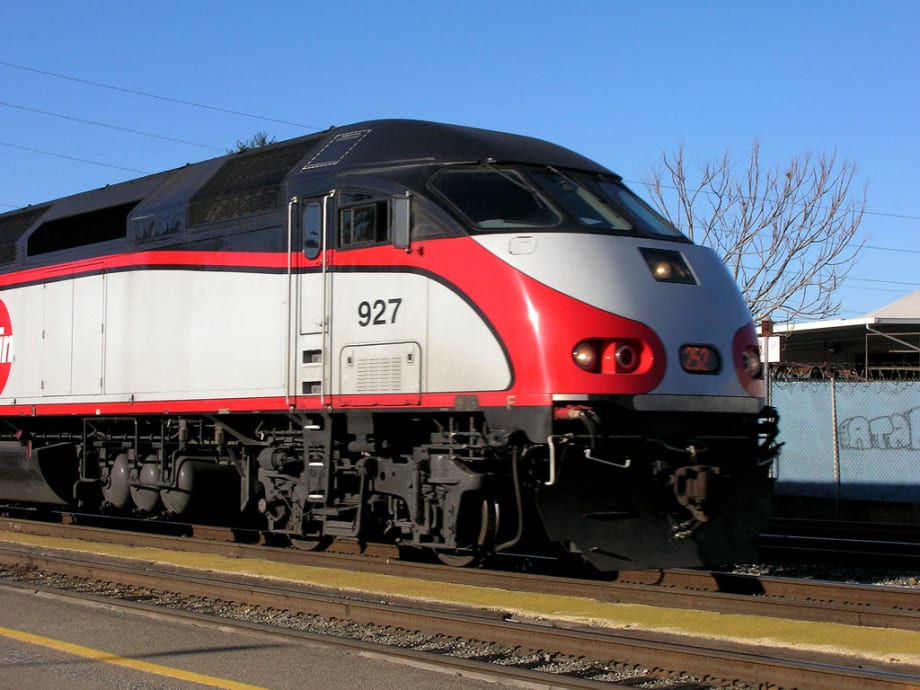
Chris Enright
Chris Enright
The Transportation and Infrastructure Committee unanimously approved bipartisan legislation that improves the infrastructure, reduces costs, creates greater accountability and transparency, leverages private sector resources, and accelerates project delivery for Amtrak and the Nation’s passenger rail transportation system.
The Passenger Rail Reform and Investment Act of 2015, or PRRIA (H.R. 749), was introduced by Transportation and Infrastructure Committee Chairman Bill Shuster (R-PA); T&I Ranking Member Peter DeFazio (D-OR); Railroads, Pipelines and Hazardous Materials Subcommittee Chairman Jeff Denham (R-CA); and Subcommittee Ranking Member Michael Capuano (D-MA).
“In every region of the country, passenger rail investments boost local economies and create thousands of family-wage construction, engineering, and manufacturing jobs. This bill isn’t perfect — but it was a bipartisan effort that ultimately provides critical investments and system wide improvements to increase capacity and make our railways safer,” said DeFazio.
"Passage of the Passenger Rail Reform and Investment Act is an investment in our infrastructure that will make Amtrak operate more like a business — better responding to the needs of its customers and focusing on efficiency, transparency, and cost-saving,” Denham said. “I’m proud of the bipartisan unanimous support we’ve garnered for this bill and look forward to seeing PRRIA move to the House floor.”
RELATED:Consultant Roundtable
Passenger rail presents one of the best transportation alternatives for relieving congestion on some of the nation’s most crowded highways and in our busy airspace. However, the rail system and Amtrak — the country’s intercity passenger rail provider — must be reformed and improved. For years, Amtrak has operated under unrealistic fiscal expectations and without a sufficient level of transparency.
Profits from Amtrak’s most profitable route – the Northeast Corridor (NEC) — currently are not invested back into the corridor. And although significant ridership increases are occurring on Amtrak’s state-supported routes, its inconsistent financial structure and “black box” accounting system hamper states’ ability to help manage the routes and understand what exactly it is they’re paying Amtrak for.
In addition, rail infrastructure projects are unnecessarily delayed by unwieldy review processes that cost time and money, and current law that limits the ability to partner with the private sector holds back the development of the system.
During the legislation markup, the Committee also approved 12 General Services Administration Capital Investment and Leasing Program resolutions that will result in “$111 million in taxpayer savings,” and the Fiscal Year 2016 Budget Views and Estimates of the Committee.
More information from the markup, including additional background, legislative text and video, are available here.
Richard Harnish, executive director of the Midwest High Speed Rail Association (MHSRA), issued the following statement in response to the PRIIA bill markup:
“The bill proposed by the House T&I Committee, which has similar low rates of funding as previous years, will not provide the national rail network our economy needs to thrive in the 21st century.”
“This bill would authorize Amtrak and other intercity passenger rail service for the next five years at a piddling $1.8 billion per year. That means another five years of declining service when the system should be rapidly expanding.”
“The Federal Railroad Administration has established that $5 billion per year is the minimum required to grow the system. The American Public Transportation Association has shown that $9.5 billion is needed to support the current project pipeline and continue Amtrak’s funding. The National Association of Railroad Passengers has identified nearly $200 billion in projects requested by state or local governments. Congress needs to do a lot better.”
“This insufficient funding comes at a time when Amtrak ridership is rapidly growing. As more and more American turn towards alternative modes of transportation, like inter-city trains, Congress is failing to plan for the future.”
“Every year that passes without an investment in expanding our system, is another year we fall behind our competitors in Europe and Asia.”
More Rail

FTA Ends Direct Oversight of MBTA Safety Actions
The federal agency closed its remaining special directive to the Massachusetts Department of Public Utilities following a safety review that began in 2022.
Read More →
Amtrak, CN Reach Agreements to Strengthen Passenger Rail Service, Safety
The agreement resolves a more than decade-long proceeding before the Surface Transportation Board concerning the terms and conditions for Amtrak services, such as the City of New Orleans, Illini/Saluki, and Wolverine.
Read More →
New York MTA Advances Final Contract for Second Avenue Subway Expansion
Contract Four is the largest in the Second Avenue Subway Phase 2 project and includes construction of station infrastructure, tracks, and signals for the subway expansion, MTA officials said. Work on Contract Four will begin in 2027.
Read More →
San Diego MTS Breaks Monthly Trolley Ridership Record
Agency officials said July’s ridership indicates MTS’s continued recovery from the pandemic.
Read More →
Report Examines NJ TRANSIT Reliability, Funding Challenges
The Garden State Initiative analysis examines the roles of Amtrak infrastructure, fleet management, and agency operations while recommending a more performance-based approach to improving reliability.
Read More →
Stadler, CapMetro Sign Long-Term Rail Fleet Support Agreement
Beginning in 2027, Stadler will provide on-site technical expertise, spare parts support, training, and obsolescence management to help extend the reliability and longevity of CapMetro’s GTW fleet.
Read More →
Biz Briefs: Alstom Lands Canadian Contract, LYT to Supply California TSP, and More
In METRO's latest installment, we take a look at recent news from Complete Coach Works, Beep, FlixBus, and more partnerships making headlines across the transportation sector.
Read More →
CATS Gold Line Marks 5 Years of Service, 2.8M Passenger Trips
With a six-mile expansion planned, the Charlotte streetcar is positioned to connect more neighborhoods and major transit hubs across the region.
Read More →
Why Simulating Pedestrian Movement Has Become Essential for Modern Rail Stations
Pedestrian microsimulation is helping rail planners identify bottlenecks, test station designs, and prepare complex transit hubs for growing passenger volumes.
Read More →
Amtrak Begins Major Construction at New York’s Sunnyside Yard
The new maintenance facility will support Amtrak’s Airo trainsets while improving maintenance efficiency and turnaround times in New York.
Read More →