



Tight transit budgets force Metra to rehab railcars
Increased sales tax receipts could be the answer that transit agencies, such as Metra have been looking for.

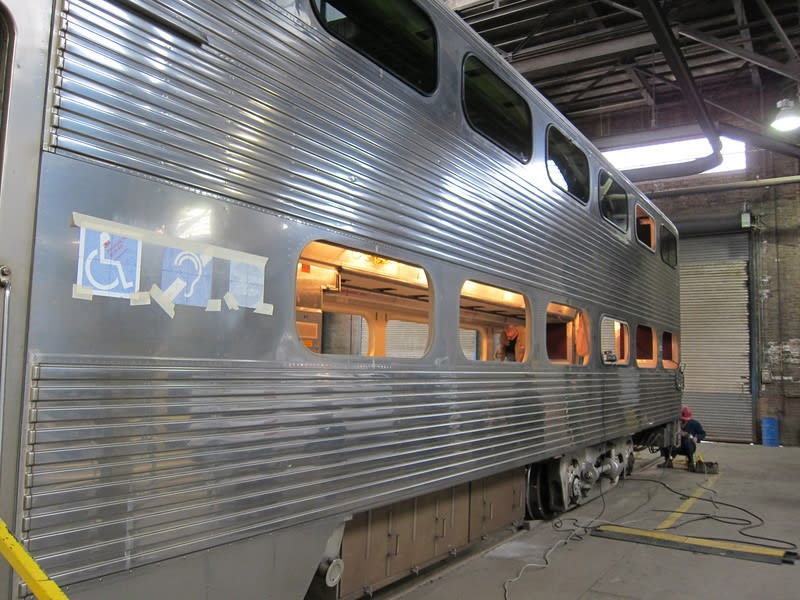
Photo courtesy Metra
Increased sales tax receipts could be the answer that transit agencies, such as Chicago's Metra have been looking for. The Regional Transportation Authority officials said in late August they expect 4% growth in sales tax revenues, which means a larger 2015 transit budget, according to a Chicago Sun-Times article.
With no agreements finalized yet, Metra is still spending its budget conservatively. The commuter rail division recently started a rehabilitation program for 176 of its cars. The passenger cars are being refurbished in-house, by Metra workers.
The Metra Rehab Facility just refurbished car number 101 and plans to finish the last car by late next year. Although the cars are not brand new, the agency is saving more than $2 million per car by rehabbing rather than starting fresh. Regular rehabs on the cars will also prolong the lifespan.
“The average life of a railcar is 25 years, but by rehabbing the cars every 14 to 16 years, we can expect a 42-year-lifespan,” said Don Orseno CEO of Metra.
The rehabilitation program isn’t only saving Metra money, but also making upgrades and adding amenities like ADA lifts, electrical outlets, new toilets, and new flooring and seating.
“From a passenger perspective, you wouldn’t be able to tell if the car was refurbished or brand new,” said Jim Derwinski, acting chief mechanical officer for Metra.
The Metra Amerail Rehab Facility has 60 workers who are divided up between four stations. The beginning of the process starts with stripping down the old car down to the bare bones of its frame. The final stage is where the newly remodeled car is tested. The assembly line of electricians, sheet metal workers and carmen have the process down to 36 days.
The Federal Transit Administration is funding the Amerail Rehabilitation Program. The total budget is $115 million. The cars are being rehabilitated at the 49th St. Car Shop along the Rock Island Line.
Although Metra has been saving money, there are still financial woes in the industry.
“Every year it seems the funding is shrinking and the needs are growing,” said Orseno.
One of those needs comes from a federal mandate making Positive Train Control (PTC) a necessity. PTC is a safety enhancement that commuter and freight railroads need to implement by next December.
“Although it is a huge safety enhancement it is also costing huge dollars,” said Orseno. “It’s costing freight railroads around 10 billion and passenger railroads around three billion.”
Orseno has been with the Northeast Illinois commuter rail for more than 30 years. He began his career as a trainman for the Chicago Rock Island and Pacific Railroad Co.
More Rail

New York MTA Advances Final Contract for Second Avenue Subway Expansion
Contract Four is the largest in the Second Avenue Subway Phase 2 project and includes construction of station infrastructure, tracks, and signals for the subway expansion, MTA officials said. Work on Contract Four will begin in 2027.
Read More →
San Diego MTS Breaks Monthly Trolley Ridership Record
Agency officials said July’s ridership indicates MTS’s continued recovery from the pandemic.
Read More →
Report Examines NJ TRANSIT Reliability, Funding Challenges
The Garden State Initiative analysis examines the roles of Amtrak infrastructure, fleet management, and agency operations while recommending a more performance-based approach to improving reliability.
Read More →
Stadler, CapMetro Sign Long-Term Rail Fleet Support Agreement
Beginning in 2027, Stadler will provide on-site technical expertise, spare parts support, training, and obsolescence management to help extend the reliability and longevity of CapMetro’s GTW fleet.
Read More →
Biz Briefs: Alstom Lands Canadian Contract, LYT to Supply California TSP, and More
In METRO's latest installment, we take a look at recent news from Complete Coach Works, Beep, FlixBus, and more partnerships making headlines across the transportation sector.
Read More →
CATS Gold Line Marks 5 Years of Service, 2.8M Passenger Trips
With a six-mile expansion planned, the Charlotte streetcar is positioned to connect more neighborhoods and major transit hubs across the region.
Read More →
Why Simulating Pedestrian Movement Has Become Essential for Modern Rail Stations
Pedestrian microsimulation is helping rail planners identify bottlenecks, test station designs, and prepare complex transit hubs for growing passenger volumes.
Read More →
Amtrak Begins Major Construction at New York’s Sunnyside Yard
The new maintenance facility will support Amtrak’s Airo trainsets while improving maintenance efficiency and turnaround times in New York.
Read More →
Chicago Leaders Unveil Plans for O’Hare Airport Express Train
The privately developed project would offer a 15-minute trip between downtown and O’Hare’s Terminal 2, with trains operating every 15 minutes on a dedicated track. The service would use battery-electric trains and three existing freight rail rights-of-way.
Read More →
OCTA Maps Out 30-Year Strategy to Protect Coastal Rail Corridor
The draft feasibility report identifies strategies to protect the coastal rail line for decades as the agency continues near-term stabilization and sand placement efforts.
Read More →