




RELATED: Transdev to run autonomous shuttle pilot in Jacksonville
Transdev lands CATA paratransit contract
The company will begin providing CATA’s Spec-Tran and supplemental rural services effective April 2018, affecting more than 15,500 paratransit customers.
January 29, 2018
2 min to read
Lansing, Mich.-based CATA’s board of directors unanimously supported staff’s recommendation to award its paratransit demand services contract to Transdev. The company will begin providing CATA’s Spec-Tran and supplemental rural services effective April 2018, affecting more than 15,500 paratransit customers.
Over the full course of the contract, which was awarded for a total of five years, Transdev will receive $37.1 million.
“We are confident that Transdev will help CATA respond to customer feedback and enhance service quality,” said CATA CEO Bradley T. Funkhouser. “Transdev offers an aggressive driver-recruitment plan, competitive wage structure and a proposal that comprehensively addresses how it would meet our customers’ needs. They capably demonstrated that they thoroughly understand CATA’s goals and expectations, and that they have the experience, leadership, technical strengths, track record and commitment to safety, thereby guaranteeing exemplary customer satisfaction.”
Four organizations — including local incumbent Dean Transportation — responded to CATA’s October 2017 request for proposal. All vendor submissions and presentations were independently reviewed by an in-house evaluation team against specific, predetermined criteria.
“We are excited to be part of the Greater Lansing community,” said Transdev Business Development VP Arthur Rader. “We’re looking forward to demonstrating that Transdev has the experience and talent to provide the best service for CATA. Our quality personnel, proven processes and prudent use of applicable technologies will enable us to provide CATA with world-class operations and maintenance. Furthermore, one of our goals is to minimize the displacement of current contracted operators by retaining as many as possible and welcoming them into the Transdev family to ensure a seamless transition.”
CATA’s existing contract with Dean Transportation, which includes Spec-Tran, Williamston Connector, Mason Connector, Mason Redi-Ride, and CATA Rural Service, expires March 31, 2018. These and other services operated by CATA such as Lot Link and Night Owl utilize smaller buses and minivans, and operate curb-to-curb, picking customers up curbside and transporting them to their destination.
More Paratransit
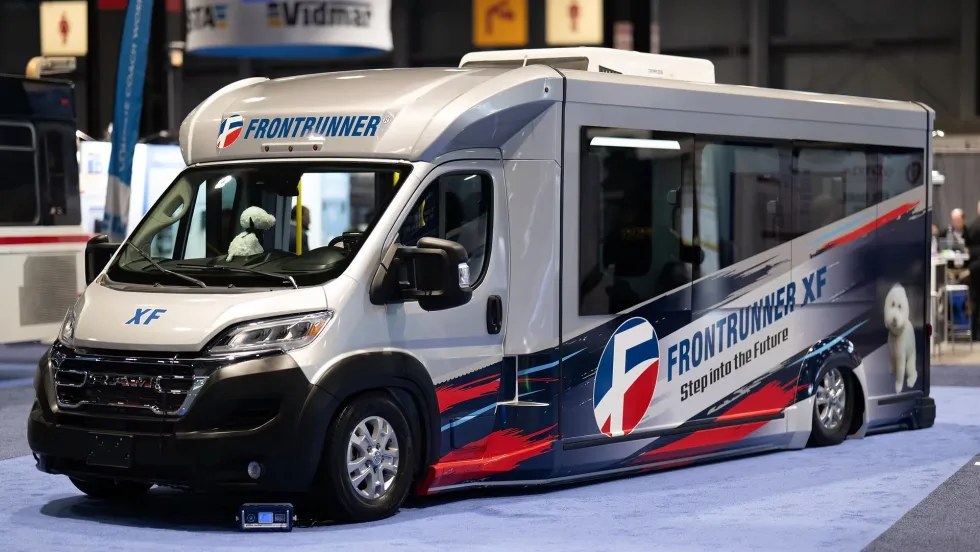
Frontrunner Bus Group Introduces XF Low-Floor Bus with Enhanced Accessibility
The new mid-sized bus features a full flat-floor design, eight-inch curbside step-in height, and zero-entry rear ramp to improve passenger access and operational flexibility.
Read More →
Scenes from APTA TRANSform & EXPO 2026
Transit leaders, manufacturers, and industry professionals gathered in Chicago to explore new technologies, share ideas, and discuss the future of public transportation.
Read More →
Indian River Transit’s Community-Focused Approach Earns National Recognition
Named APTA’s 2026 Outstanding Public Transportation System in its size category, Florida’s Indian River County transit system continues to grow ridership through fare-free service and a focus on evolving community needs.
Read More →
Everett Transit, Community Transit Outline Consolidation Agreement
The proposed agreement calls for a 50% increase in bus service in Everett, a new microtransit zone, continued paratransit service, and the transfer of Everett Transit operations to Community Transit.
Read More →
Driving Smarter Paratransit
John Hanlon shares how AlphaRoute is leveraging AI-powered technology to help paratransit providers optimize operations, support frontline staff, and enhance the rider experience.
Read More →
People Movement: Dan Dipert Coaches Adds Third-Generation Leader, Keolis Names New Valley Metro VP/GM, and More
In this edition, we also cover recent appointments and announcements at the Wabtec, SilverRide, HNTB, and more, showcasing the individuals helping to shape the future of transportation.
Read More →
Biz Briefs: RIPTA Unveils New Frontrunners, Clevland RTA Adds New Siemens, and More
In METRO's latest installment, we take a look at recent news from Siemens, Prevost, Dodge, and more partnerships making headlines across the transportation sector.
Read More →
King County Metro Makes ADA Paratransit Easier to Navigate
METRO's Innovative Solutions Award winner replaces complex service-area descriptions with an accessible, interactive map that puts paratransit information directly in customers’ hands.
Read More →
Jacksonville’s NAVI Project Charts a New Course for Autonomous Public Transportation
Through its NAVI program, JTA is showing how autonomous vehicles, intelligent infrastructure, and coordinated operations can work together to deliver everyday public transportation.
Read More →
Driving Smarter Paratransit
John Hanlon shares how AlphaRoute is leveraging AI-powered technology to help paratransit providers optimize operations, support frontline staff, and enhance the rider experience.
Read More →