



Transit Bus Deliveries Stabilize in 2024, but Market Still Trails Pre-Pandemic Levels
OEM consolidation, lingering supply chain challenges, and rising ZEB demand define a transitional year for the North American bus market.

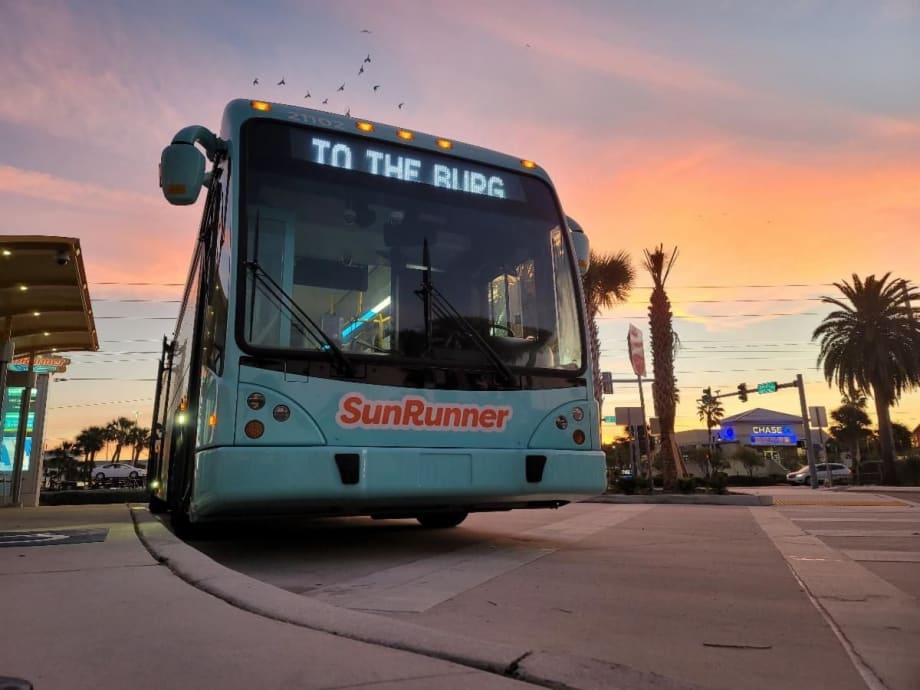
In calendar year 2024, transit bus deliveries were flat compared to 2023, with a nominal 2% increase.
Photo: PSTA
Calendar year 2024 saw a move to a more sustained level of stability in the North American transit bus supply sector, while only two heavy-duty transit bus suppliers continue to dominate customer deliveries in the U.S., following the market retrenchment of other bus OEMs in 2023.
The bus OEMs have settled into somewhat of a “new normal,” with labor at manufacturing plants essentially stabilized and supply chain issues still challenging, albeit on a more limited basis with specific suppliers.
The hyper-inflation issues that persisted post-COVID have stabilized as the OEMs worked through legacy contracts and now have order books primarily reflecting current supply chain costs.
Further, the FTA “Dear Colleague” letter issued in early 2024 addressing how to manage cost increases in contracts and advance and progress payments, bonding, and state contracts has added contractual tools in the quivers of both transit agencies and OEMs to stabilize the market's supply side.
Outlook Positive
Customer demand for new bus procurements, especially for zero-emission propulsion, continues to be bullish, with major OEM order books and backlogs at significantly high levels. This is positive; however, with reduced industry capacity in the U.S. and wait times for new bus deliveries in the 18 to 24-month range, delivery times are beyond historical.
As we look forward to 2025 and beyond, we have a dynamic landscape for the national transit industry that will need to be navigated, including:
The stability of federal funding under the new Republican Administration.
The federal government’s approach and funding for zero-emission buses.
Fiscal and budget challenges facing most U.S. transit systems.
Upcoming diesel emission changes in 2027.
Upcoming major world events, including the 2026 World Cup and the 2028 LA Olympics.
These items will impact customer demand and potentially bus OEM deliveries in the coming few years, so we will see what the future holds as these developments take hold.
Overall Transit Market Assessment
The following is our analysis for 2024 transit bus deliveries in North America.
2024 vs 2023 overall transit bus deliveries increased by 98 units from 4,349 units in 2023 to 4,447 units in 2024 for a slight 2% year-over-year increase.
2024 is the second year in a row where market deliveries were higher than the prior year, following 2020 to 2023, which saw year-over-year decreases from the high pre-pandemic deliveries of 6,320 units in 2019. However, the 2% year-over-year increase is at best a marginal increase, with the market still at only 70% of pre-pandemic levels.
Assessment from a Transit Vehicle Length Perspective
| Units by Size | 2023 | 2024 | 2024 vs 2023 (Units) | 2024 vs 2023 (%) |
| 30 Feet and Under | 214 | 160 | (54) | -25% |
| 35- to 40-Feet | 3,662 | 3,706 | 44 | 1% |
| 45 Feet | 128 | 100 | (28) | -22% |
| 60 Feet | 345 | 481 | 136 | 39% |
| TOTAL | 4,349 | 4,447 | 98 | 2% |
Source: METRO Magazine, based on numbers reported by participating suppliers. Some numbers projected
Overall, 35- to 40-foot units made up most deliveries in 2024, essentially a repeat of prior years, with 3,706 units delivered, representing 83% of all deliveries. This compares with 84% being in this length segment in 2023, with 3,662 units delivered in 2023. Thus, 2024 saw a 1% increase in deliveries in this segment vs. 2023.
30-foot and under units experienced another consecutive year of decline of 54 units, or a 25% reduction, from 214 units in 2023 to 160 units in 2024.
45-foot units experienced a decline of 28 units from 128 units in 2023 to 100 units in 2024, or a 22% overall reduction.
60-foot units exhibited an increase of 136 units in 2024 vs 2023, or a 39% uptick. Deliveries were 481 units in 2024 vs 345 units in 2023. Interestingly, only one bus OEM supplies the U.S. market with 60-foot models.
Assessment from a Propulsion Segmentation Perspective
| Propulsion Catalog | 2023 | 2024 | 2024 vs 2023 (Units) | 2024 vs 2023 (%) |
| Diesel | 2,003 | 2,090 | 87 | 4% |
| Hybrid | 886 | 760 | (126) | -14% |
| Natural Gas | 800 | 732 | 68 | -9% |
| Zero Emissions (Electric and Fuel Cell) | 660 | 865 | 205 | 31% |
| TOTAL | 4,349 | 4,447 | 98 | 2% |
Source: METRO Magazine, based on numbers reported by participating suppliers. Some numbers projected
Although order books are flush with zero-emission orders, industry deliveries are still dominated by the more traditional propulsion technologies of diesel and CNG as zero-emission bus production continues to ramp up to meet customer demand.
Diesel propulsion was still the predominant technology in 2024, with market deliveries of 2,090 units, representing an increase of 87 units or 4% vs. 2023. In 2024, diesel represented 47% of overall deliveries compared with 46% of deliveries in 2023.
Hybrid propulsion saw a decline in 2024 from 886 units in 2023 to 760 units in 2024, which was a decline of 14%. In 2024, hybrids represented 17% of the overall deliveries.
Natural gas fuel propulsion decreased from 800 units in 2023 to 732 in 2024. This 68-unit decrease resulted in a 9% year-over-year decline for natural gas. In 2024, natural deliveries represented 16% of the total deliveries, which is a 2% decline compared to 2023.
Zero-emission buses (comprising Battery Electric and Fuel Cell Buses) were 865 units in 2024 vs. 660 in 2023. This resulted in a 205-unit, or 31%, year-over-year increase for zero-emission buses. Overall, this propulsion segment represented 19% of deliveries in 2024 vs. 14% of the overall deliveries in 2023, showing the continued demand for ZEBs and the OEMs’ ramping up their production lines.
What's Down the Road?
In calendar year 2024, transit bus deliveries were flat compared to 2023, with a nominal 2% increase. In light of OEM retrenchment and some continued hangover COVID effects, we continue to be on a path to return to pre-pandemic delivery levels, but still have a long way to go.
New OEMs are entering the market, with Solaris from Poland recently announcing contracts that may increase deliveries in the coming years. Also, ENC has announced a rebirth after initially being slated to close.
Hopefully, these new and reborn entrants will learn the lessons of their predecessors in being consistently viable and profitable in the long term and that the FTA and agencies' efforts to stabilize the bus supply sector will have the desired effects.
More Bus

New York MTA Plans Largest Bus Fleet Upgrade in More Than a Decade
The agency is seeking manufacturers for 650 new CNG buses to replace aging vehicles, improve reliability, and advance its broader fleet modernization strategy.
Read More →
Building a Flexible Path to Transit Electrification
John Hroncich discusses BAE Systems’ modular and scalable approach, lessons learned from decades of real-world operations, and how agencies can identify electrification strategies that fit their fleets.
Read More →
Bus Tech Talk: Keeping Transit Technicians Ahead of the Technology Curve
LA Metro’s Obed Mejia discusses technician training, evolving maintenance technology, fleet replacement, and strategies for getting the most out of today’s transit fleets.
Read More →
Biz Briefs: RIPTA Unveils New Frontrunners, Clevland RTA Adds New Siemens, and More
In METRO's latest installment, we take a look at recent news from Siemens, Prevost, Dodge, and more partnerships making headlines across the transportation sector.
Read More →
People Movement: Holly Arnold Joins Transdev and More
In this edition, we also cover recent appointments and announcements at Pace, CamTran, MCI, and more, showcasing the individuals helping to shape the future of transportation.
Read More →
The High Cost of Transit Buses: Industry Leaders Look to Procurement Reform
Transit leaders and policymakers examine how standardized bus designs, streamlined procurement, and predictable funding could help agencies stretch budgets and deliver better service.
Read More →
The Business Voice Behind Public Transportation
As chair of APTA’s Business Members Board of Governors, Ray Melleady explains how more than 850 business members are partnering with transit agencies to advance funding, innovation, and industry-wide collaboration.
Read More →
From Surviving to Thriving: Building Stronger Transportation Organizations
Bus Business Consultants founder Brian Dickson shares lessons on leadership, organizational health, and creating options for long-term success in a changing transportation industry.
Read More →
Finding the ‘Happy Medium’: Optimizing Maintenance Without Sacrificing Reliability
The key to maintenance optimization isn’t doing less work—it’s doing the right work at the right time on the right assets.
Read More →
LA Metro, City of West Hollywood, and Partners Advance Smarter Bus Lane Enforcement
The award-winning partnership combines AI-powered detection with human oversight to improve bus reliability, accessibility, and enforcement efficiency.
Read More →