



Transit Unplugged Updates Branding, Website, Launches Unplugged TV
Transit Unplugged has grown exponentially from its roots as a passion project, but its website hadn’t kept up with the episodes, guests, and broad range of content.
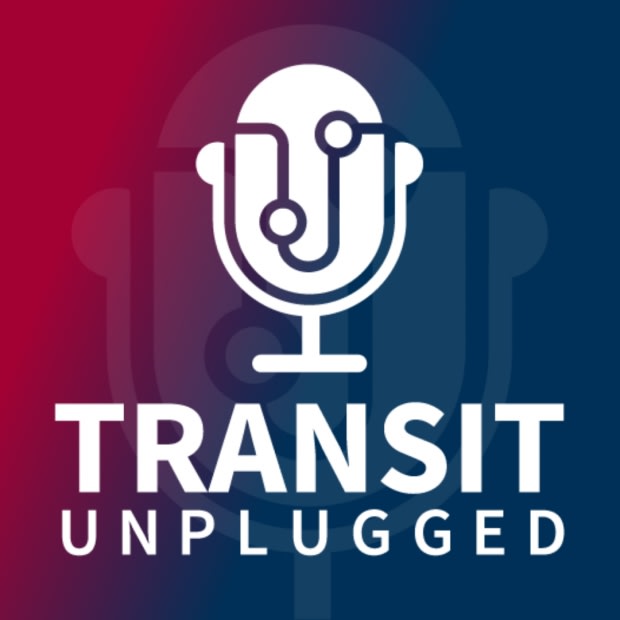
Award-winning podcast Transit Unplugged announced their rebrand. With listeners in over 100 countries around the world, Transit Unplugged has set the benchmark for news, opinion, and interviews for the entire transit industry. To celebrate the fourth anniversary of the podcast and kick off season five, Transit Unplugged is also getting a whole new segment: Transit Unplugged TV.
Transit Unplugged has grown exponentially from its roots as a passion project, but its website hadn’t kept up with the episodes, guests, and broad range of content. The design team at Trapeze Group Marketing developed a new, modern look for Transit Unplugged with an updated logo, colors, and website that lets listeners quickly catch the latest show and includes a search bar to find old favorites. Listeners can search on the main navigation for all past episodes, conveniently categorized by season, episode, guest(s), agencies, region, and categories. Listeners can also find links to featured agencies and more information on the topics discussed on the podcast.
“We really grew out of the old website,” said Paul Comfort, host of Transit Unplugged. “With nearly 150 episodes, it was hard for our listeners to search for specific interviews. The new website allows people to dive right into what they really want to hear, from our earliest episodes in Season 1 to our most recent interviews in season 5. I love how our new site showcases all the exciting content we’ve created.”
The updated Transit Unplugged logo reflects the iconic microphone. It has a subtle TU and a design element that represents stops on a transit route map. “Everyone tries to use the same microphone in their logo, so much so that it’s become cliché,” said Tris Hussey, producer of Transit Unplugged. “But this logo is dynamic. It has movement and highlights that we’re a podcast, but it’s a new take that I really love. This combined with modern and harmonized branding allows us to create sharper episode graphics.”
Part of rebranding Transit Unplugged was updating the color palette for the website and graphics. The new, simplified colors are based on the Trapeze Group and Vontas brands with shades of red, blue, and grey. Each segment of Transit Unplugged is paired with unique gradient colors to represent flow and unity. The Trapeze and Vontas design team chose colors that are appealing and meet all accessibility requirements.
Transit Unplugged has grown into its own established brand. To reflect this, we’ve created dedicated social channels to share upcoming episodes, behind-the-scenes details, video and audiogram content, and more. Transit Unplugged now has its own Twitter, Instagram, LinkedIn, and YouTube profiles. The social channels launched today along with the reveal of the rebrand.
The first episode of Transit Unplugged TV will air in November, featuring an inside look at Las Vegas’ Regional Transportation Commission of Southern Nevada (RTC) along with its CEO MJ Maynard and executive staff. Season 5 Episode 1 of Transit Unplugged is available now on www.transitunplugged.com.
Transit Unplugged TV is set to air once a month on our YouTube channel.
More Management

METRO Opens Submissions for 2026 Motorcoach Awards
Nominations are now being accepted for METRO Magazine’s Operator of the Year and Innovative Operator of the Year awards.
Read More →
New York MTA Advances Final Contract for Second Avenue Subway Expansion
Contract Four is the largest in the Second Avenue Subway Phase 2 project and includes construction of station infrastructure, tracks, and signals for the subway expansion, MTA officials said. Work on Contract Four will begin in 2027.
Read More →
Transit Agencies Highlight Safety Gains at National Summit
Leaders from 15 major transit systems shared crime-reduction results and safety initiatives while discussing the role of continued federal support.
Read More →

NITA Names New Leadership, Expands Reduced-Fare Program at First Board Meeting
The new regional transit authority appointed its first board chair and interim executive director while extending reduced fares across CTA, Metra, and Pace for eligible riders.
Read More →
Beyond the Checklist: A Structured Approach to Transit Maintenance
Reliability-Centered Maintenance helps transit agencies move beyond routine checklists to focus limited resources on the assets and failures that have the greatest impact on safety, reliability, and service.
Read More →
APTA 2026 Nominating Committee Selects Leadership Slate, Names Chair and Vice Chair Nominees
Leadership changes will help shape the association’s priorities and its representation of the transportation industry during the 2026–2027 term.
Read More →
DART Launches Major Security, Fare Enforcement Initiative
The 90-day demonstration will deploy coordinated security teams at five light rail stations while testing controlled access and gathering data to guide future investments.
Read More →
Advancing Fare Collection Through Technology and Innovation
Learn about delivering 1300 gates at 91 stations while managing fare evasion. Explore the large scale deployment, solution customization and real-world results that affect the region. Prepare for deployment in your region now.
Read More →
Game Day in Motion: Moving Millions During the 2026 World Cup
Between packed transit stations and team motorcoaches, see how agencies and operators across North America tackled the transportation demands of the 2026 FIFA World Cup.
Read More →
Surface Transportation Extension Averts Shutdown, Leaves Transit Funding Gap
The stopgap keeps federal transportation programs moving, but missing advance funding could complicate the transit and rail projects agencies are planning next.
Read More →