



U. Nebraska-Omaha expands Metro Transit ridership program
The expansion of UNO’s popular MavRide program will provide bus access to more than 15,000 students and more than 3,000 faculty and staff.

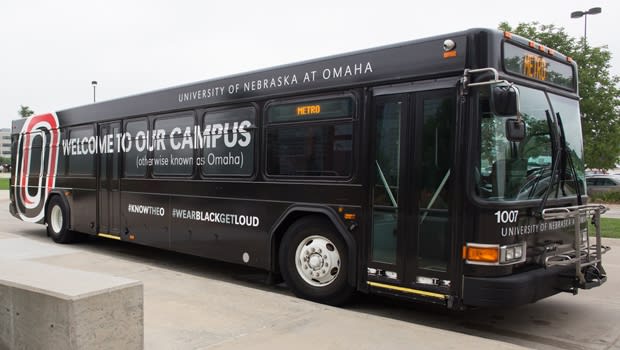
University of Nebraska-Omaha

University of Nebraska-Omaha
Beginning Saturday, Jan. 2, 2016, University of Nebraska at Omaha (UNO) students, staff and faculty will be able to use their university ID as a Metro Transit bus pass.
The expansion of UNO’s popular MavRide program will provide bus access to more than 15,000 students and more than 3,000 faculty and staff. No special activation will be required for those wanting to use their MavCARD; instead, passengers will only need to swipe their card to ride.
Metro will accept MavCARDs belonging to all faculty, staff and active students at any time buses are running (with this change, MavRide will now cover Sundays and time between semesters). Students are considered active if they are currently taking classes or registered for the upcoming semester.
MavRide is an initiative started by Student Government that, in partnership with Metro Transit, has provided a set number of physical bus passes to students on request since 2011. In January 2015, the program expanded with funding from UNO Parking Services, allowing faculty and staff to activate their MavCARDs as bus passes.
All told, Metro has provided more than 266,000 rides to UNO students, staff and faculty participating in the program. The upcoming MavRide expansion is jointly funded by UNO’s Student Government and UNO Parking Services, with existing funds from their current budgets.
Emergency Ride Home
Students, staff or faculty who plan to start busing to campus can take advantage of the Emergency Ride Home program, which offers free taxi service in the event of an unexpected emergency for registered commuters who travel to UNO by bus (MavRide), ride share (Zimride), bike or walk to campus.
A Leader in Sustainability
The 2016 MavRide expansion marks a major step forward in following the recommendations laid out in UNO’s Sustainability Master Plan. The document, announced in early 2015, identifies ways to implement new policies and programs that are environmentally friendly, socially responsible and financially feasible.
The announcement also comes less than two months after another significant development: the hiring of UNO’s first Sustainability Coordinator, Sarah Burke, who will facilitate the implementation of the Sustainability Master Plan and help support sustainability-based programs, events, and research activities.
More Bus

New York MTA Plans Largest Bus Fleet Upgrade in More Than a Decade
The agency is seeking manufacturers for 650 new CNG buses to replace aging vehicles, improve reliability, and advance its broader fleet modernization strategy.
Read More →
Building a Flexible Path to Transit Electrification
John Hroncich discusses BAE Systems’ modular and scalable approach, lessons learned from decades of real-world operations, and how agencies can identify electrification strategies that fit their fleets.
Read More →
Bus Tech Talk: Keeping Transit Technicians Ahead of the Technology Curve
LA Metro’s Obed Mejia discusses technician training, evolving maintenance technology, fleet replacement, and strategies for getting the most out of today’s transit fleets.
Read More →
Biz Briefs: RIPTA Unveils New Frontrunners, Clevland RTA Adds New Siemens, and More
In METRO's latest installment, we take a look at recent news from Siemens, Prevost, Dodge, and more partnerships making headlines across the transportation sector.
Read More →
People Movement: Holly Arnold Joins Transdev and More
In this edition, we also cover recent appointments and announcements at Pace, CamTran, MCI, and more, showcasing the individuals helping to shape the future of transportation.
Read More →
The High Cost of Transit Buses: Industry Leaders Look to Procurement Reform
Transit leaders and policymakers examine how standardized bus designs, streamlined procurement, and predictable funding could help agencies stretch budgets and deliver better service.
Read More →
The Business Voice Behind Public Transportation
As chair of APTA’s Business Members Board of Governors, Ray Melleady explains how more than 850 business members are partnering with transit agencies to advance funding, innovation, and industry-wide collaboration.
Read More →
From Surviving to Thriving: Building Stronger Transportation Organizations
Bus Business Consultants founder Brian Dickson shares lessons on leadership, organizational health, and creating options for long-term success in a changing transportation industry.
Read More →
Finding the ‘Happy Medium’: Optimizing Maintenance Without Sacrificing Reliability
The key to maintenance optimization isn’t doing less work—it’s doing the right work at the right time on the right assets.
Read More →
LA Metro, City of West Hollywood, and Partners Advance Smarter Bus Lane Enforcement
The award-winning partnership combines AI-powered detection with human oversight to improve bus reliability, accessibility, and enforcement efficiency.
Read More →