




RELATED: Transit partners with ridesharing services to create multimodal options
U of Fla., FDOT, City partner to create ‘smart testbed’ for advanced technologies
This will be the first such program in Florida to involve a city, a university, and a state DOT. It will also involve industry partnerships to facilitate the development and operation of test bed.
April 27, 2017

2 min to read
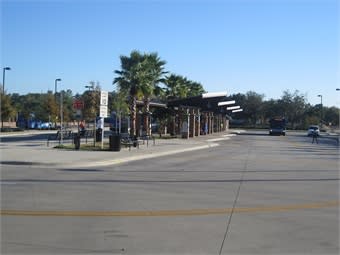
The City of Gainesville, University of Florida (UF), and the Florida Department of Transportation (FDOT) announced a partnership to develop a “smart test bed” for new and evolving advanced transportation technologies and equipment.
Advanced technologies, such as connected and autonomous vehicles, smart devices, and sensors, will be tested on the UF campus and surrounding highway network. Goals for the test bed include improving mobility and safety on the UF campus and around Gainesville; facilitate the incorporation of UF invented technologies; quantify how people engage with automated vehicles; collaborate with businesses to test and enhance their own technologies; and become a national and international model for the use of technology to enhance transportation.
“We are very excited to be working with our long time partners, FDOT, and the City of Gainesville, as well as the UF administration, in the development and use of advanced technologies on our campus,” said Lily Elefteriadou, Ph.D., lead researcher and the director of the UF Transportation Institute (UFTI) and the Barbara Goldsby Professor of Civil Engineering. “UF is an ideal location for such testing, as speeds are relatively low, there are lots of pedestrians, extensive bicycle facilities, scooters and mopeds, and one of the most heavily-used transit systems in Florida.”
This will be the first such program in Florida to involve a city, a university, and a state DOT. It will also involve industry partnerships to facilitate the development and operation of test bed.
This initiative aligns with the UF and City of Gainesville Strategic Plans by helping to turn Gainesville and UF into a proving ground for solutions that challenge cities nationwide; testing and implementing transportation alternatives for the community; and providing technologies that highlight UF as a preeminent university and the City of Gainesville as a New American City.
“This is just one area that the city and university are collaborating to solve problems using more productive, creative and efficient methods than those used in the past,” said City of Gainesville Manager, Anthony Lyons. The two organizations have also partnered recently to establish undergraduate fellowship opportunities and a series of research awards aimed at addressing common issues in the community.
FDOT is funding the beginning research effort of the initiative. UF officials with the UFTI are currently reviewing literature and other test bed applications around the world before setting an official date to begin local tests of new transportation technologies.
More New Mobility

From Hardware to Digital Partner: Luminator Charts Its Next Chapter
CEO Magnus Friberg discusses Luminator’s shift toward becoming a digital partner, the growing importance of software and interoperability, and how AI can help agencies improve operations and passenger experience.
Read More →
Biz Briefs: Alstom Lands Canadian Contract, LYT to Supply California TSP, and More
In METRO's latest installment, we take a look at recent news from Complete Coach Works, Beep, FlixBus, and more partnerships making headlines across the transportation sector.
Read More →
CharterUP’s Armir Harris on Technology, AI, and the Future of Group Mobility
In a recent episode of METROspectives, CharterUP Founder/CEO Armir Harris discussed the company’s evolution from an online charter bus marketplace into a technology platform supporting public- and private-sector mobility and much more.
Read More →
Jacksonville’s NAVI Project Charts a New Course for Autonomous Public Transportation
Through its NAVI program, JTA is showing how autonomous vehicles, intelligent infrastructure, and coordinated operations can work together to deliver everyday public transportation.
Read More →
Biz Briefs: Luminator Marks Milestone and More
From manufacturers and suppliers to transit agencies and motorcoach operators, these updates offer a snapshot of the projects, partnerships and business moves driving the industry forward.
Read More →
New Tricks for Old Bureaucracies: Joshua Schank on Making Transit Innovation Stick
Former LA Metro Chief Innovation Officer Joshua Schank discusses why good ideas aren't enough, how transit agencies can overcome resistance to change, and why today's challenges demand more innovation.
Read More →
How DART's GoPass Is Redefining Regional Mobility
Serving 14 transit agencies, GoPass simplifies multimodal travel by allowing riders to plan, pay for, and manage an entire trip through one app.
Read More →
Biz Briefs: OCTA Taps Clean Energy for Hydrogen Station, Stadler to Supply Via Rail Vehicles, and More
From manufacturers and suppliers to transit agencies and motorcoach operators, these updates offer a snapshot of the projects, partnerships and business moves driving the industry forward.
Read More →CharterUP Expands Into New Mobility and Autonomous Transportation
Vice President of New Mobility Stephen Joos discusses how CharterUP is leveraging its nationwide transportation network, technology platform, and autonomous vehicle partnerships to expand into workforce mobility, campus shuttles, and transit solutions.
Read More →
METRO Magazine Announces 2026 Innovative Solutions Awards Winners
Projects Recognized for Advancing Mobility Through Technology, Accessibility, Workforce Innovation, and Operational Excellence
Read More →