



U.S. workforce development webinar educates railcar manufacturers
The companies, preparing to submit proposals to Amtrak and the California High Speed Rail Authority, are competing for a multibillion dollar contract to manufacture 43 state-of-the-art high speed “train sets."

Representatives of the world’s largest railcar manufacturing companies learned about best-practices in American workforce development, diversity, and outreach to disadvantaged workers via an informational webinar hosted this week by the Jobs to Move America coalition.
The companies are preparing to submit proposals to Amtrak and the California High Speed Rail Authority by May 17, competing for a multibillion dollar contract to manufacture 43 state-of-the-art high speed “train sets” to operate between Boston and Washington D.C. and between San Francisco and Los Angeles.
RELATED:Amtrak, California seek bids for high-speed trains
To support manufacturers’ efforts to recruit and develop a skilled American workforce to build America’s new high speed trains, the Jobs to Move America coalition launched its new website and hosted the webinar on Monday.
“We want to inspire the companies bidding to build high-speed trains for Amtrak and California — some of the largest manufacturing companies in the world — to create thousands of U.S. jobs and exciting opportunities for disadvantaged Americans,” said Madeline Janis, Director of the Jobs to Move America campaign. “It’s vital to put billions of our taxpayer dollars to good use, reviving America’s manufacturing sector and reducing devastatingly high unemployment.”
Monday’s webinar featured real-world snapshots of workforce development programs that have created the most innovative and successful efforts to get more women, people of color and disadvantaged people into manufacturing jobs. Experts from top non-profit, community college, and union programs in Chicago, Wisconsin and Los Angeles explained models for recruiting, hiring and training disadvantaged workers into skilled railcar manufacturing jobs.
Also on Monday, the Jobs to Move America coalition launched its new public website, featuring a workforce development resource bank, and a range of other information and tools to make America’s transit dollars go the distance. The website also includes a pledge asking transit officials to use dollars wisely, personal stories of transportation manufacturing workers, and testimonials from prominent leaders of the Jobs to Move America coalition.
Both the website and webinar were tailored to help manufacturing companies meet the requirements of Amtrak’s Request for Proposals (RFP) for its new high-speed trains. Issued January 24, Amtrak’s RFP asked bidding manufacturers to divulge comprehensive information about their plans to create American jobs, locate manufacturing facilities in the United States, recruit disadvantaged workers such as veterans, and invest in workforce development, in connection with the contract.
To help inform bidding proposals to Amtrak, Dan Swinney, Executive Director of Manufacturing Renaissance, shared success stories of Chicago area training programs that imbue manufacturing workers with standardized skills, saying, “let’s make our programs a stepping stone not just to a job, but to a career. Successful education and training programs linked to manufacturing must align with national skill standards and formal industry credentials that are portable. Everyone benefits — companies, employees and our education and training system.”
The Amtrak RFP also asks bidding manufacturers to detail their relationships with workforce development and training organizations.
Many of the railcar manufacturing companies expected to bid for the high-speed trains contract have existing "final assembly" facilities or factories in the U.S.; such as Siemens Industries in Sacramento, Calif., Bombardier in Plattsburgh, N.Y. and West Mifflin, Pa., Nippon Sharyo in Rochele, Ill., CAF-USA in Elmira, N.Y., and Kawasaki in Lincoln, Neb. and Yonkers, N.Y.
After the May 17 deadline for proposals, Amtrak will evaluate and score each bidder’s American jobs plans in deciding which company to award, and eventually incorporate these plans into its contract with the winning bidder. University of Massachusetts, Amherst economists estimate that Amtrak’s approach could incent manufacturing companies to create nearly 28,000 American jobs.
The webinar was offered free of charge for railcar manufacturing company staff and executives, government officials, and interested experts in the field. More than 60 stakeholders participated.
The Amtrak RFP is available to download via FTP server, at:
https://procurement.amtrak.com/irj/portal/anonymous?NavigationTarget=navurl://7e7c6db809b56f05f8e58e6565a217df.
More Management
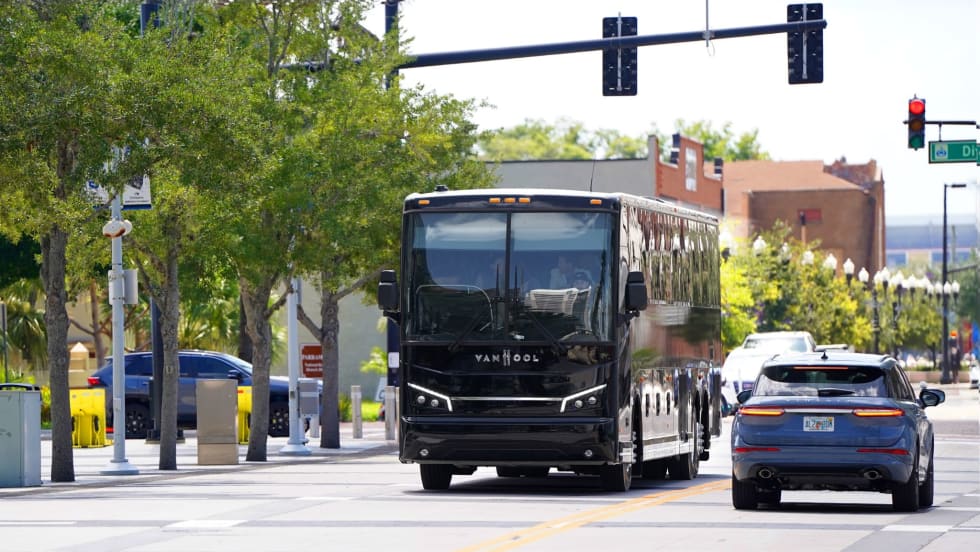
Financing, Fleet Replacement Require a More Strategic Approach
Executives from ABC Companies and MCI discuss how rising costs, changing market conditions, and post-pandemic challenges are prompting motorcoach operators to rethink financing strategies, fleet replacement cycles, and long-term planning.
Read More →
Bringing Austin’s First Light Rail System to Life
Austin Transit Partnership CEO Greg Canally discusses the city's nearly 10-mile light rail project, its collaborative approach to project delivery, the importance of community engagement, and the milestones ahead as construction approaches in 2027.
Read More →
ETA CEO John Maglio on Transit Technology, Innovation, and Building Agency Trust
ETA founder and CEO John Maglio explores the evolution of transit technology, the importance of reliable systems, and how stronger partnerships can help agencies improve operations and the passenger experience.
Read More →
Metra Draft Plan Outlines Costs, Service Improvements for Regional Rail
The Systemwide Network Plan identifies infrastructure needs and potential investments to expand all-day, bidirectional rail service across the Chicago region.
Read More →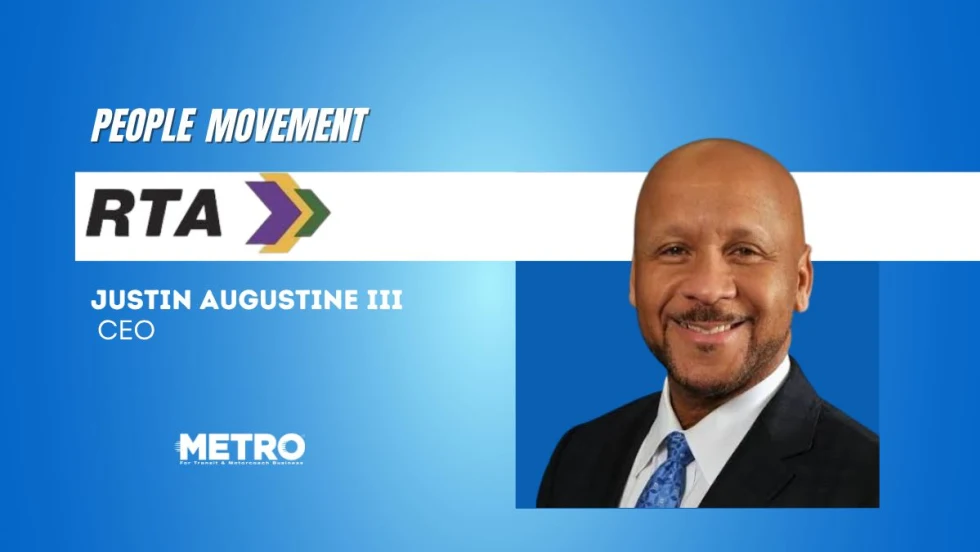
New Orleans RTA Names Augustine III as New CEO
In this edition, we also spotlight recent personnel moves at HDR, PATH, STV, and more, highlighting the people taking on new roles across the transportation industry.
Read More →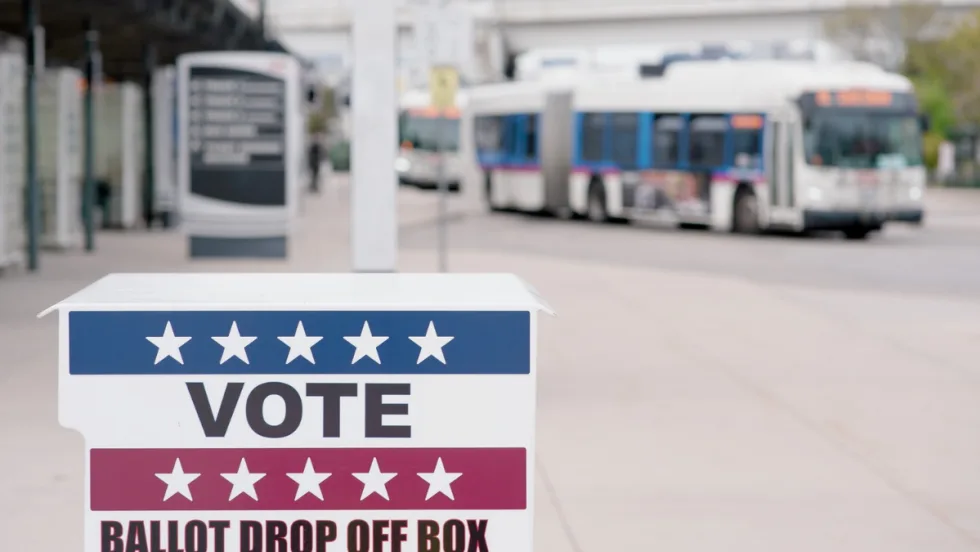
How Transit Agencies Are Using Free Rides to Improve Voting Access
Transit agencies are using fare-free service, trip-planning tools, and targeted rides to improve voting access. See what other agencies can learn from these efforts.
Read More →
Caltrain’s Electrification Drives a New Era of Ridership Growth
The railroad’s shift to electric service has brought more frequent trains, stronger customer satisfaction, and increased ridership, earning it APTA’s Outstanding Public Transportation System award.
Read More →
Chicago, Charlotte Transit Agencies Expand Rider Support Programs
CTA launched crisis intervention teams as CATS prepares to deploy fare ambassadors, expanding customer assistance and security efforts across both systems.
Read More →
New York MTA Launches Historic $1.9B Signal, Track Modernization Project
Funded in part by congestion pricing revenue, the project will replace nearly century-old signals along the A and C lines in Brooklyn and Queens.
Read More →
Brian Dickson on Building Stronger, More Resilient Transportation Organizations
Bus Business Consultants Founder Brian Dickson discusses the leadership principles, operational discipline, and strategic planning that separate transportation companies positioned for long-term success from those stuck in survival mode.
Read More →