




More than 30 million travelers flew through LaGuardia Airport last year, and more than 90% of those travelers used private vehicles, individual taxis, and similar methods of travel that contribute to stagnating traffic.
Via, PANYNJ launch shared-ride service from LaGuardia Airport
Service provides $15 flat-rate rides from LaGuardia to Manhattan, Brooklyn and Queens, and $20 to Staten Island and the Bronx.
November 15, 2019
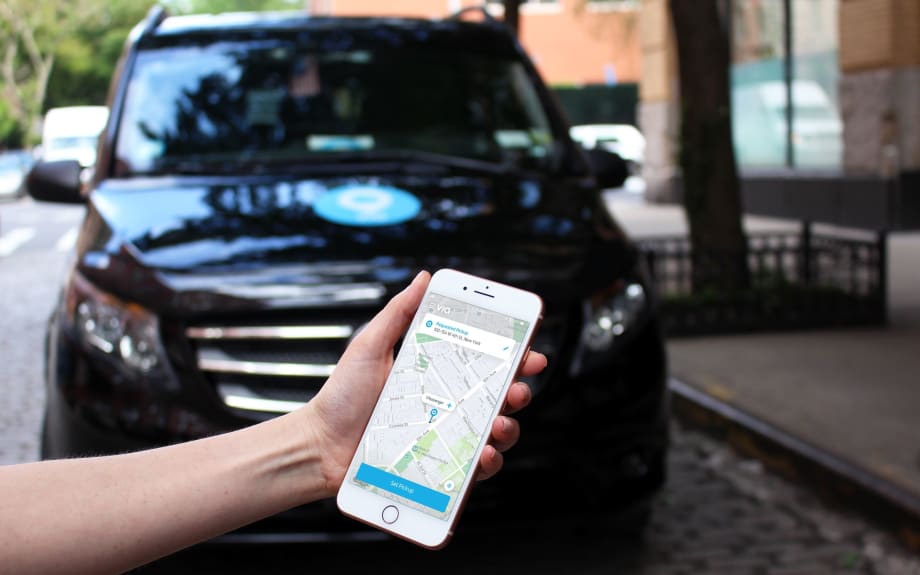
The Via and PANYNJ pilot represents an opportunity for the public and private sectors to work together to introduce a solution that could meaningfully reduce congestion and expand access to a new form of public transit at New York City’s highly-trafficked airports.
Via
2 min to read
The Via and PANYNJ pilot represents an opportunity for the public and private sectors to work together to introduce a solution that could meaningfully reduce congestion and expand access to a new form of public transit at New York City’s highly-trafficked airports.
Via
Via and the Port Authority of New York and New Jersey (PANYNJ) are launching a pilot program, LGA Connect — a new flat-rate shared-ride service from LaGuardia Airport to all five boroughs. Leading into the busy holiday season, Via and PANYNJ aim to reduce private vehicle trips from the airport with the introduction of congestion-reducing, convenient, and affordable shared rides as part of public transit.
Powered by Via’s technology for on-demand shared rides, LGA Connect provides travelers full transparency and price consistency with $15 flat-rate rides booked from LaGuardia to Manhattan, Brooklyn and Queens, and $20 to Staten Island and the Bronx.
The Via and PANYNJ pilot represents an opportunity for the public and private sectors to work together to introduce a solution that could meaningfully reduce congestion and expand access to a new form of public transit at New York City’s highly-trafficked airports.
LGA Connect rides can be booked seven days a week between 8 a.m. and 1 a.m. with a credit card through the Via app, or with the help of a dispatcher at a designated “LGA Connect” pickup point outside of Terminal C/D.
In the Via app, passengers select “LGA Connect” from the menu, and enter their desired destination. Via’s algorithm matches multiple passengers headed in the same direction into a single vehicle and provides passengers with vehicle identification information and an ETA. Rides depart within 10 minutes, and passengers will be dropped off at a nearby corner within walking distance of their destination.
More New Mobility

From Hardware to Digital Partner: Luminator Charts Its Next Chapter
CEO Magnus Friberg discusses Luminator’s shift toward becoming a digital partner, the growing importance of software and interoperability, and how AI can help agencies improve operations and passenger experience.
Read More →
Biz Briefs: Alstom Lands Canadian Contract, LYT to Supply California TSP, and More
In METRO's latest installment, we take a look at recent news from Complete Coach Works, Beep, FlixBus, and more partnerships making headlines across the transportation sector.
Read More →
CharterUP’s Armir Harris on Technology, AI, and the Future of Group Mobility
In a recent episode of METROspectives, CharterUP Founder/CEO Armir Harris discussed the company’s evolution from an online charter bus marketplace into a technology platform supporting public- and private-sector mobility and much more.
Read More →
Jacksonville’s NAVI Project Charts a New Course for Autonomous Public Transportation
Through its NAVI program, JTA is showing how autonomous vehicles, intelligent infrastructure, and coordinated operations can work together to deliver everyday public transportation.
Read More →
Biz Briefs: Luminator Marks Milestone and More
From manufacturers and suppliers to transit agencies and motorcoach operators, these updates offer a snapshot of the projects, partnerships and business moves driving the industry forward.
Read More →
New Tricks for Old Bureaucracies: Joshua Schank on Making Transit Innovation Stick
Former LA Metro Chief Innovation Officer Joshua Schank discusses why good ideas aren't enough, how transit agencies can overcome resistance to change, and why today's challenges demand more innovation.
Read More →
How DART's GoPass Is Redefining Regional Mobility
Serving 14 transit agencies, GoPass simplifies multimodal travel by allowing riders to plan, pay for, and manage an entire trip through one app.
Read More →
Biz Briefs: OCTA Taps Clean Energy for Hydrogen Station, Stadler to Supply Via Rail Vehicles, and More
From manufacturers and suppliers to transit agencies and motorcoach operators, these updates offer a snapshot of the projects, partnerships and business moves driving the industry forward.
Read More →CharterUP Expands Into New Mobility and Autonomous Transportation
Vice President of New Mobility Stephen Joos discusses how CharterUP is leveraging its nationwide transportation network, technology platform, and autonomous vehicle partnerships to expand into workforce mobility, campus shuttles, and transit solutions.
Read More →
METRO Magazine Announces 2026 Innovative Solutions Awards Winners
Projects Recognized for Advancing Mobility Through Technology, Accessibility, Workforce Innovation, and Operational Excellence
Read More →