



Volk to be inducted into APTA Awards Hall of Fame
When he inherited the transit system, there were just 13 buses and annual ridership was 555,000. Today, ridership is more than 13 million and there is a fleet of 102 buses.

Bill Volk/Champaign-Urbana Mass Transit District
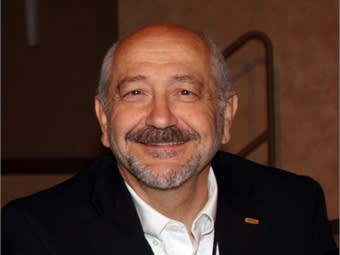
Bill Volk/Champaign-Urbana Mass Transit District
Bill Volk, retired Managing Director of the Champaign-Urbana Mass Transit District (MTD), will be inducted in the American Public Transportation Association (APTA) Awards Hall of Fame. The award will be conferred at the APTA Annual Meeting September 2016 in Los Angeles.
This special honor, which began in 1983, is reserved for individuals who have long and distinguished careers in the industry; who have made extraordinary contributions to public transportation; and who have actively participated in APTA activities. This esteemed award has been granted to fewer than 150 men and women.
“Congratulations to Bill Volk, the longest serving head of an American public transportation system, for his acceptance into the APTA Hall of Fame,” said APTA Acting President/CEO Richard A. White. “An effective advocate for public transportation, he advanced funding for public transit systems on the local level and the national level. Due to his efforts, funding for public transit systems in Illinois and across the country was increased.”
Across the U.S., few transit managers have had a larger impact than Volk. MTD’s Managing Director for 40 years, he redefined transit locally and led innovations impacting cities nationwide. After graduating from Indiana University and working for several years in transit in Indiana, Volk accepted the managing director position at MTD. He inherited a transit system in turmoil and became its third manager in the three years since its creation. There were just 13 buses and annual ridership was 555,000. Today, ridership is more than 13 million and there is a fleet of 102 buses.
“Bill Volk was a pragmatic visionary who worked to put his dreams into action. Always ahead of the time, he saw accessibility to transit as a civil right and was an early adopter of the use of low-floor buses,” said Valarie McCall, APTA Chair and board member of the Greater Cleveland Regional Transit Authority. “Volk also started the Illinois Public Transportation in 1975, where he served as president. He was also instrumental on the national level where he served on many APTA committees including the Executive Committee, vice chair of the Small Operations Committee, and chair of the Legislative Committee.”
Bill was involved in every piece of legislation affecting Downstate Illinois during his tenure. In 2013, he was honored with IPTA’s first lifetime achievement award — named in his honor.
With the added revenue from a successful 1977 local tax referendum, service doubled and Sunday and evening service were reintroduced. Full accessibility for those with disabilities was achieved in 1983. The opening of Illinois Terminal was a major development in downtown Champaign and helped herald a renaissance with infill development, employment and residential growth, and new construction.
Perhaps no idea of Volk's has been copied as much as unlimited access. In 1989, the University of Illinois approved a transportation fee that would fund unlimited access to students, faculty, and staff. Scores of communities across the country, both large and small, have adopted similar programs.
U.S. Senator Richard Durbin said, “Bill’s innovative accomplishments have been ongoing throughout his career. His vision for the future was often ahead of his peers… Bill was always my first call when I was thinking through the issues that downstate transit providers were facing. His knowledge and understanding was always a great resource for me and my staff.”
Volk researched and authored the initial concept for the Federal Small Transit Intensive Cities funding tier. His efforts led the Federal Transit Administration (FTA) to study the issue and conclude the concept was valid. APTA then supported the provision until it became law. It is arguably the most important legislation that has ever been enacted for small transit systems.
MTD twice received APTA's Outstanding Achievement Award. In addition to the APTA participation McCall mentioned above, Bill served as APTA VP-Marketing and, as a result of his efforts to initially establish funding in the APTA budget for marketing transit, he received the 1991 Jesse Haugh Award.
“In the early 70’s, transit was not a field people were clamoring to enter. Valuable mentors and minimal experience made me marketable enough to lead a transit system at the age of 25,” Volk said. “Positive outcomes, a Board not averse to risk taking, and talented employees resulted in a 40+ year tenure without a promotion. This recognition is an affirmation of the value of public service and a legacy that I feel fortunate to be able to share with my family.”
Over his 44-year career, Bill contributed greatly to his community, his state, and the transit industry.
More Management

METRO Opens Submissions for 2026 Motorcoach Awards
Nominations are now being accepted for METRO Magazine’s Operator of the Year and Innovative Operator of the Year awards.
Read More →
New York MTA Advances Final Contract for Second Avenue Subway Expansion
Contract Four is the largest in the Second Avenue Subway Phase 2 project and includes construction of station infrastructure, tracks, and signals for the subway expansion, MTA officials said. Work on Contract Four will begin in 2027.
Read More →
Transit Agencies Highlight Safety Gains at National Summit
Leaders from 15 major transit systems shared crime-reduction results and safety initiatives while discussing the role of continued federal support.
Read More →

NITA Names New Leadership, Expands Reduced-Fare Program at First Board Meeting
The new regional transit authority appointed its first board chair and interim executive director while extending reduced fares across CTA, Metra, and Pace for eligible riders.
Read More →
Beyond the Checklist: A Structured Approach to Transit Maintenance
Reliability-Centered Maintenance helps transit agencies move beyond routine checklists to focus limited resources on the assets and failures that have the greatest impact on safety, reliability, and service.
Read More →
APTA 2026 Nominating Committee Selects Leadership Slate, Names Chair and Vice Chair Nominees
Leadership changes will help shape the association’s priorities and its representation of the transportation industry during the 2026–2027 term.
Read More →
DART Launches Major Security, Fare Enforcement Initiative
The 90-day demonstration will deploy coordinated security teams at five light rail stations while testing controlled access and gathering data to guide future investments.
Read More →
Advancing Fare Collection Through Technology and Innovation
Learn about delivering 1300 gates at 91 stations while managing fare evasion. Explore the large scale deployment, solution customization and real-world results that affect the region. Prepare for deployment in your region now.
Read More →
Game Day in Motion: Moving Millions During the 2026 World Cup
Between packed transit stations and team motorcoaches, see how agencies and operators across North America tackled the transportation demands of the 2026 FIFA World Cup.
Read More →
Surface Transportation Extension Averts Shutdown, Leaves Transit Funding Gap
The stopgap keeps federal transportation programs moving, but missing advance funding could complicate the transit and rail projects agencies are planning next.
Read More →