



Voters Approve $25B-Plus in Transportation Ballot Measures
Voters once again voiced their overwhelming support for public transit by approving transit ballot measures across the country, with 46 of 53 measures for public transit in 2024 proving successful — an 86.7% win rate.

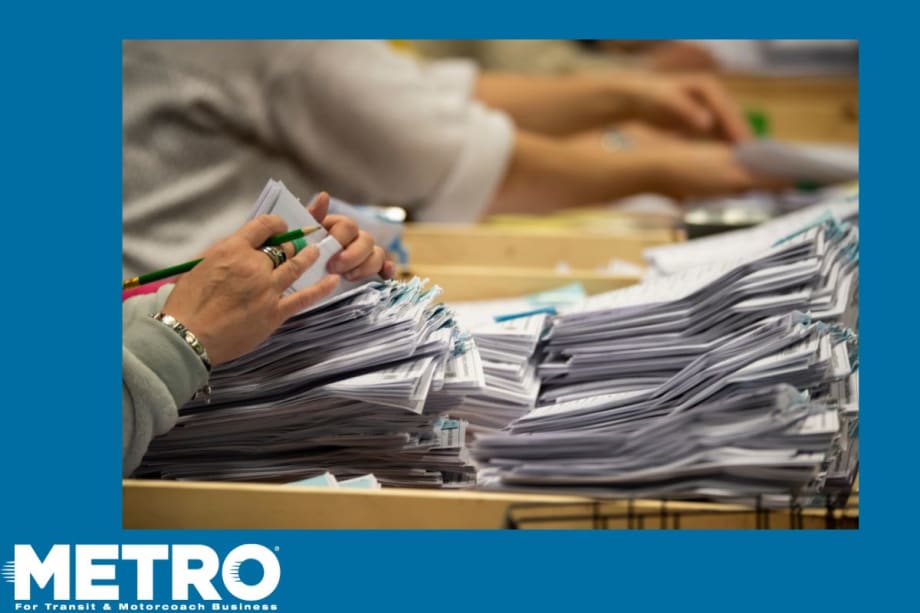
Tuesday’s election proved to be a marked success, with $24.9 billion approved so far by voters to make transit improvements, bringing the total funding for public transit in 2024 to over $25 billion.
Photo: Canva
Voters once again voiced their overwhelming support for public transit by approving transit ballot measures across the country, with 46 of 53 measures for public transit in 2024 proving successful — an 86.7% win rate.
Results for ballot measures are available via APTA’s Center for Transportation Excellence’s (CFTE) 2024 election scorecard, which is available here.
“Initial results from this year’s public transportation ballot initiatives show a clear trend: communities across the country are backing public transit. These measures have become a vital indicator of voters’ commitment to investing in transit, and this year’s response has been overwhelmingly positive,” said APTA President/CEO Paul P. Skoutelas. “The public’s enthusiasm for investing in transit reflects a clear desire for cleaner, more accessible transportation options in their neighborhoods. The 2024 election has marked a significant step forward for public transportation, as communities continue to invest in a brighter, more sustainable future for everyone.”
Success on Election Day
Tuesday’s election proved to be a marked success, with $24.9 billion approved so far by voters to make transit improvements, bringing the total funding for public transit in 2024 to over $25 billion.
According to APTA and the CFTE, the results show that residents understand the importance of putting public transit systems on the road to recovery—because good public transportation means a brighter and easier future for communities.
Successful ballot measures included:
A bill in Flagstaff, Ariz., which extended the current transit tax and increased it by about .20 cents per $100. Proposed improvements through the bill included electrifying the bus fleet, expanding service hours, improving service frequency, bringing service to new areas, and reducing congestion while protecting the environment.
In San Francisco, Prop L, which will increase operations funding for Muni, passed. The bill will use revenues from a new business tax on ride-hail companies to prevent Muni service cuts and improve Muni access.
In Nashville, a half-cent sales tax increase will fund accelerated expansion of Nashville’s bus system, building out dozens of miles of sidewalks and bike lanes, while also upgrading nearly 600 traffic signals to better handle vehicle congestion. The tax increase will cover around 46% of the plan’s total cost.
In Fairfax County, Va., $180 million in bonds will be used to finance Fairfax County’s share, under the Washington Metropolitan Area Transit Authority Regional Compact, of the cost of constructing, reconstructing, improving, and acquiring transportation improvements and facilities, including capital costs of land, transit facilities, rolling stock, and equipment in the Washington metropolitan area.
In Seattle, an eight-year $1.55 billion Transportation Levy will use property taxes to fund improvements to the city’s transportation infrastructure, including building sidewalks, paving streets, repairing bridges, and improving transit connections.
Losses and More to Come
Meanwhile, measures in Gwinnet and Cobb County, Ga. and San Diego were defeated, as well as three measures in South Carolina.
As of Wednesday afternoon, a measure in South Lake Tahoe, Calif., had not yet been decided.
APTA’s Center for Transportation Excellence tracks all of the measures at its website and will be providing updates as results continue to come in.
More Management

METRO Opens Submissions for 2026 Motorcoach Awards
Nominations are now being accepted for METRO Magazine’s Operator of the Year and Innovative Operator of the Year awards.
Read More →
New York MTA Advances Final Contract for Second Avenue Subway Expansion
Contract Four is the largest in the Second Avenue Subway Phase 2 project and includes construction of station infrastructure, tracks, and signals for the subway expansion, MTA officials said. Work on Contract Four will begin in 2027.
Read More →
Transit Agencies Highlight Safety Gains at National Summit
Leaders from 15 major transit systems shared crime-reduction results and safety initiatives while discussing the role of continued federal support.
Read More →

NITA Names New Leadership, Expands Reduced-Fare Program at First Board Meeting
The new regional transit authority appointed its first board chair and interim executive director while extending reduced fares across CTA, Metra, and Pace for eligible riders.
Read More →
Beyond the Checklist: A Structured Approach to Transit Maintenance
Reliability-Centered Maintenance helps transit agencies move beyond routine checklists to focus limited resources on the assets and failures that have the greatest impact on safety, reliability, and service.
Read More →
APTA 2026 Nominating Committee Selects Leadership Slate, Names Chair and Vice Chair Nominees
Leadership changes will help shape the association’s priorities and its representation of the transportation industry during the 2026–2027 term.
Read More →
DART Launches Major Security, Fare Enforcement Initiative
The 90-day demonstration will deploy coordinated security teams at five light rail stations while testing controlled access and gathering data to guide future investments.
Read More →
Advancing Fare Collection Through Technology and Innovation
Learn about delivering 1300 gates at 91 stations while managing fare evasion. Explore the large scale deployment, solution customization and real-world results that affect the region. Prepare for deployment in your region now.
Read More →
Game Day in Motion: Moving Millions During the 2026 World Cup
Between packed transit stations and team motorcoaches, see how agencies and operators across North America tackled the transportation demands of the 2026 FIFA World Cup.
Read More →
Surface Transportation Extension Averts Shutdown, Leaves Transit Funding Gap
The stopgap keeps federal transportation programs moving, but missing advance funding could complicate the transit and rail projects agencies are planning next.
Read More →