



Web Extra: Champaign-Urbana MTD celebrates 40 years with record ridership
On track to hit 10.6 million riders by summer, the agency is taking several initiatives to serve its growing passenger base, such as adding hybrid buses to its fleet; utilizing more social media tools and making its facilities even more eco-friendly.

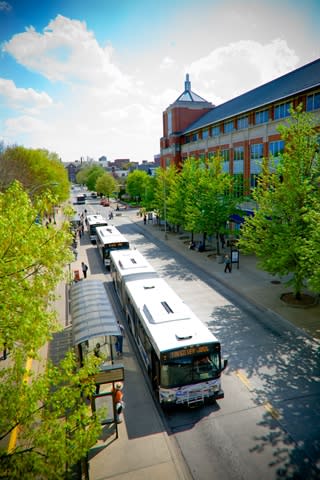
[IMAGE]CU-MTDTransit-Plaza-15-April62011-2.jpg[/IMAGE] Champaign-Urbana Mass Transit District (MTD) will celebrate its 40th anniversary this year and may commemorate the milestone by breaking its current ridership record of 10.4 million.
MTD, started in 1971, serves the University of Illinois at Urbana-Champaign (U.of Ill.) and the communities of Champaign, Urbana and Savoy, Ill. In 1989, the agency was able to increase the amount of service it provides, when U. of Ill. students approved a referendum to assess a student fee to help pay for high-frequency service on and near the campus.
Since then, the system has continued to grow in leaps and bounds, Jan Kijowski, marketing director, said.
About 65 percent of the ridership is a combination of university students, faculty and staff. MTD contracts directly with the university, which funds ridership for faculty and staff. Students vote every three years on whether to pay a student fee each semester for an annual pass that provides unlimited access to MTD campus routes, vehicles and services. In July 2009, MTD was able to lower the pass price from $235 down to $60 to make it more affordable.
“I’m happy to say they have continued that since 1989,” Kijowski said. “This year, if everything goes as it has been thus far with our fiscal year, which ends [in] June, we think we’ll come close to [breaking our] ridership record, if we don’t actually set a new ridership record,” she added. The record is anticipated to be 10.6 million. The previous record — 10.4 million — was set in 2004.
MTD operates approximately 100 buses and employs nearly 300 staff. MTD’s key routes operate on the university campus and run every 10 minutes. The agency also operates a demand response service in the late evening and early morning hours, called Safe Ride. It utilizes 16 hybrid vans and is funded by U. of Ill.
The combined population of the communities is about 130,000, including 41,000 to 42,000 students at the University of Illinois. “For the size of our community, our ridership is very robust,” Kijowski explained.
MTD’s fleet is primarily comprised of News Flyers, but also includes Gillig and ElDorado buses. To accommodate its growing ridership, the agency recently received 20 New Flyer 40-foot hybrid buses and, now, runs a total of 32 hybrid buses and five hybrid vans.
Last summer, MTD started interacting with social media and is now active on Facebook, Twitter, Flickr, YouTube and FormSpring, an entertaining question and answer venue. “You get the opportunity to give detailed answers to what seemingly are simple questions,” Kijowski explained.
Last month, MTD launched a blog and e-newsletter as additional ways to connect with its young, mostly student ridership. While the agency is aiming to connect with riders where they are most often communicating, to make information about MTD easily accessible, it also tried to get that information to people in the community who don’t ride or who have no interest, Kijowski said. “We believe it’s important they know what we’re delivering service in the most efficient way we can,” he said.
Another part of that effort is MTD’s adoption of an INIT CAD AVL system to provide real-time bus location information to passengers, through text messaging, smartphone and street kiosks. The agency also is working on providing data for applications developers.
“Given the large [population of] very smart people at the university, we’ll see growth in the number of apps available. There are a couple out there already,” Kijowski noted.
Last year, MTD was awarded $1,700,493 in ARRA funding for “green” projects, including a geothermal heating/cooling system; a white roof, which reduces temperatures and utility costs; and permeable pavers on its parking lots that allow water to percolate back into the groundwater. MTD also received stimulus funding for two bus simulators ($500,000) and a security camera system ($1,000,000).
In customer service surveys conducted by the agency, 95 percent to 98 percent of riders who are satisfied are very satisfied with MTD’s service.
“We work very hard to ensure that number never goes down,” Kijowski said. “We have a really great crew of operators who do an amazing job. We have a terrific customer service department at the headquarters building, a really great group of people…everybody has to contribute to get a number like that.”
More Bus
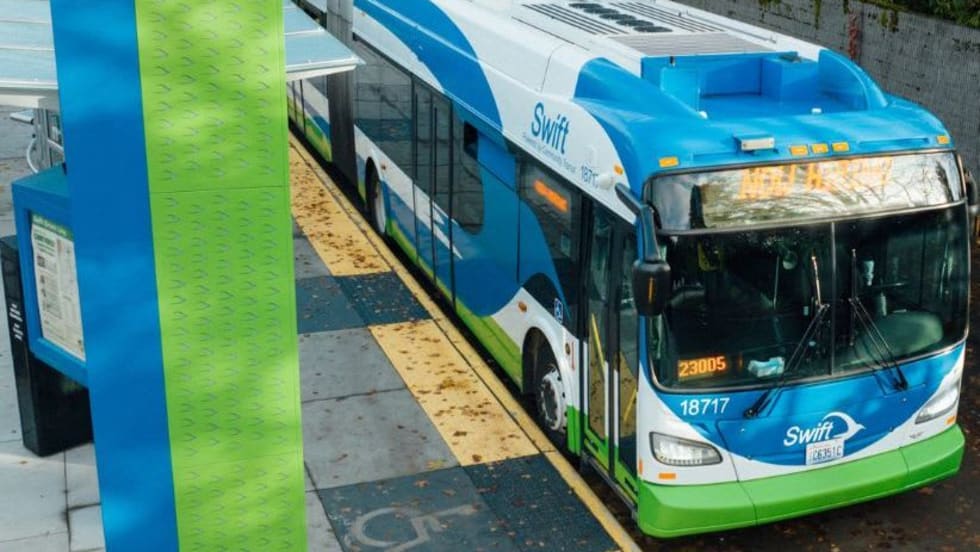
Washington's Community Transit Sets Six-Year Roadmap for Growth, Expansion
Approved TDP targets more bus service, new mobility options, Swift BRT expansion, and a potential Everett Transit annexation.
Read More →
DART Customer Satisfaction Reaches Six-Year High
Overall satisfaction rose to 74.9%, while the agency’s Net Promoter Score reached a record 33.7.
Read More →
How DART's GoPass Is Redefining Regional Mobility
Serving 14 transit agencies, GoPass simplifies multimodal travel by allowing riders to plan, pay for, and manage an entire trip through one app.
Read More →
Biz Briefs: OCTA Taps Clean Energy for Hydrogen Station, Stadler to Supply Via Rail Vehicles, and More
From manufacturers and suppliers to transit agencies and motorcoach operators, these updates offer a snapshot of the projects, partnerships and business moves driving the industry forward.
Read More →
METRO Magazine Announces 2026 Innovative Solutions Awards Winners
Projects Recognized for Advancing Mobility Through Technology, Accessibility, Workforce Innovation, and Operational Excellence
Read More →
Biz Briefs: STV teams with Amtrak, Motorcoach Operators Boost Fleet and Land Contracts, and More
From manufacturers and suppliers to transit agencies and motorcoach operators, these updates offer a snapshot of the projects, partnerships and business moves driving the industry forward.
Read More →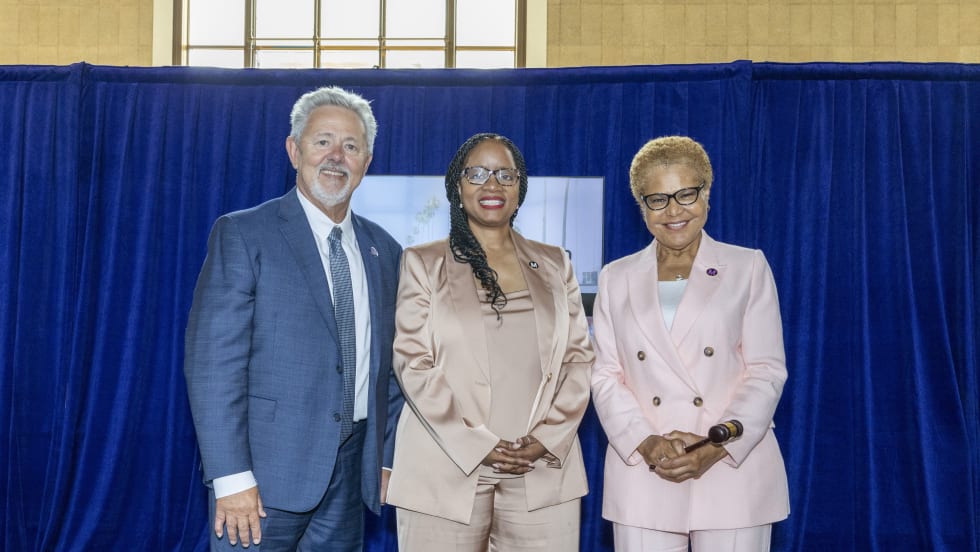
LA Metro Marks Banner Year, Sets Ambitious Goals for New Fiscal Year
Incoming LA Metro Board Chair and Los Angeles Mayor Karen Bass joined outgoing Board Chair Fernando Dutra and LA Metro CEO Stephanie Wiggins to review accomplishments from fiscal year 2026, which included the opening of new rail extensions, advancement of major transit projects, expanded safety programs, and new rider amenities.
Read More →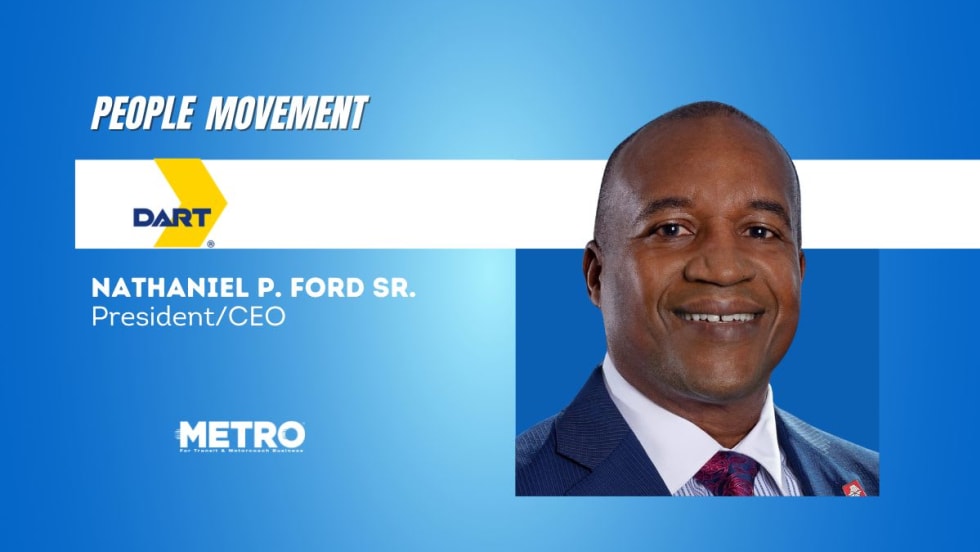
DART Taps Nathaniel P. Ford Sr. as Next President/CEO
Since 2012, Ford has served as the CEO of the Jacksonville Transportation Authority
Read More →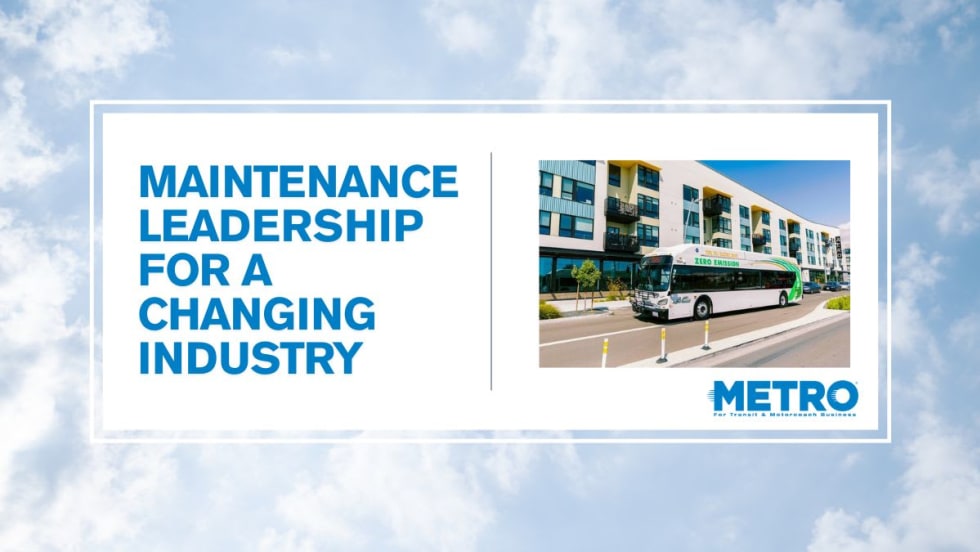
AC Transit’s Cecil Blandon on Building the Next Generation of Transit Maintenance Leaders
The agency’s maintenance chief discusses leadership, workforce development, zero-emission technology, and preparing technicians for the future of public transportation.
Read More →
Building the Next Generation of Transit Technology
In this edition of METROspectives, Luminator CEO Magnus Friberg discusses the company's transformation, the growing role of AI and software, and what's next for transit technology.
Read More →