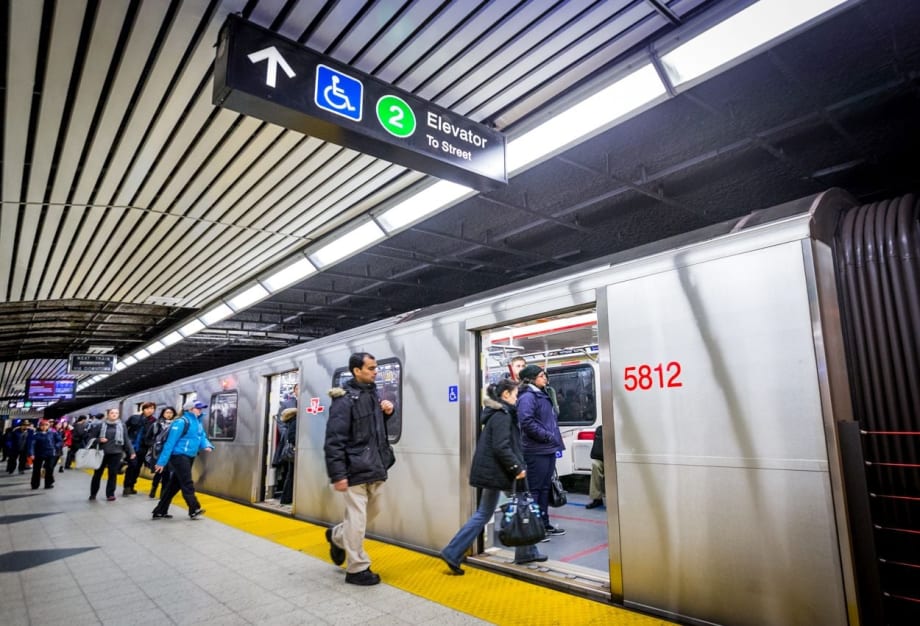
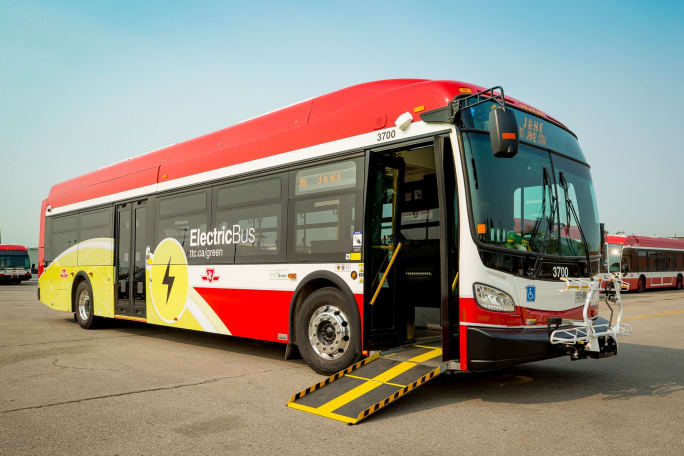
The improvements come in time for the new school year and the return of more people to in-office work. They also better align with the growing demand for more than 2.5 million daily weekday boardings.
Photo: TTC
2 min to read
The Toronto Transit Commission (TTC) is increasing service and revising schedules on its bus, subway, and streetcar networks.
When fully implemented this fall, the bus network, which has seen sustained and increasing ridership levels, will have more service hours than were in place pre-pandemic. Across the system, service hours will increase to 97% of pre-pandemic levels, with ridership at approximately 80% to 85% compared to 2019.
Ad Loading...
TTC’s Improvements Answer Demand
The improvements come in time for the new school year and the return of more people to in-office work. They also better align with the growing demand for more than 2.5 million daily weekday boardings.
Overall, the changes will increase frequency, improve reliability, and strengthen connections throughout the city.
“I am incredibly proud of the progress we have made in rebuilding from the challenges posed by the pandemic, and I am confident that the ongoing service improvements and our strategic long-term plans will further elevate public transit in Toronto,” said TTC CEO Rick Leary. “This marks a pivotal moment for our customers, and I extend my heartfelt gratitude to our dedicated teams who have worked tirelessly since the pandemic to deliver enhanced service where and when it is most required.”
Starting Sept. 1, customers on 16 bus routes will benefit from more room on board or shorter wait times, while 23 routes will see improved service reliability.
Photo: TTC
Bus, School Service
Starting Sept. 1, customers on 16 bus routes will benefit from more room on board or shorter wait times, while 23 routes will see improved service reliability.
Additionally, six new and revised routes will improve customer wayfinding, and better connect key employment, education, and retail areas, providing more transfer-free trips for faster journeys.
Ad Loading...
As the new school year kicks off, the TTC will restore more than 100 extra scheduled bus trips and make route adjustments to facilitate students boarding at multiple locations surrounding schools.
The TTC is also launching a year-long pilot program for free transit for Grade seven to 12 student field trips in partnership with the Toronto public, Catholic, and French school boards.
Increased Rail Service
Subway service on Line 1 Yonge-University will be increased to address crowding and shorten waits at the busiest times.
Trains will arrive every two-to-three minutes during weekday morning and afternoon rush hours, and every four-to-five minutes in the early afternoons and evenings between 7 p.m. and 10 p.m.
The new schedules will shorten wait times by up to approximately one minute. Extra trains will add more demand-responsive service on Line 2 Bloor-Danforth, with further scheduled increases planned to start in October.
Ad Loading...
The TTC is also expanding overnight streetcar service with more frequent trips, as well as introducing a new overnight service, providing more transit options for customers between 1:30 a.m. and 5:30 a.m. daily.
Contract Four is the largest in the Second Avenue Subway Phase 2 project and includes construction of station infrastructure, tracks, and signals for the subway expansion, MTA officials said. Work on Contract Four will begin in 2027.
The new regional transit authority appointed its first board chair and interim executive director while extending reduced fares across CTA, Metra, and Pace for eligible riders.
Reliability-Centered Maintenance helps transit agencies move beyond routine checklists to focus limited resources on the assets and failures that have the greatest impact on safety, reliability, and service.
The 90-day demonstration will deploy coordinated security teams at five light rail stations while testing controlled access and gathering data to guide future investments.
Learn about delivering 1300 gates at 91 stations while managing fare evasion. Explore the large scale deployment, solution customization and real-world results that affect the region. Prepare for deployment in your region now.
Between packed transit stations and team motorcoaches, see how agencies and operators across North America tackled the transportation demands of the 2026 FIFA World Cup.
The stopgap keeps federal transportation programs moving, but missing advance funding could complicate the transit and rail projects agencies are planning next.