
Metro Magazine

 MENU
 SEARCHMENUSEARCH
Loading data...

Today’s autonomous vehicles require hand-labeled 3-D maps, but a new system enables navigation with just GPS and sensors.
Read More →







The company also detailed key organizational changes designed to improve its operational fitness and drive profitable growth.
Read More →Gives suggestions on what mobility and infrastructure changes may need to be implemented to ensure safety on roadways.
Read More →Specifically, the legislation allocates $250 million toward the Carl Moyer program, $140 million toward incentivizing cleaner emissions vehicles at the ports, and another $180 million towards the Clean Bus and Truck program, which underwrites Low-NOx natural gas engines.
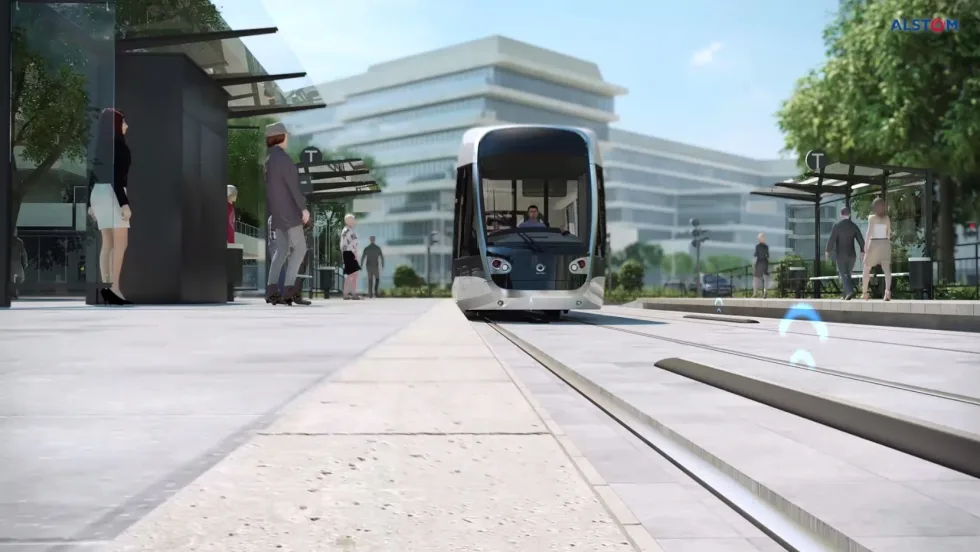
Read More →Autonomy and energy efficiency are important criteria in urban transport. With continued focus on ensuring the proper architectural integration of trams into city centers, Alstom expanded its range of catenary-free solutions with SRS, a breakthrough ground-based power charging system for all types of tramways, including the non-Alstom built.
Read More →Hyundai will produce/deploy air vehicles, and Uber provides airspace support, links to ground transportation, and customer interfaces.
Read More →Visits several fixed stops based on riders' pick-up and destination requests within the Center City area.
Read More →Transit agencies don’t need to wait for fully autonomous vehicles to become a reality before they can begin saving money, augmenting safety, and enhancing efficiencies in their bus operations.
Read More →Eligible transit agencies and states can apply through the Notice of Funding Opportunity for the FY 2022 and FY 2023 Rail Vehicle Replacement Program for funds to replace vehicles on subway systems, commuter rail, and light rail systems.
Read More →A study funded by the National Science Foundation, led by College of Science and Engineering professor Zhi-Li Zhang, examined one potential solution: shared automated vehicles (SAVs).
Read More →