



Wash. Metro Transit to debut BRT line
The RapidRide B Line, featuring 60-foot articulated buses built by New Flyer, will connect the cities of Bellevue and Redmond.

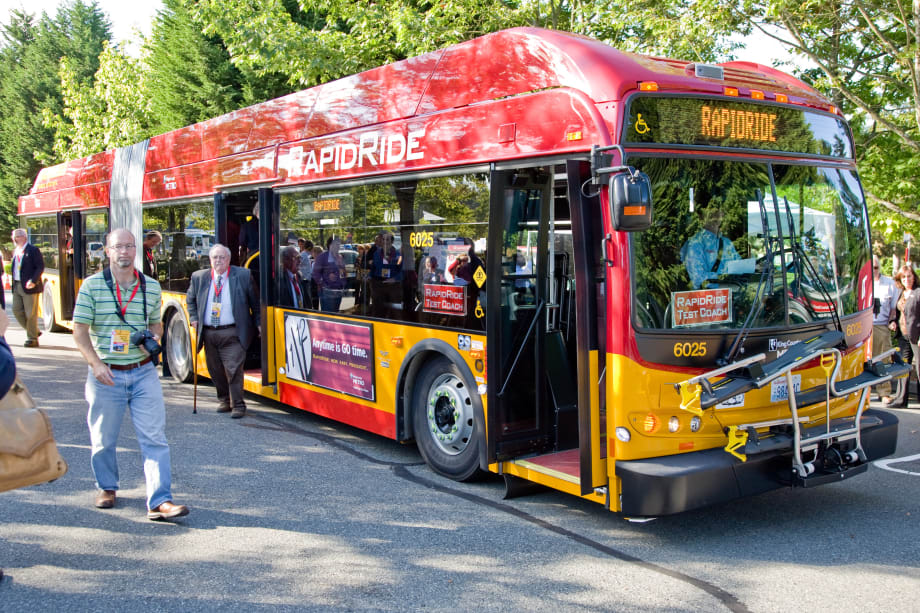
Photo credit Ned Ahrens

Washington's King County Metro Transit will debut its new bus rapid transit (BRT) service this weekend. The RapidRide B Line, which features newly designed buses, shelters and signs, will connect the cities of Bellevue and Redmond.
The B Line will start carrying passengers at 6 a.m. this Saturday, and rides will be free all weekend. It is the second of Metro’s six planned RapidRide routes.
The A Line debuted a year ago has increased bus ridership by 30 percent to 40 percent in its corridor. Similar results are expected for the B Line, according to transit officials, with Eastside RapidRide ridership projected to increase to nearly 2.2 million passenger trips a year by 2016.

The service includes newly designed buses, shelters and signs. The distinctive red and yellow buses are energy efficient, low-emission hybrid vehicles with low floors and three doors for easier, faster boarding. The B Line was funded with $20.2 in federal funding in addition to local dollars.
The service, which travels between the Bellevue and Redmond transit centers, features 60-foot articulated buses with three doors for faster boarding. The vehicles, built by New Flyer, have free Wi-Fi, interior and exterior stop announcements, security cameras, and a passive restraint system to speed boarding time for those using wheelchairs and other mobility devices.
The B Line is expected to operate about 20 percent faster than the current routes in those corridors. This is achieved by combining bus stops, quicker fare collection with off-board payment at major stations, and transit signal priority that either extends or provides green lights for arriving B Line buses, according to officials.
The B Line has 19 RapidRide stations installed at locations that currently have the most transit use. Station amenities include: large shelters with interior lighting; real-time arrival information; ORCA card readers; benches; and a lighted signal that passengers can activate to let bus drivers know there is someone waiting. The remaining 28 stops along the line also have benches and the passenger-activated lights.

Buses are scheduled to arrive every 10 minutes on weekdays during the busiest travel hours, and every 15 minutes during most other times of the day and week before 10 p.m. During the late-night and early-morning hours, it operates every 30 minutes. On weekdays, it operates from 4:30 a.m. to approximately 1 a.m.
Because of the way the B Line connects the Eastside, Metro is also restructuring much of its bus service in Bellevue, Redmond and Kirkland to improve the efficiency of the transit network and to integrate with the new RapidRide service. The revisions also begin Oct. 1 and include: significantly revised routing for 11 routes; elimination of 12 routes to avoid duplication of service; and three new routes to fill in the network.
More Bus

Joshua Schank on Transportation Innovation, Risk, and the Future of Mobility
In this edition of METROspectives, Joshua Schank discusses lessons from launching LA Metro’s Office of Extraordinary Innovation, the challenges of advancing new mobility technologies, and much more.
Read More →
Reinventing Fleet Maintenance with Real-time Visibility and AI
Transit leaders need to know what needs fixing, where to look, who is responsible, when work is completed, and what it costs without having to chase information across disconnected systems.
Read More →
SamTrans Sets Priorities for Potential Connect Bay Area Revenue
The board-approved framework allocates future funding to maintaining service, rider improvements, equity initiatives, and infrastructure repairs.
Read More →
When Routine Fails: How Public Transit Must Adapt for the World Cup
The 2026 FIFA World Cup will test transit agencies’ ability to manage unpredictable travel patterns, making real-time data and operational flexibility critical to moving millions of visitors efficiently.
Read More →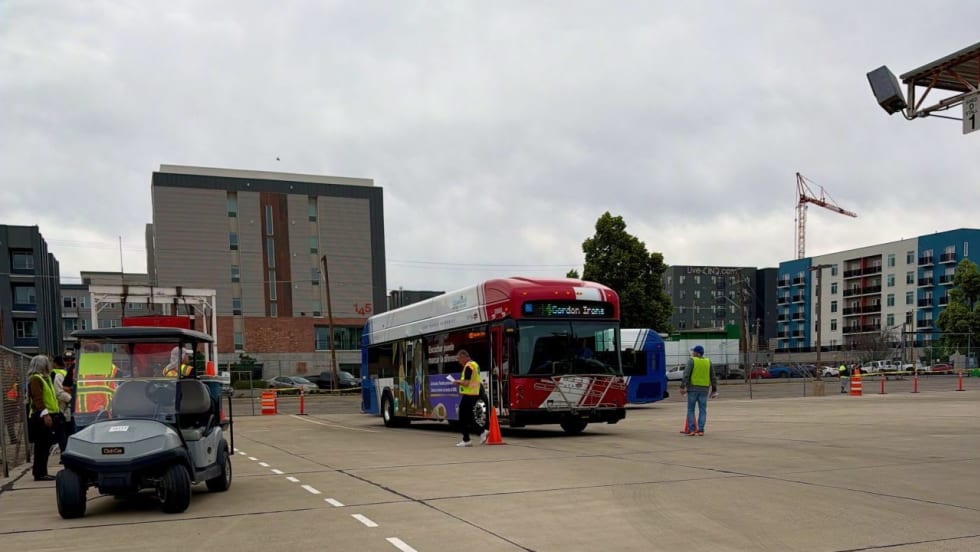
Photo Highlights from APTA's 2026 Mobility Conference
The photo gallery captures scenes from the conference, including the International Bus Roadeo, exhibit hall activities, the Bus Showcase, and much more.
Read More →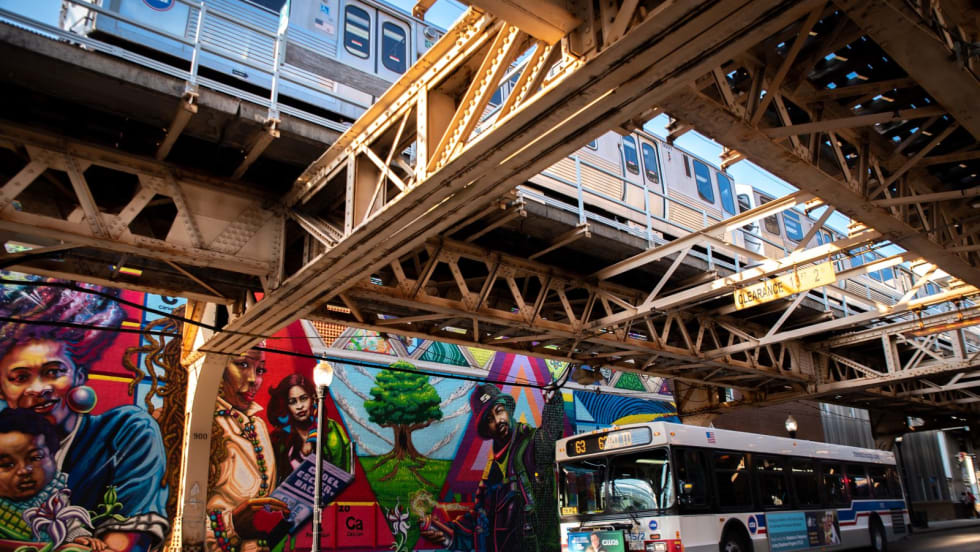
Chicago's NITA Act Moves Into Next Phase as Service Improvements Begin
Rider-focused improvements will begin rolling out across the system immediately as CTA, Metra, and Pace increase service this summer in the six-county region.
Read More →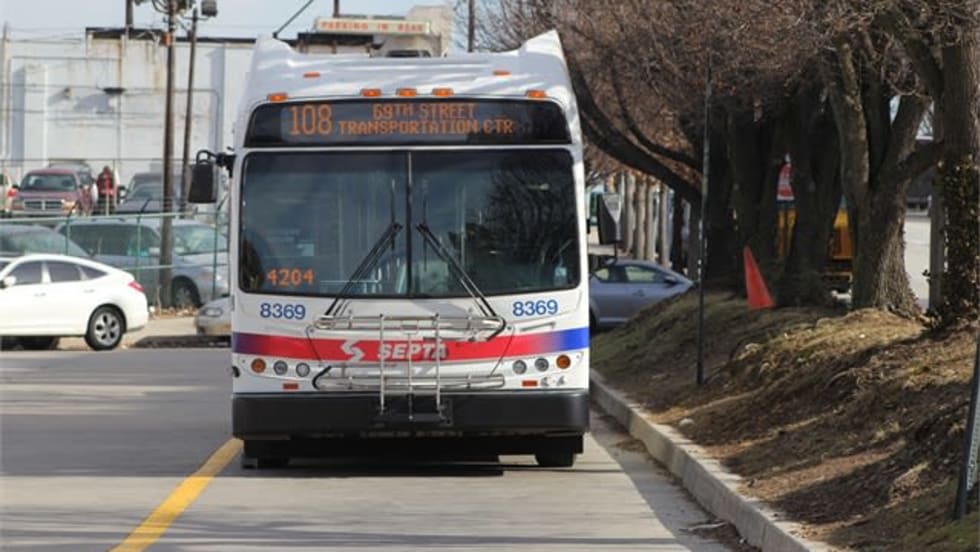
Philadelphia's SEPTA Approves Annual Transit Service Plan
Between 2021 and 2024, SEPTA held more than 200 public meetings — including 144 in-person sessions — throughout the SEPTA service region.
Read More →
A True Low-Floor Minibus Design Delivers Better Accessibility and Efficiency for Everyone
As transit demands evolve, so should your fleet. Download the whitepaper to see how the Low-Floor Frontrunner Minibus compares to traditional options.
Read More →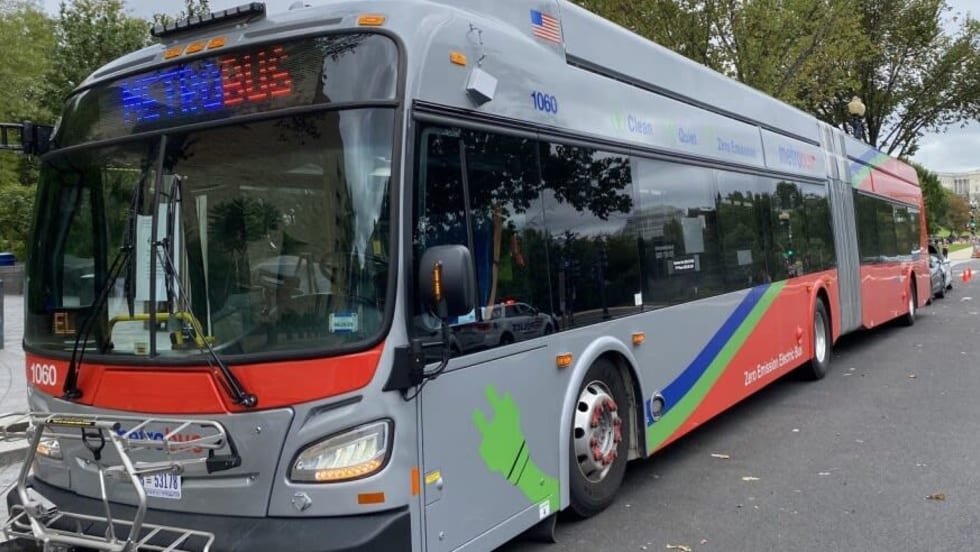
WMATA Debuts 'Fares Pay for Service' Awareness Campaign
The campaign was highlighted during a media event at the Paul S. Sarbanes Transit Center in Silver Spring, where WMATA’s GM/CEO Randy Clarke joined Metro Transit Police officers, WMATA management team, board members, and staff to expand fare enforcement and customer education efforts on Metro Bus routes throughout the region.
Read More →
Biz Briefs: Foothill Gold Line Award, Matawan Contract, and More
From strategic partnerships to acquisitions and service expansions, the industry continues to evolve at a rapid pace. Find out all the latest here.
Read More →