



Hyundai AVs hit the streets in California
Through a partnership with Pony.ai and Via, BotRide Electric SUVs will provide a free ride-sharing service to the local community of Irvine.

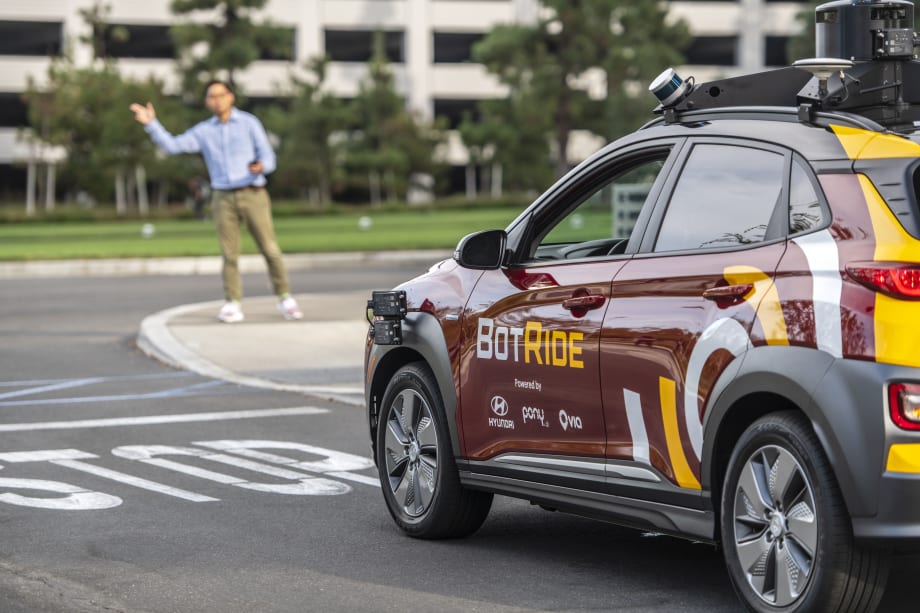
BotRide is validating its user experience in preparation for a fully driverless future.
Hyundai/Via
BotRide is validating its user experience in preparation for a fully driverless future.
Hyundai/Via
Hyundai, in collaboration with Pony.ai and Via, unveiled BotRide, a shared, on-demand, and autonomous vehicle service operating on public roads.
Starting Nov. 4, a fleet of self-driving Hyundai KONA Electric SUVs will provide a free ride-sharing service to the local community of Irvine, Calif.
Hyundai partnered with Pony.ai to build the self-driving system and with Via to create the BotRide on-demand ride-sharing technology and application. Using the BotRide app (iOS and Android), riders can hail an autonomous Hyundai KONA Electric SUV directly from their smartphone. Via’s advanced algorithms enable multiple riders to share the same vehicle, outfitted with Pony.ai autonomous vehicle technology. The app directs passengers to nearby stops for pick up and drop off, allowing for quick and efficient shared trips without lengthy detours, or inconvenient fixed routes and schedules.
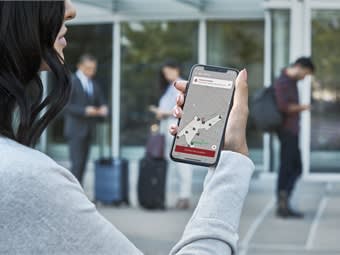
Starting Nov. 4, a fleet of self-driving Hyundai KONA Electric SUVs will provide a free ride-sharing service to the local community of Irvine, Calif.
Hyundai/Via
Integrated Hyundai and Pony.ai technologies enable the BotRide vehicles to navigate complex road scenarios safely. These vehicles are equipped with Pony.ai’s latest sensor hardware and proprietary software to identify the precise position of surrounding vehicles, handle pedestrian traffic in urban areas, accurately monitor its surroundings, predict the behavior of other road users, and precisely plan actions accordingly. In addition to self-driving capabilities, BotRide is validating its user experience in preparation for a fully driverless future.
BotRide launches with multiple popular destinations where a passenger may hail a ride using the BotRide app. The service area covers several residential, commercial, and institutional points of interest. BotRide’s technology prioritizes passenger-to-system interactions such as automated onboard passenger verification, giving riders the chance to familiarize themselves with technologies expected to become commonplace in an autonomous mobility future.
More New Mobility

From Hardware to Digital Partner: Luminator Charts Its Next Chapter
CEO Magnus Friberg discusses Luminator’s shift toward becoming a digital partner, the growing importance of software and interoperability, and how AI can help agencies improve operations and passenger experience.
Read More →
Biz Briefs: Alstom Lands Canadian Contract, LYT to Supply California TSP, and More
In METRO's latest installment, we take a look at recent news from Complete Coach Works, Beep, FlixBus, and more partnerships making headlines across the transportation sector.
Read More →
CharterUP’s Armir Harris on Technology, AI, and the Future of Group Mobility
In a recent episode of METROspectives, CharterUP Founder/CEO Armir Harris discussed the company’s evolution from an online charter bus marketplace into a technology platform supporting public- and private-sector mobility and much more.
Read More →
Jacksonville’s NAVI Project Charts a New Course for Autonomous Public Transportation
Through its NAVI program, JTA is showing how autonomous vehicles, intelligent infrastructure, and coordinated operations can work together to deliver everyday public transportation.
Read More →
Biz Briefs: Luminator Marks Milestone and More
From manufacturers and suppliers to transit agencies and motorcoach operators, these updates offer a snapshot of the projects, partnerships and business moves driving the industry forward.
Read More →
New Tricks for Old Bureaucracies: Joshua Schank on Making Transit Innovation Stick
Former LA Metro Chief Innovation Officer Joshua Schank discusses why good ideas aren't enough, how transit agencies can overcome resistance to change, and why today's challenges demand more innovation.
Read More →
How DART's GoPass Is Redefining Regional Mobility
Serving 14 transit agencies, GoPass simplifies multimodal travel by allowing riders to plan, pay for, and manage an entire trip through one app.
Read More →
Biz Briefs: OCTA Taps Clean Energy for Hydrogen Station, Stadler to Supply Via Rail Vehicles, and More
From manufacturers and suppliers to transit agencies and motorcoach operators, these updates offer a snapshot of the projects, partnerships and business moves driving the industry forward.
Read More →CharterUP Expands Into New Mobility and Autonomous Transportation
Vice President of New Mobility Stephen Joos discusses how CharterUP is leveraging its nationwide transportation network, technology platform, and autonomous vehicle partnerships to expand into workforce mobility, campus shuttles, and transit solutions.
Read More →
METRO Magazine Announces 2026 Innovative Solutions Awards Winners
Projects Recognized for Advancing Mobility Through Technology, Accessibility, Workforce Innovation, and Operational Excellence
Read More →